
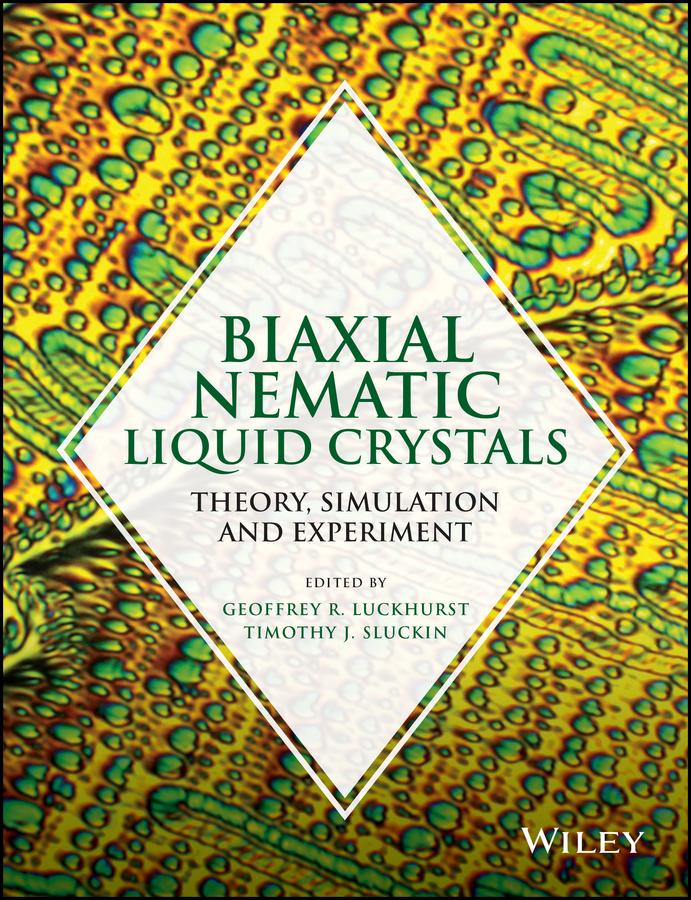
In the nematic liquid crystal phase, rod-shaped molecules move randomly but remain essentially parallel to one another. Biaxial nematics, which were first predicted in 1970 by Marvin Freiser, have their molecules differentially oriented along two axes. They have the potential to create displays with fast switching times and may have applications in thin-film displays and other liquid crystal technologies.
This book is the first to be concerned solely with biaxial nematic liquid crystals, both lyotropic and thermotropic, formed by low molar mass as well as polymeric systems. It opens with a general introduction to the biaxial nematic phase and covers:
• Order parameters and distribution functions
• Molecular field theory
• Theories for hard biaxial particles
• Computer simulation of biaxial nematics
• Alignment of the phase
• Display applications
• Characterisation and identification
• Lyotropic, thermotropic and colloidal systems together with material design
With a consistent, coherent and pedagogical approach, this book brings together theory, simulations and experimental studies; it includes contributions from some of the leading figures in the field. It is relevant to students and researchers as well as to industry professionals working in soft matter, liquid crystals, liquid crystal devices and their applications throughout materials science, chemistry, physics, mathematics and display engineering.
Płać wygodnie kartą, Klarną, Apple Pay lub Google Pay. Nie jesteś zadowolony? Zawsze masz 14-dniową gwarancję zwrotu pieniędzy. Więcej przeczytasz w naszych warunkach. Masz pytania? Napisz do nas na hello@memmo.org.
Memmo ułatwia naukę – gdziekolwiek jesteś na świecie. U nas znajdziesz podręczniki i sprytne narzędzia do nauki w jednym miejscu: streszczenia, quizy, podcasty i fiszki. A do tego Ted, Twój kumpel do nauki, który odpowie na wszystko, co Cię nurtuje. Ponad 50 000 studentów już tu się uczy – stworzone, byś uczył się szybciej i mniej stresował.