
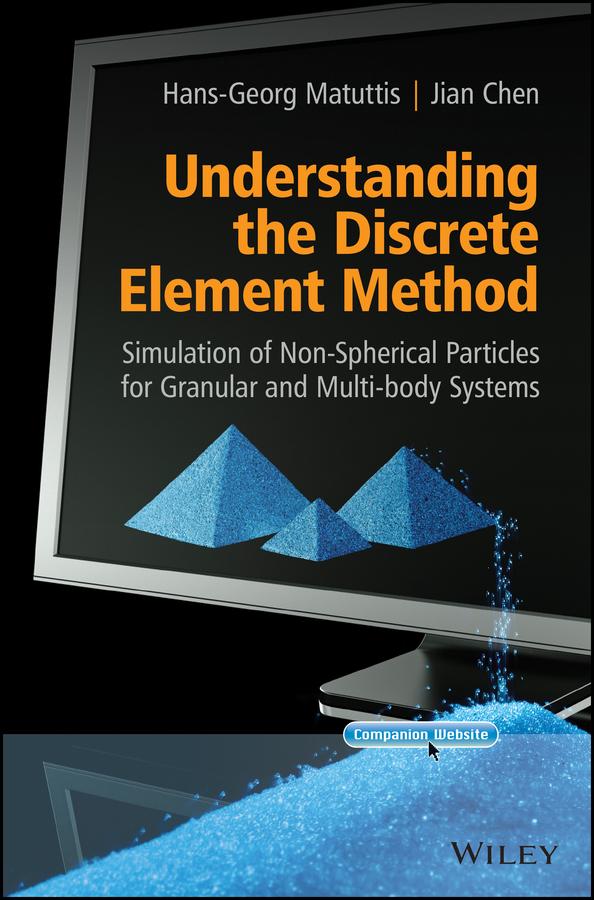
Gives readers a more thorough understanding of DEM and equips researchers for independent work and an ability to judge methods related to simulation of polygonal particles
- Introduces DEM from the fundamental concepts (theoretical mechanics and solidstate physics), with 2D and 3D simulation methods for polygonal particles
- Provides the fundamentals of coding discrete element method (DEM) requiring little advance knowledge of granular matter or numerical simulation
- Highlights the numerical tricks and pitfalls that are usually only realized after years of experience, with relevant simple experiments as applications
- Presents a logical approach starting withthe mechanical and physical bases,followed by a description of the techniques and finally their applications
- Written by a key author presenting ideas on how to model the dynamics of angular particles using polygons and polyhedral
- Accompanying website includes MATLAB-Programs providing the simulation code for two-dimensional polygons
Recommended for researchers and graduate students who deal with particle models in areas such as fluid dynamics, multi-body engineering, finite-element methods, the geosciences, and multi-scale physics.
Płać wygodnie kartą, Klarną, Apple Pay lub Google Pay. Nie jesteś zadowolony? Zawsze masz 14-dniową gwarancję zwrotu pieniędzy. Więcej przeczytasz w naszych warunkach. Masz pytania? Napisz do nas na hello@memmo.org.
Memmo ułatwia naukę – gdziekolwiek jesteś na świecie. U nas znajdziesz podręczniki i sprytne narzędzia do nauki w jednym miejscu: streszczenia, quizy, podcasty i fiszki. A do tego Ted, Twój kumpel do nauki, który odpowie na wszystko, co Cię nurtuje. Ponad 50 000 studentów już tu się uczy – stworzone, byś uczył się szybciej i mniej stresował.