
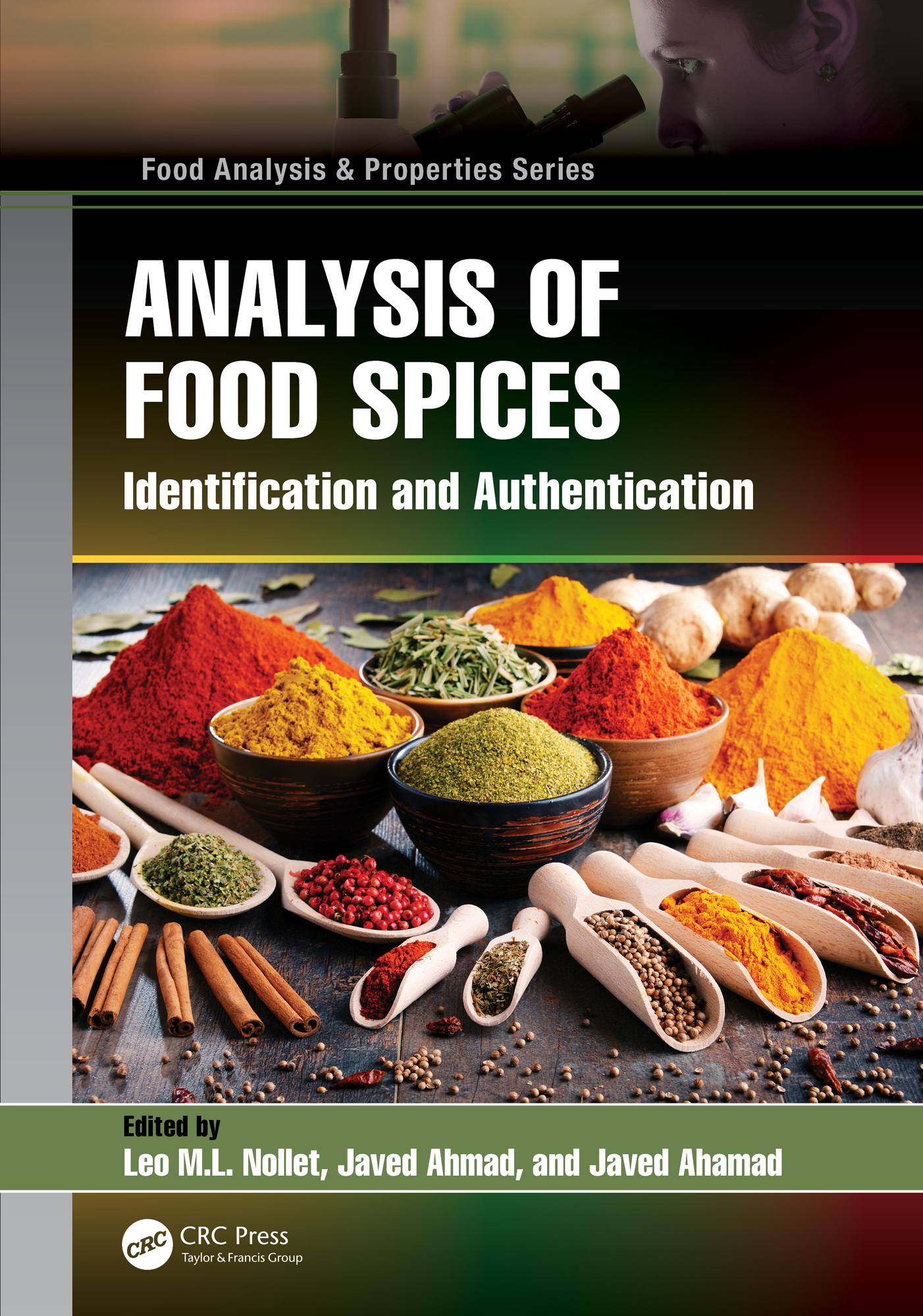
Spices are obtained from natural sources, especially from plants, and are used in cooking food in whole or grounded forms mainly for imparting flavor, aroma, and piquancy. Besides their role in improving food quality, spices also have health benefits that are anticancer, antidiabetic, antimicrobial, antioxidant, hypolipidemic, analgesic, immunostimulant, and more.
Spices are generally marketed in powder form, and their supply chain is very long and complicated, which is why they are particularly susceptible to adulteration at many points. The spice supply chain is considered to be moderately vulnerable and has an ineffective quality detection system in its final product, which is the main risk factor. There are many types of fraud nowadays related to spices such as adulteration, falsification, substitution, and inaccurate labeling.
Analysis of Food Spices: Identification and Authentication provides an overview of spices of different categories, such as terpenes and terpenoids, oleoresins, alkaloids, and polyphenolics and flavonoids, as well as qualitative and quantitative guidelines for ensuring their quality and safety using modern analytical tools and techniques. The first section of the book discusses the overview, sources, and health benefits of important categories of spices such as terpenes and terpenoids (cardamom, cinnamon, clove, coriander, cumin, fennel), oleoresins (capsicum, ginger, nutmeg), alkaloids (black pepper, fenugreek), and polyphenolics and flavonoids (basil, turmeric, olive, saffron). In the second section, qualitative diagnostic features of spices are covered. In the third section, the roles of quantitative analytical techniques, such as HPLC, LC-MS, HPTLC, GC, and GC-MS, capillary electrophoresis (CE), and other recent techniques in the analysis of food spices, are also discussed. Each chapter concludes with a general reference section, which is a bibliographic guide to more advanced texts.
Key Features
- Provides a detailed overview of different food spices of plant origin, and discusses their health benefits and uses of different analytical techniques in its quality control
- Explains how qualitative diagnostic features of food spices are utilized as quality control tools
- Describes applicability of analytical techniques like HPLC, LC-MS, GC-MS, HPTLC, and CE for quality control of food spices
- Emphasizes use of recent techniques such as proteomics, biosensors, and more in the analysis/quality control of food spices
This book will provide important guidelines for controlling quality, safety, and efficacy issues related to food spices.
Płać wygodnie kartą, Klarną, Apple Pay lub Google Pay. Nie jesteś zadowolony? Zawsze masz 14-dniową gwarancję zwrotu pieniędzy. Więcej przeczytasz w naszych warunkach. Masz pytania? Napisz do nas na hello@memmo.org.
Memmo ułatwia naukę – gdziekolwiek jesteś na świecie. U nas znajdziesz podręczniki i sprytne narzędzia do nauki w jednym miejscu: streszczenia, quizy, podcasty i fiszki. A do tego Ted, Twój kumpel do nauki, który odpowie na wszystko, co Cię nurtuje. Ponad 50 000 studentów już tu się uczy – stworzone, byś uczył się szybciej i mniej stresował.