
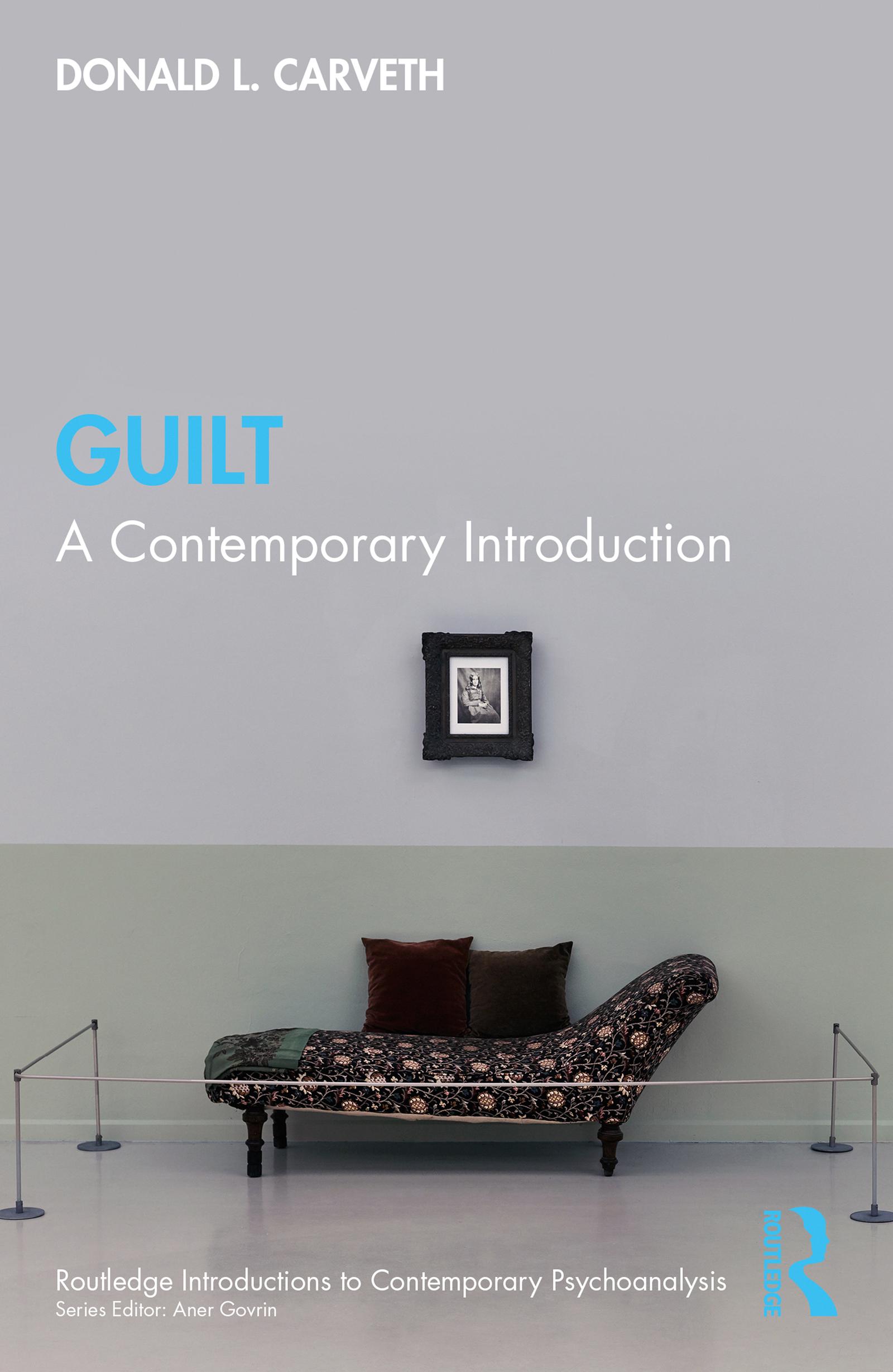
This insightful and innovative book sheds light on the complexity of the concept of guilt, while exploring aspects of guilt that have previously been overlooked in psychoanalytic theory and discourse.
Offering original insights on the topic, Donald Carveth looks at Freud's failure to distinguish persecutory guilt from reparative guilt, and the superego from the conscience. The significance of these distinctions for both psychosocial theory and clinical practice is explored throughout the volume. Carveth distinguishes varieties of punitive guilt, such as justified, unjustified, "borrowed" or induced, existential and collective. He expertly describes patterns of self-punishment and self-sabotage, while also addressing the widespread use of persecutory guilt and self-punishment as a defence against and evasion of reparative guilt, contrition, and reparation. Throughout the volume, Carveth critically reviews a range of recent contributions to psychoanalytic literature to support his theories.
Part of the Routledge Introductions to Contemporary Psychoanalysis series, this book will be of interest to psychoanalysts, psychotherapists, social scientists, and social philosophers, as well as to those studying ethics and theology.
Płać wygodnie kartą, Klarną, Apple Pay lub Google Pay. Nie jesteś zadowolony? Zawsze masz 14-dniową gwarancję zwrotu pieniędzy. Więcej przeczytasz w naszych warunkach. Masz pytania? Napisz do nas na hello@memmo.org.
Memmo ułatwia naukę – gdziekolwiek jesteś na świecie. U nas znajdziesz podręczniki i sprytne narzędzia do nauki w jednym miejscu: streszczenia, quizy, podcasty i fiszki. A do tego Ted, Twój kumpel do nauki, który odpowie na wszystko, co Cię nurtuje. Ponad 50 000 studentów już tu się uczy – stworzone, byś uczył się szybciej i mniej stresował.