
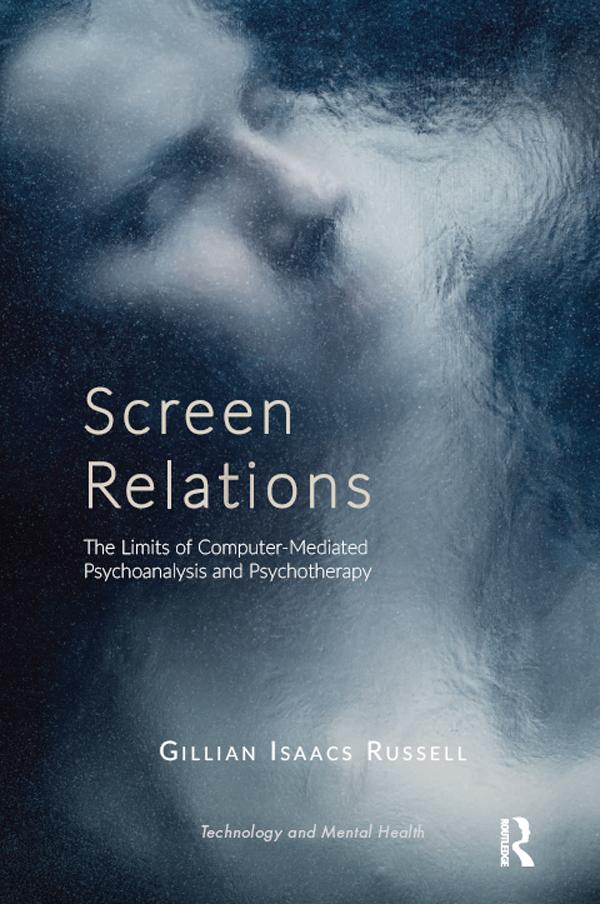
Increased worldwide mobility and easy access to technology means that the use of technological mediation for treatment is being adopted rapidly and uncritically by psychoanalysts and psychoanalytic psychotherapists. Despite claims of functional equivalence between mediated and co-present treatments, there is scant research evidence to advance these assertions. Can an effective therapeutic process occur without physical co-presence? What happens to screen-bound treatment when, as a patient said, there is no potential to "kiss or kick?" Our most intimate relationships, including that of analyst and patient, rely on a significant implicit non-verbal component carrying equal or possibly more weight than the explicit verbal component. How is this finely-nuanced interchange affected by technologically-mediated communication? This book draws on the fields of neuroscience, communication studies, infant observation, cognitive science and human/computer interaction to explore these questions. It finds common ground where these disparate disciplines intersect with psychoanalysis in their definitions of a sense of presence, upon which the sense of self and the experience of the other depends.
Płać wygodnie kartą, Klarną, Apple Pay lub Google Pay. Nie jesteś zadowolony? Zawsze masz 14-dniową gwarancję zwrotu pieniędzy. Więcej przeczytasz w naszych warunkach. Masz pytania? Napisz do nas na hello@memmo.org.
Memmo ułatwia naukę – gdziekolwiek jesteś na świecie. U nas znajdziesz podręczniki i sprytne narzędzia do nauki w jednym miejscu: streszczenia, quizy, podcasty i fiszki. A do tego Ted, Twój kumpel do nauki, który odpowie na wszystko, co Cię nurtuje. Ponad 50 000 studentów już tu się uczy – stworzone, byś uczył się szybciej i mniej stresował.
Może Ci się spodobać
Kup książkę0