
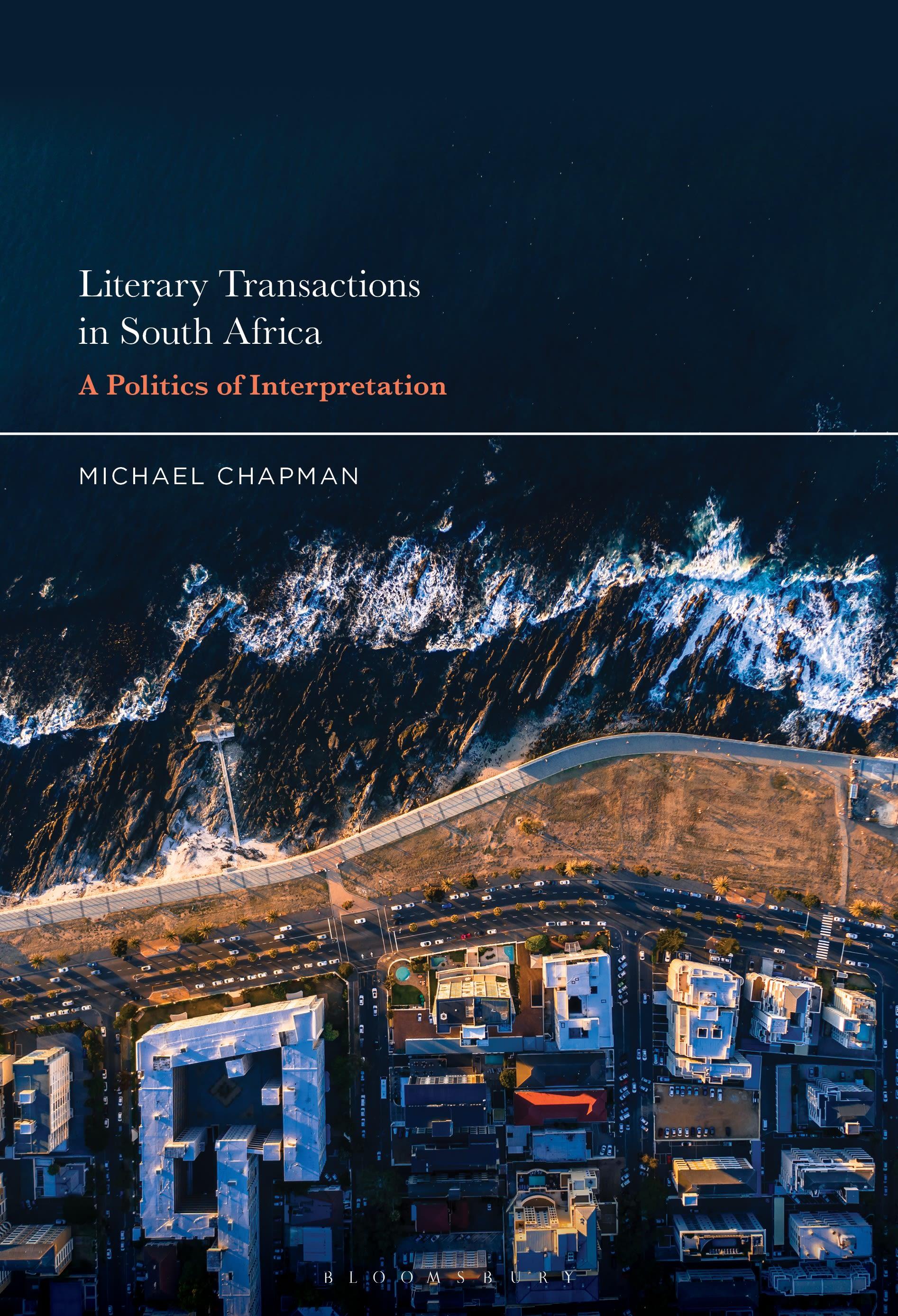
A representative overview of some of the most pressing concerns in contemporary literary criticism in South Africa, demonstrating literary form's shaping power in the interpretation of politically contentious content.
Rather than pressing literature into the service of a political cause or programme, this study's purpose – its politics of interpretation – is to open literature to the potential of human experience in both the personal and the public life. The society of focus – South Africa – is a society of political contestation. Instead of prioritizing the what of contestation, however, Michael Chapman explores contestation through the how of the literary work.
In sharp transactions between an intransitivity of form and a compulsion to communicate, the book elucidates an ethics of aesthetics in J. M. Coetzee and Nadine Gordimer, and the best of modernism and the worst of modernism in Roy Campbell's poetry. It also asks: Can Themba's 'style' of the shebeens in the 1950s be re-visited in a contemporary context of gender-based abuse? Why or how are Ellen Kuzwayo and Mtutuzeli Matshoba, writing in the 'struggle' years of the 1970s, simultaneously less than artists and more than artists? Has the interpretative frame of the 'postcolonial' best served fiction after apartheid? What language of interpretation best releases the voices of contemporary women's poetry: a poetry which in its play on identities and identifications looks both inwards to its locality and outwards to the globe?
Alert to both South Africa's colonial past and its assertions of today, Literary Transactions in South Africa pursues the challenge of interpreting a literature of disjuncture between Africa and the West, or the South and the North.
Rather than pressing literature into the service of a political cause or programme, this study's purpose – its politics of interpretation – is to open literature to the potential of human experience in both the personal and the public life. The society of focus – South Africa – is a society of political contestation. Instead of prioritizing the what of contestation, however, Michael Chapman explores contestation through the how of the literary work.
In sharp transactions between an intransitivity of form and a compulsion to communicate, the book elucidates an ethics of aesthetics in J. M. Coetzee and Nadine Gordimer, and the best of modernism and the worst of modernism in Roy Campbell's poetry. It also asks: Can Themba's 'style' of the shebeens in the 1950s be re-visited in a contemporary context of gender-based abuse? Why or how are Ellen Kuzwayo and Mtutuzeli Matshoba, writing in the 'struggle' years of the 1970s, simultaneously less than artists and more than artists? Has the interpretative frame of the 'postcolonial' best served fiction after apartheid? What language of interpretation best releases the voices of contemporary women's poetry: a poetry which in its play on identities and identifications looks both inwards to its locality and outwards to the globe?
Alert to both South Africa's colonial past and its assertions of today, Literary Transactions in South Africa pursues the challenge of interpreting a literature of disjuncture between Africa and the West, or the South and the North.
Betal enkelt med kort, Klarna, Apple Pay eller Google Pay. Ikke fornøyd? Du har alltid 14 dagers angrerett. Les mer i våre vilkår. Har du spørsmål, send oss en e-post på hello@memmo.org.
Memmo gjør det enklere å studere – uansett hvor du er i verden. Hos oss samler du pensumbøker og smarte studieverktøy på ett og samme sted: sammendrag, quizer, podkaster og flashcards. Og så Ted, din studiekompis som svarer på alt du lurer på. Over 50 000 studenter studerer allerede her – bygget for at du skal lære raskere og stresse mindre.