
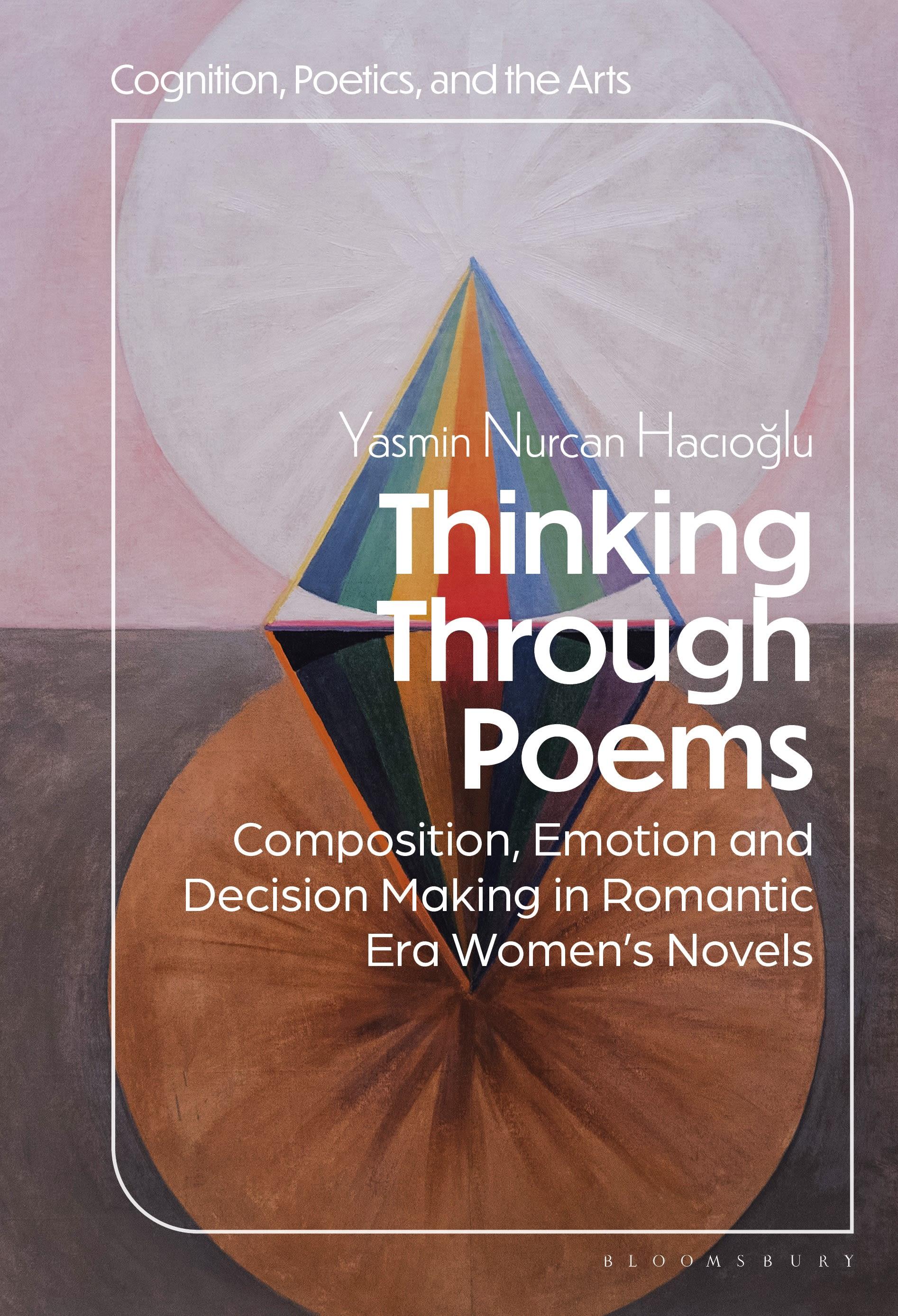
A new cognitive approach to the representation of composition in literature that examines five women novelists of the late 18th century and how they use imaginative poetic practices to attain emotional, practical and political agency.
During a backlash towards feminism in British politics at the turn of the 19th century, popular women's novels became saturated with heroines in dangerous situations who turn to composing original poetry. Thinking Through Poems shows how these poems indicate practices of composition that model imaginative decision-making. It reveals how these novels provide readers with cognitive tools to re-think how situations might unfold and to realize how patriarchal threats and cultural narratives can be methodically altered.
Using both contemporary cognitive philosophy and historical approaches, Yasemin Nurcan Hacioglu uncovers how fictional heroines manipulate the narrative as they craft thoughts and responses not yet socially scripted. Re-considered as "works in progress," poems in Ann Radcliffe's and Charlotte Smith's influential novels are examined as a space in which heroines re-draft experiences into narratives that justify their choices. Hacioglu then investigates how the neglected novels of Eleanor Sleath, Charlotte Dacre and Amelia Opie added new arguments, through compositional practices, to the rich philosophical debate on how agency can be constructed.
Thinking Through Poems provides new readings of women's novels that are often read as conservative. It argues that these novels contributed to feminist politics not through defining values, but by providing frameworks for weaponizing fictional affects to challenge both practical and ideological obstacles during a changing climate in gender politics.
During a backlash towards feminism in British politics at the turn of the 19th century, popular women's novels became saturated with heroines in dangerous situations who turn to composing original poetry. Thinking Through Poems shows how these poems indicate practices of composition that model imaginative decision-making. It reveals how these novels provide readers with cognitive tools to re-think how situations might unfold and to realize how patriarchal threats and cultural narratives can be methodically altered.
Using both contemporary cognitive philosophy and historical approaches, Yasemin Nurcan Hacioglu uncovers how fictional heroines manipulate the narrative as they craft thoughts and responses not yet socially scripted. Re-considered as "works in progress," poems in Ann Radcliffe's and Charlotte Smith's influential novels are examined as a space in which heroines re-draft experiences into narratives that justify their choices. Hacioglu then investigates how the neglected novels of Eleanor Sleath, Charlotte Dacre and Amelia Opie added new arguments, through compositional practices, to the rich philosophical debate on how agency can be constructed.
Thinking Through Poems provides new readings of women's novels that are often read as conservative. It argues that these novels contributed to feminist politics not through defining values, but by providing frameworks for weaponizing fictional affects to challenge both practical and ideological obstacles during a changing climate in gender politics.
Betal enkelt med kort, Klarna, Apple Pay eller Google Pay. Ikke fornøyd? Du har alltid 14 dagers angrerett. Les mer i våre vilkår. Har du spørsmål, send oss en e-post på hello@memmo.org.
Memmo gjør det enklere å studere – uansett hvor du er i verden. Hos oss samler du pensumbøker og smarte studieverktøy på ett og samme sted: sammendrag, quizer, podkaster og flashcards. Og så Ted, din studiekompis som svarer på alt du lurer på. Over 50 000 studenter studerer allerede her – bygget for at du skal lære raskere og stresse mindre.