
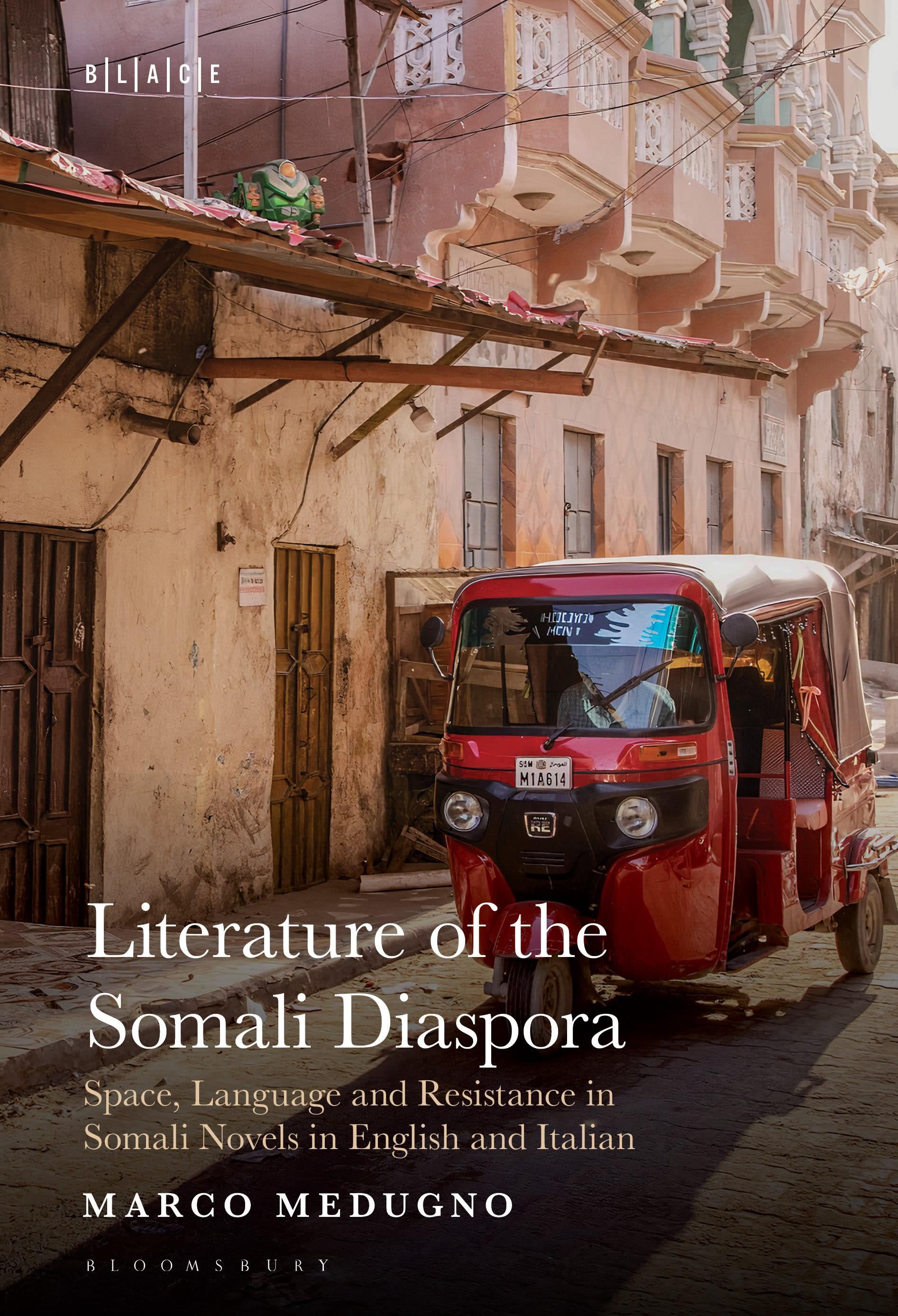
The first study of Anglophone and Italian novels by Somali diasporic authors, offering a new critical framework for multilingual and transnational analysis of Somali literature.
Building on the latest scholarship about multilingual contexts, diaspora studies and the rapidly expanding field of Italian postcolonial studies, Marco Medugno examines Somali diasporic literature with a comparative perspective. Considering works written in English and Italian, he argues that Somali diasporic authors share similar themes and aesthetics, thus creating an interliterary community within the diaspora space.
By using multilingualism as a starting point, Medugno provides significant insights into how Somali national and individual identities are constructed in diasporic, global contexts through geography, style, form, language and the re-writing of national histories emerging out of colonization and independence. Analysing acclaimed Somali novels such as Nuruddin Farah's Links and Crossbones, Igiaba Scego's Adua and Cristina Ali Farah's Little Mother, he questions any definition of 'local' as 'provincial', instead considering it a site for interrogating global concerns.
Literature of the Somali Diaspora is organized around three themes: spatiality, language and resistance help to contextualize authors, forced by the decades-long Somali Civil War, to write outside Somalia and in different languages – including Somali, Italian, English, German, Dutch and Arabic – within global literary circuits. Their work thus creates a literature not confined within national borders but an interliterary global community, a transnational and multilingual space in which they share world aesthetic ideologies, challenge and engage with literary traditions in different languages and show an interplay between diverse cultures.
Building on the latest scholarship about multilingual contexts, diaspora studies and the rapidly expanding field of Italian postcolonial studies, Marco Medugno examines Somali diasporic literature with a comparative perspective. Considering works written in English and Italian, he argues that Somali diasporic authors share similar themes and aesthetics, thus creating an interliterary community within the diaspora space.
By using multilingualism as a starting point, Medugno provides significant insights into how Somali national and individual identities are constructed in diasporic, global contexts through geography, style, form, language and the re-writing of national histories emerging out of colonization and independence. Analysing acclaimed Somali novels such as Nuruddin Farah's Links and Crossbones, Igiaba Scego's Adua and Cristina Ali Farah's Little Mother, he questions any definition of 'local' as 'provincial', instead considering it a site for interrogating global concerns.
Literature of the Somali Diaspora is organized around three themes: spatiality, language and resistance help to contextualize authors, forced by the decades-long Somali Civil War, to write outside Somalia and in different languages – including Somali, Italian, English, German, Dutch and Arabic – within global literary circuits. Their work thus creates a literature not confined within national borders but an interliterary global community, a transnational and multilingual space in which they share world aesthetic ideologies, challenge and engage with literary traditions in different languages and show an interplay between diverse cultures.
Sider: 248
Kategori: Litteraturvetenskap & Teori
e-ISBN: 9798765107508
Fraktvekt: 1.2 kg
Sendes innen: 1-2 dager
Betal enkelt med kort, Klarna, Apple Pay eller Google Pay. Ikke fornøyd? Du har alltid 14 dagers angrerett. Les mer i våre vilkår. Har du spørsmål, send oss en e-post på hello@memmo.org.
Memmo gjør det enklere å studere – uansett hvor du er i verden. Hos oss samler du pensumbøker og smarte studieverktøy på ett og samme sted: sammendrag, quizer, podkaster og flashcards. Og så Ted, din studiekompis som svarer på alt du lurer på. Over 50 000 studenter studerer allerede her – bygget for at du skal lære raskere og stresse mindre.