
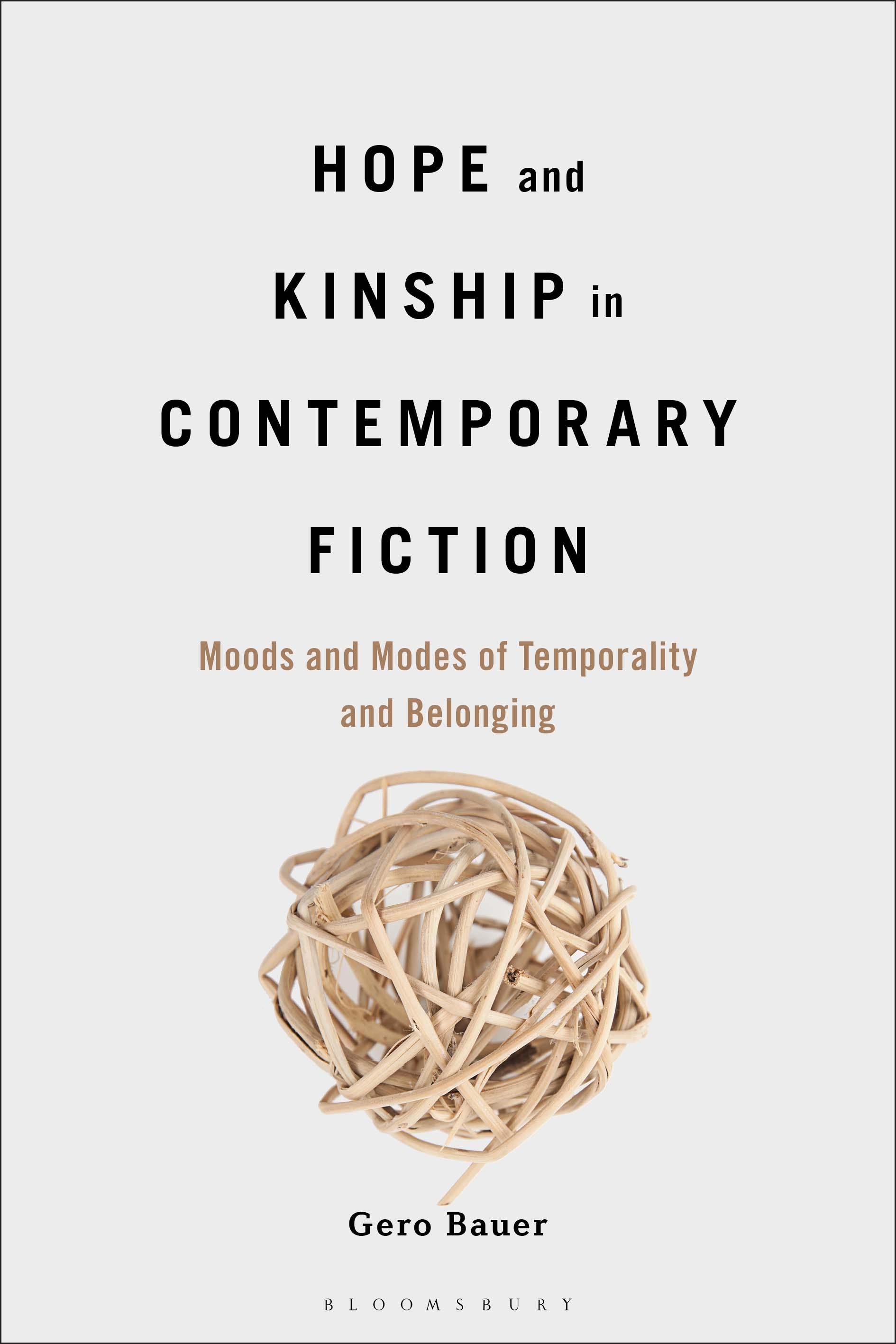
Explores the emphasis that contemporary novels, films and television series place on the present, arguing that hope emerges from the potentiality of the here and now, rather than the future, and as intimately entangled with negotiations of structures of belonging.
Taking its cue from an understanding of hope as connoting an organizing temporality, one which is often presumed to be projecting into a future, Hope and Kinship in Contemporary Fiction challenges this understanding, arguing that hope emerges in practices of relationality in the present, disentangling hope from a necessary correlation with futurity.
Through close readings of contemporary works, including The Road, The Walking Dead, Cloud Atlas, Sense8, The People in the Trees and A Little Life, Gero Bauer investigates how these texts explore structures of kinship as creative and affective practices of belonging and care that claim spaces beyond the heterosexual, reproductive nuclear family. In this context, fictional figurations of the child – often considered the bearer of the future – are of particular interest.
Through these interventions into definitions of and reflections on fictional manifestations of hope and kinship, Bauer's analyses intersect with queer theory, new materialism and postcritical approaches to literature and cultural studies, moving towards counterintuitively hopeful readings of the present moment.
Taking its cue from an understanding of hope as connoting an organizing temporality, one which is often presumed to be projecting into a future, Hope and Kinship in Contemporary Fiction challenges this understanding, arguing that hope emerges in practices of relationality in the present, disentangling hope from a necessary correlation with futurity.
Through close readings of contemporary works, including The Road, The Walking Dead, Cloud Atlas, Sense8, The People in the Trees and A Little Life, Gero Bauer investigates how these texts explore structures of kinship as creative and affective practices of belonging and care that claim spaces beyond the heterosexual, reproductive nuclear family. In this context, fictional figurations of the child – often considered the bearer of the future – are of particular interest.
Through these interventions into definitions of and reflections on fictional manifestations of hope and kinship, Bauer's analyses intersect with queer theory, new materialism and postcritical approaches to literature and cultural studies, moving towards counterintuitively hopeful readings of the present moment.
Betal enkelt med kort, Klarna, Apple Pay eller Google Pay. Ikke fornøyd? Du har alltid 14 dagers angrerett. Les mer i våre vilkår. Har du spørsmål, send oss en e-post på hello@memmo.org.
Memmo gjør det enklere å studere – uansett hvor du er i verden. Hos oss samler du pensumbøker og smarte studieverktøy på ett og samme sted: sammendrag, quizer, podkaster og flashcards. Og så Ted, din studiekompis som svarer på alt du lurer på. Over 50 000 studenter studerer allerede her – bygget for at du skal lære raskere og stresse mindre.