
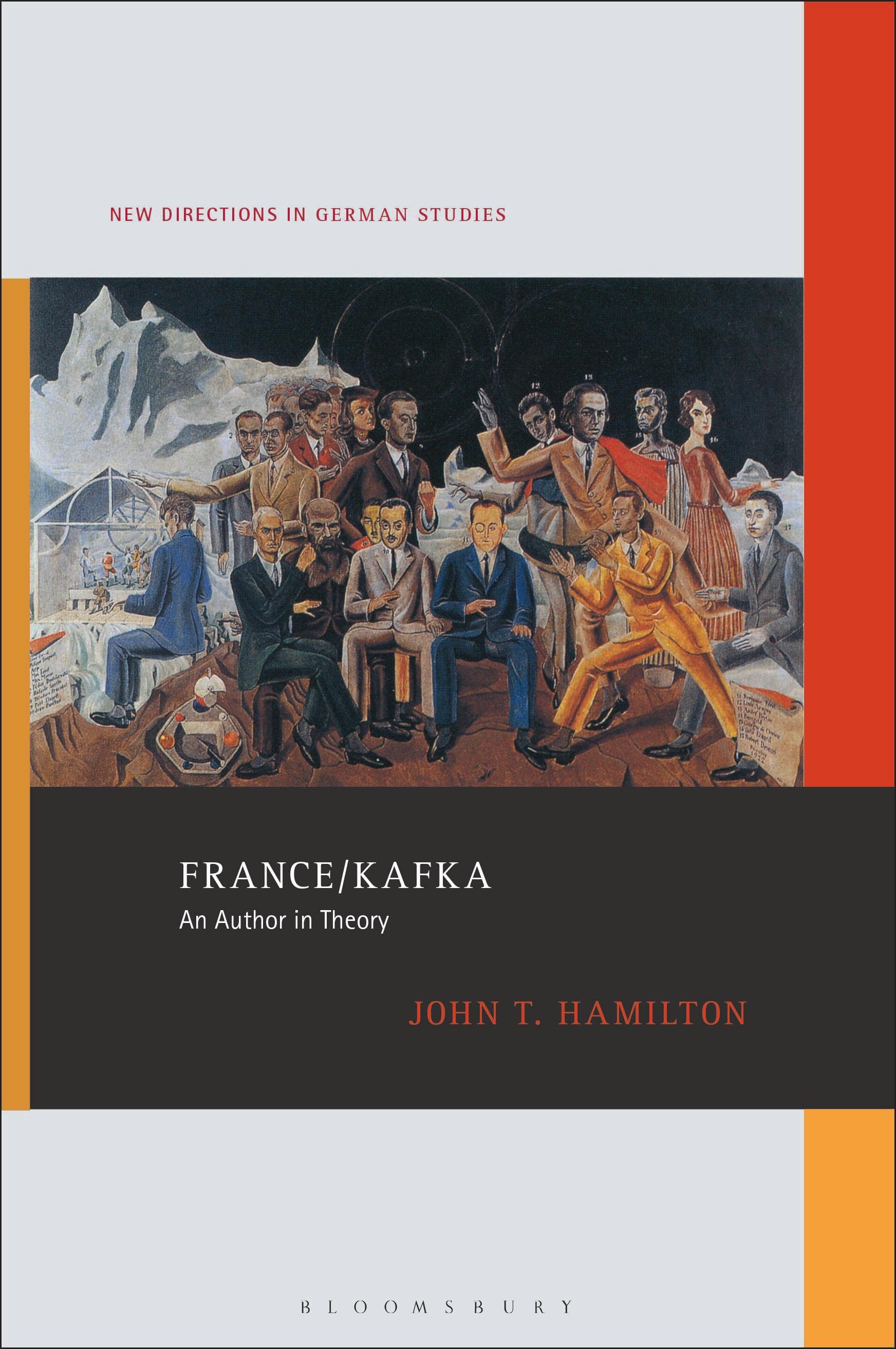
While his memory languished under Nazi censorship, Franz Kafka covertly circulated through occupied France and soon emerged as a cultural icon, read by the most influential intellectuals of the time as a prophet of the rampant bureaucracy, totalitarian oppression, and absurdity that branded the twentieth century. In tracing the history of Kafka's reception in postwar France, John T. Hamilton explores how the work of a German-Jewish writer from Prague became a modern classic capable of addressing universal themes of the human condition.
Hamilton also considers how Kafka's unique literary corpus came to stimulate reflection in diverse movements, critical approaches, and philosophical schools, from surrealism and existentialism through psychoanalysis, phenomenology, and structuralism to Marxism, deconstruction, and feminism. The story of Kafka's afterlife in Paris thus furnishes a key chapter in the unfolding of French theory, which continues to guide how we read literature and understand its relationship to the world.
Hamilton also considers how Kafka's unique literary corpus came to stimulate reflection in diverse movements, critical approaches, and philosophical schools, from surrealism and existentialism through psychoanalysis, phenomenology, and structuralism to Marxism, deconstruction, and feminism. The story of Kafka's afterlife in Paris thus furnishes a key chapter in the unfolding of French theory, which continues to guide how we read literature and understand its relationship to the world.
Betal enkelt med kort, Klarna, Apple Pay eller Google Pay. Ikke fornøyd? Du har alltid 14 dagers angrerett. Les mer i våre vilkår. Har du spørsmål, send oss en e-post på hello@memmo.org.
Memmo gjør det enklere å studere – uansett hvor du er i verden. Hos oss samler du pensumbøker og smarte studieverktøy på ett og samme sted: sammendrag, quizer, podkaster og flashcards. Og så Ted, din studiekompis som svarer på alt du lurer på. Over 50 000 studenter studerer allerede her – bygget for at du skal lære raskere og stresse mindre.