
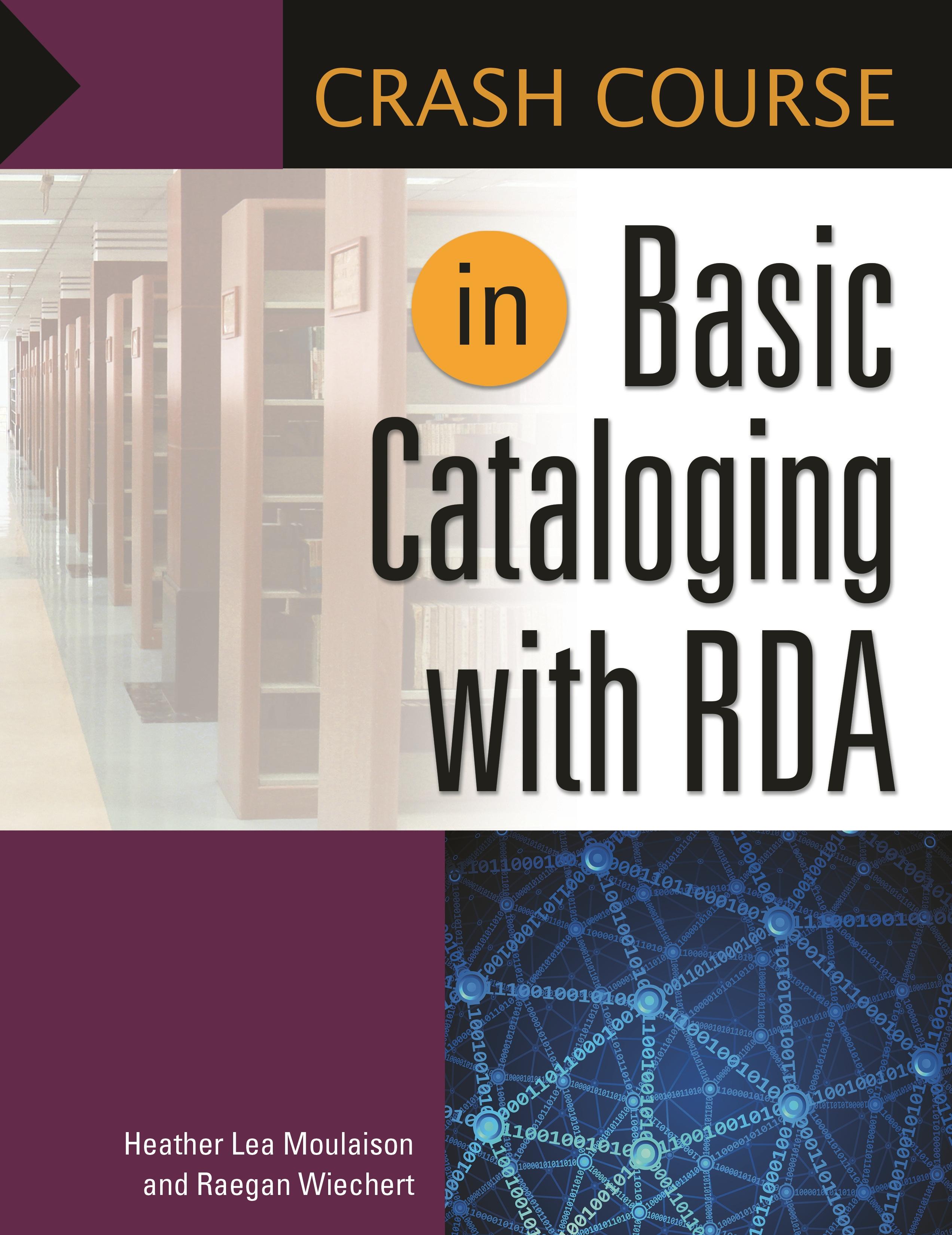
Covering tools, terminology, and the FRBR-based RDA approach to description, this book explains the current principles of organization of information and basic cataloging practices for non-catalogers, enabling readers to understand elements of the cataloging process and interact with records in a basic manner.
Organization of information and cataloging is often the most daunting task for library technicians and non-catalogers working in the library. New RDA cataloging rules can be baffling for even the more seasoned catalogers. Written by two authors with 20 years' combined experience in cataloging instruction, Crash Course in Basic Cataloging with RDA approaches current principles of organization of information and cataloging practices from a basic standpoint for non-catalogers. It makes a complex topic easy to understand and a complicated practice doable for those without the proper training and necessary experience.
The book gives readers a basic understanding of organization of information and cataloging practice, explaining how records are created and the approaches to different formats of information in libraries, including MARC records and encoding RDA cataloging records; offering assistance in applying RDA; identifying the cataloger's tools; and providing non-technical explanations for the tasks that today's catalogers do. It contains an introduction, a bibliography/webliography, and three appendices of additional resources (Cataloging Tools, Resources for Catalogers, and Sample Catalog Records).
Organization of information and cataloging is often the most daunting task for library technicians and non-catalogers working in the library. New RDA cataloging rules can be baffling for even the more seasoned catalogers. Written by two authors with 20 years' combined experience in cataloging instruction, Crash Course in Basic Cataloging with RDA approaches current principles of organization of information and cataloging practices from a basic standpoint for non-catalogers. It makes a complex topic easy to understand and a complicated practice doable for those without the proper training and necessary experience.
The book gives readers a basic understanding of organization of information and cataloging practice, explaining how records are created and the approaches to different formats of information in libraries, including MARC records and encoding RDA cataloging records; offering assistance in applying RDA; identifying the cataloger's tools; and providing non-technical explanations for the tasks that today's catalogers do. It contains an introduction, a bibliography/webliography, and three appendices of additional resources (Cataloging Tools, Resources for Catalogers, and Sample Catalog Records).
Betal enkelt med kort, Klarna, Apple Pay eller Google Pay. Ikke fornøyd? Du har alltid 14 dagers angrerett. Les mer i våre vilkår. Har du spørsmål, send oss en e-post på hello@memmo.org.
Memmo gjør det enklere å studere – uansett hvor du er i verden. Hos oss samler du pensumbøker og smarte studieverktøy på ett og samme sted: sammendrag, quizer, podkaster og flashcards. Og så Ted, din studiekompis som svarer på alt du lurer på. Over 50 000 studenter studerer allerede her – bygget for at du skal lære raskere og stresse mindre.