
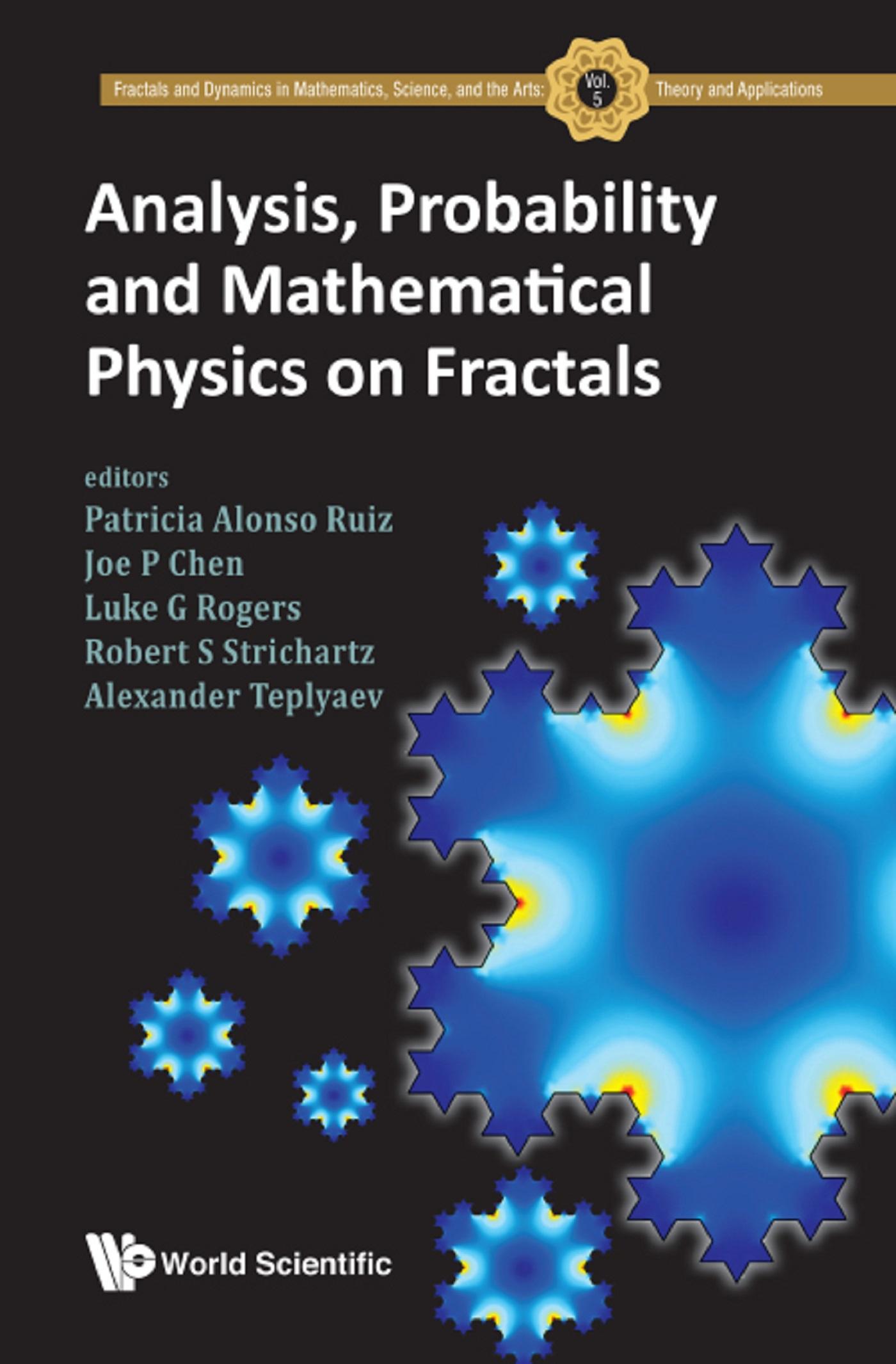
In the 50 years since Mandelbrot identified the fractality of coastlines, mathematicians and physicists have developed a rich and beautiful theory describing the interplay between analytic, geometric and probabilistic aspects of the mathematics of fractals. Using classical and abstract analytic tools developed by Cantor, Hausdorff, and Sierpinski, they have sought to address fundamental questions: How can we measure the size of a fractal set? How do waves and heat travel on irregular structures? How are analysis, geometry and stochastic processes related in the absence of Euclidean smooth structure? What new physical phenomena arise in the fractal-like settings that are ubiquitous in nature?This book introduces background and recent progress on these problems, from both established leaders in the field and early career researchers. The book gives a broad introduction to several foundational techniques in fractal mathematics, while also introducing some specific new and significant results of interest to experts, such as that waves have infinite propagation speed on fractals. It contains sufficient introductory material that it can be read by new researchers or researchers from other areas who want to learn about fractal methods and results.
Betal enkelt med kort, Klarna, Apple Pay eller Google Pay. Ikke fornøyd? Du har alltid 14 dagers angrerett. Les mer i våre vilkår. Har du spørsmål, send oss en e-post på hello@memmo.org.
Memmo gjør det enklere å studere – uansett hvor du er i verden. Hos oss samler du pensumbøker og smarte studieverktøy på ett og samme sted: sammendrag, quizer, podkaster og flashcards. Og så Ted, din studiekompis som svarer på alt du lurer på. Over 50 000 studenter studerer allerede her – bygget for at du skal lære raskere og stresse mindre.
Du vil kanskje også like
Kjøp boken0