
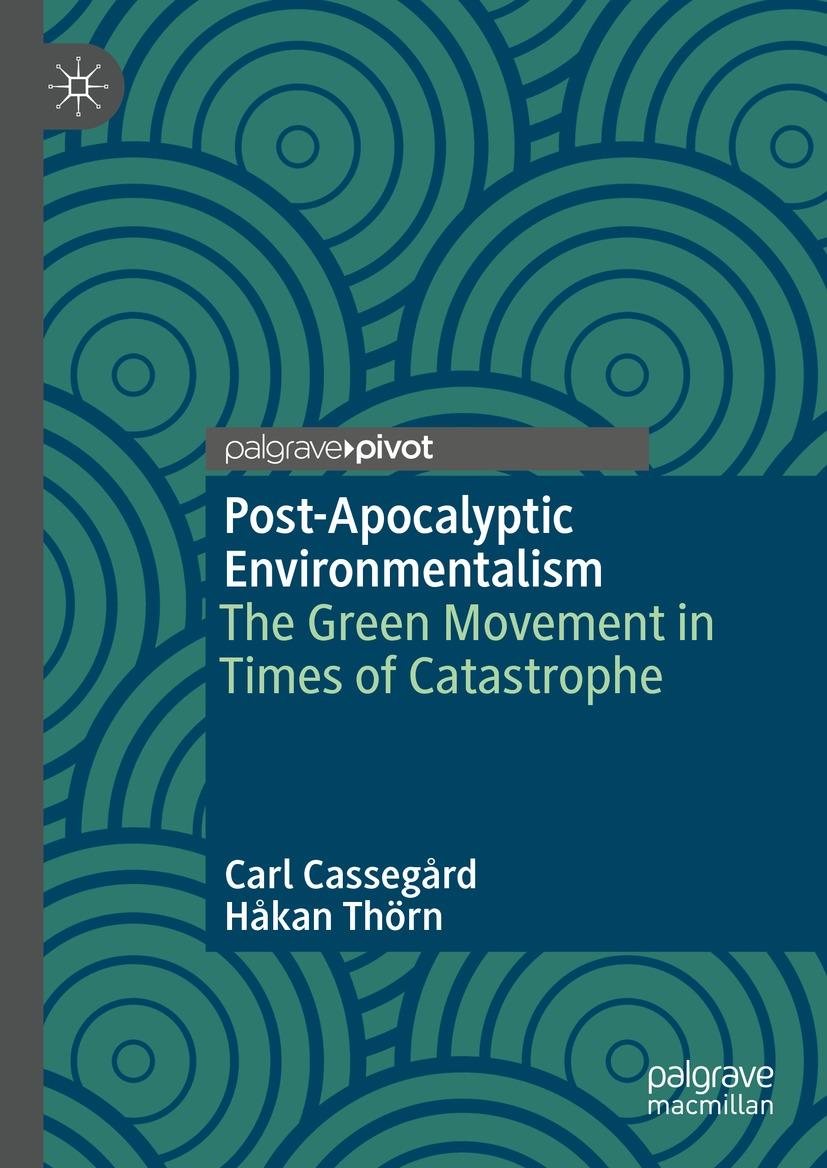
This book analyses how the environmental movement has developed three overarching narratives that co-exist and compete within it. The first is the narrative of green progress, which has been prominent from the start in environmentalist thought and which is today expressed in the idea of sustainable development and in eco-modernism. The second is the apocalyptic narrative, which urges us to act in order to avert a future catastrophe and which rose to prominence with Rachel Carson and other classics of post-war environmentalism and experienced a renaissance with the climate activism of the 2000s. The third is the postapocalyptic narrative according to which catastrophe is already an unavoidable fact. The centrepiece of the book is its discussion of the postapocalyptic narrative, which has become influential in the recent decade, especially in the wake of the disillusionment following the failed climate summit in Copenhagen 2009.
Climate change, resource exhaustion, pollution and species extinction signal that catastrophes have already become realities here and now for an enormous number of people and other lifeforms. The book probes the possibilities and limitations of the environmental movement in grappling with these issues and turning them into relevant action.
Betal enkelt med kort, Klarna, Apple Pay eller Google Pay. Ikke fornøyd? Du har alltid 14 dagers angrerett. Les mer i våre vilkår. Har du spørsmål, send oss en e-post på hello@memmo.org.
Memmo gjør det enklere å studere – uansett hvor du er i verden. Hos oss samler du pensumbøker og smarte studieverktøy på ett og samme sted: sammendrag, quizer, podkaster og flashcards. Og så Ted, din studiekompis som svarer på alt du lurer på. Over 50 000 studenter studerer allerede her – bygget for at du skal lære raskere og stresse mindre.