
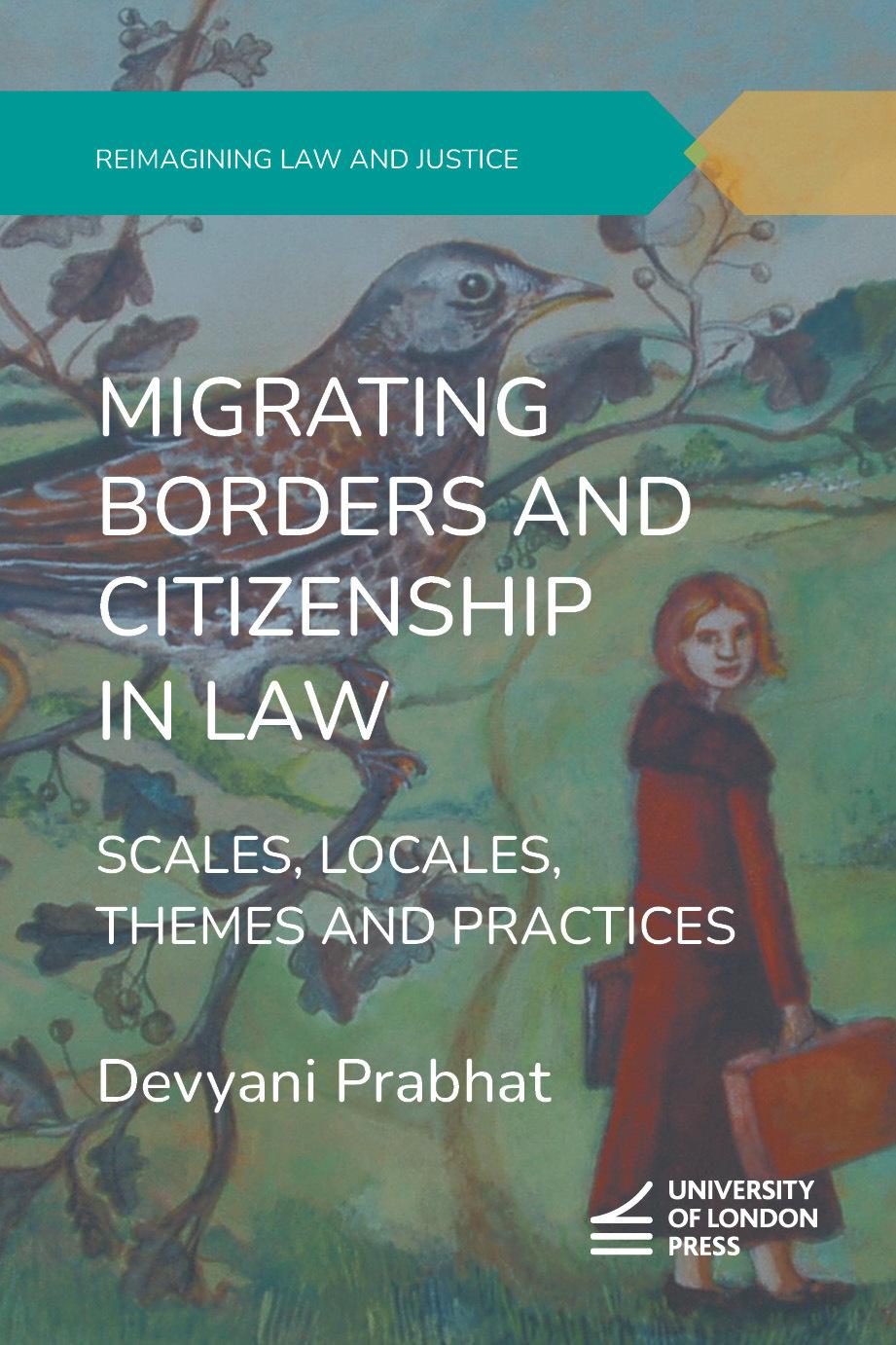
Borders not only demarcate nations and territories, but transform people into migrants. Hand-in-hand with law and law enforcement, borders create residents and foreigners. The law ascertains who crosses borders and who does not, and who remains foreign despite being within national borders.
Migrating Borders and Citizenship in Law argues that law has multiple roles and mechanisms for breathing life into borders, operating at different locales and scales (from worldwide to the nation; from the family to the workplace), and through different practices, for example, preventing entry or withholding access to resources. It examines case law, legislation and press accounts relating to several key events in recent times that have changed the legal landscape on migration control, such as the Immigration and Nationality Acts in the UK, the end of empire, the arrival of Empire Windrush, Brexit, Covid and the case of Shamima Begum. Focusing on race and ethnicity, gender and class, as well as crime and control, the book contextualises the legal debates around these historical and political developments, the question of who belongs, the consequences of behaviour for immigration status and citizenship, and the links with conduct and national security.
With its wide interdisciplinary framing of the law, drawing from sociology, politics, philosophy and history, this groundbreaking book will appeal to all readers with broad interests in migration studies.
Betal enkelt med kort, Klarna, Apple Pay eller Google Pay. Ikke fornøyd? Du har alltid 14 dagers angrerett. Les mer i våre vilkår. Har du spørsmål, send oss en e-post på hello@memmo.org.
Memmo gjør det enklere å studere – uansett hvor du er i verden. Hos oss samler du pensumbøker og smarte studieverktøy på ett og samme sted: sammendrag, quizer, podkaster og flashcards. Og så Ted, din studiekompis som svarer på alt du lurer på. Over 50 000 studenter studerer allerede her – bygget for at du skal lære raskere og stresse mindre.