
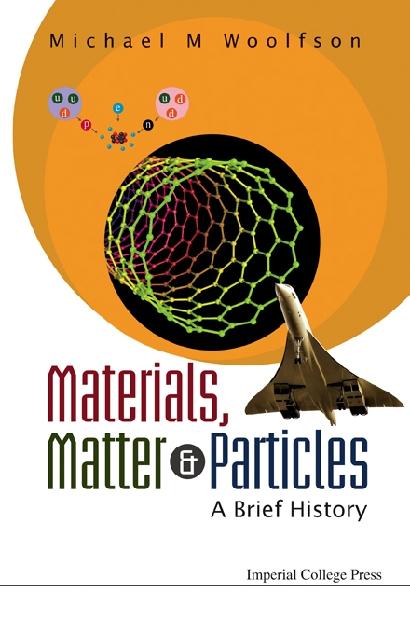
This book traces the history of ideas about the nature of matter and also the way that mankind has used material resources that the world offers. Starting with the ideas of ancient civilizations that air, earth, fire and water were the basic ingredients of all matter, it traces the development of the science of chemistry beginning within the ranks of the alchemists. First, the idea of elements grew and then the atomic nature of matter was verified. Physicists had entered the scene, showing the nature of atoms in terms of fundamental particles and then introducing the concept of wave-particle duality that altered the basic concepts of what matter was. Finally the physicists discovered a panoply of fundamental particles, some observed within atom-smashing machines and the existence of others merely postulated.In parallel with the above there is a description of various kinds of matter as it affects everyday life — including the nature of matter associated with life itself. The way that early man used the materials directly given by nature, such as stone, wood and animal skins, is followed by the use of materials requiring some process to be employed — e.g. metals which include bronze and also concrete. Some important modern materials are discussed, such as synthetic fibres and plastics and semiconductors, and potentially important future products from new developments in nanotechnology.
Betal enkelt med kort, Klarna, Apple Pay eller Google Pay. Ikke fornøyd? Du har alltid 14 dagers angrerett. Les mer i våre vilkår. Har du spørsmål, send oss en e-post på hello@memmo.org.
Memmo gjør det enklere å studere – uansett hvor du er i verden. Hos oss samler du pensumbøker og smarte studieverktøy på ett og samme sted: sammendrag, quizer, podkaster og flashcards. Og så Ted, din studiekompis som svarer på alt du lurer på. Over 50 000 studenter studerer allerede her – bygget for at du skal lære raskere og stresse mindre.
Du vil kanskje også like
Kjøp boken0