
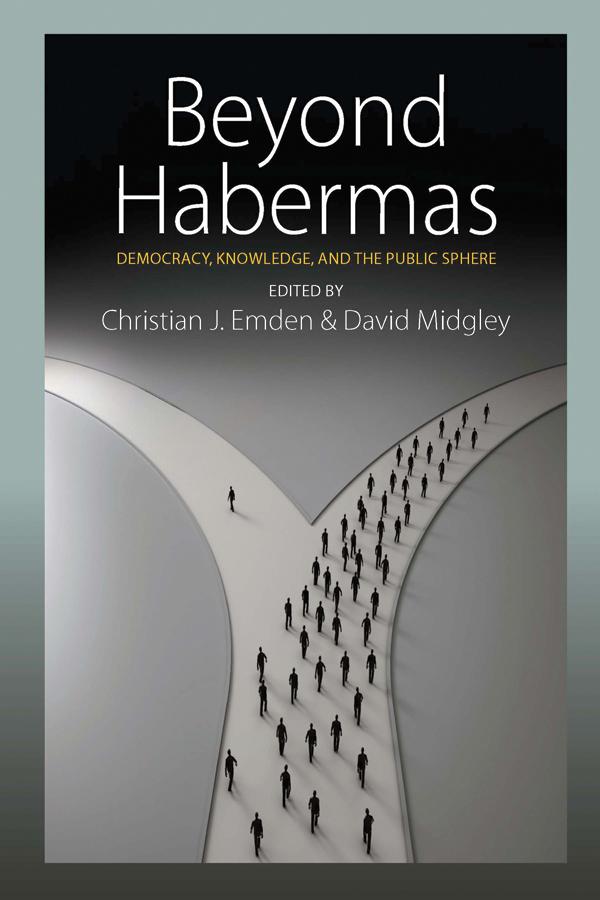
During the 1960s the German philosopher Jürgen Habermas introduced the notion of a “bourgeois public sphere” in order to describe the symbolic arena of political life and conversation that originated with the cultural institutions of the early eighteenth-century; since then the “public sphere” itself has become perhaps one of the most debated concepts at the very heart of modernity. For Habermas, the tension between the administrative power of the state, with its understanding of sovereignty, and the emerging institutions of the bourgeoisie—coffee houses, periodicals, encyclopedias, literary culture, etc.—was seen as being mediated by the public sphere, making it a symbolic site of public reasoning. This volume examines whether the “public sphere” remains a central explanatory model in the social sciences, political theory, and the humanities.
Betal enkelt med kort, Klarna, Apple Pay eller Google Pay. Ikke fornøyd? Du har alltid 14 dagers angrerett. Les mer i våre vilkår. Har du spørsmål, send oss en e-post på hello@memmo.org.
Memmo gjør det enklere å studere – uansett hvor du er i verden. Hos oss samler du pensumbøker og smarte studieverktøy på ett og samme sted: sammendrag, quizer, podkaster og flashcards. Og så Ted, din studiekompis som svarer på alt du lurer på. Over 50 000 studenter studerer allerede her – bygget for at du skal lære raskere og stresse mindre.