
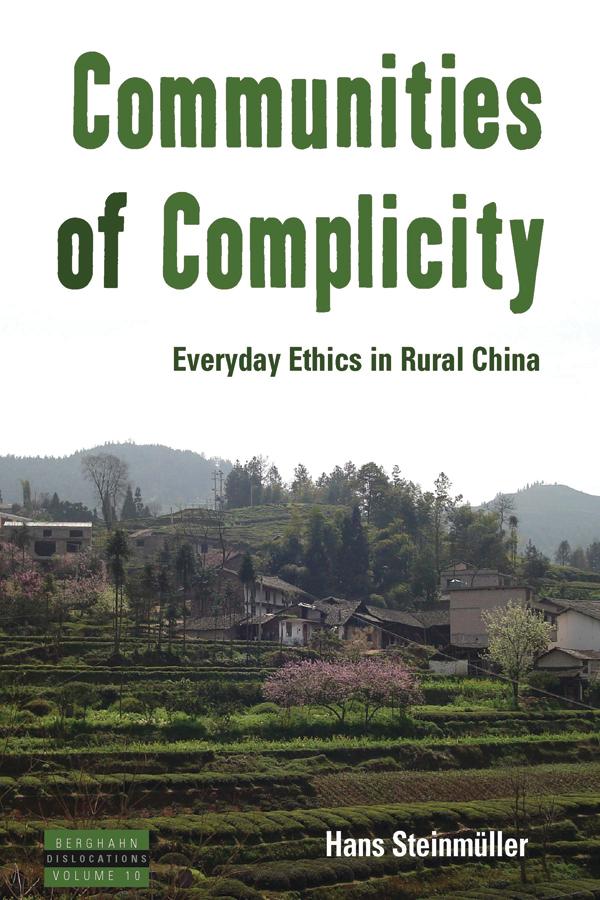
Everyday life in contemporary rural China is characterized by an increased sense of moral challenge and uncertainty. Ordinary people often find themselves caught between the moral frameworks of capitalism, Maoism and the Chinese tradition. This ethnographic study of the village of Zhongba (in Hubei Province, central China) is an attempt to grasp the ethical reflexivity of everyday life in rural China. Drawing on descriptions of village life, interspersed with targeted theoretical analyses, the author examines how ordinary people construct their own senses of their lives and their futures in everyday activities: building houses, working, celebrating marriages and funerals, gambling and dealing with local government. The villagers confront moral uncertainty; they creatively harmonize public discourse and local practice; and sometimes they resolve incoherence and unease through the use of irony. In so doing, they perform everyday ethics and re-create transient moral communities at a time of massive social dislocation.
Betal enkelt med kort, Klarna, Apple Pay eller Google Pay. Ikke fornøyd? Du har alltid 14 dagers angrerett. Les mer i våre vilkår. Har du spørsmål, send oss en e-post på hello@memmo.org.
Memmo gjør det enklere å studere – uansett hvor du er i verden. Hos oss samler du pensumbøker og smarte studieverktøy på ett og samme sted: sammendrag, quizer, podkaster og flashcards. Og så Ted, din studiekompis som svarer på alt du lurer på. Over 50 000 studenter studerer allerede her – bygget for at du skal lære raskere og stresse mindre.