
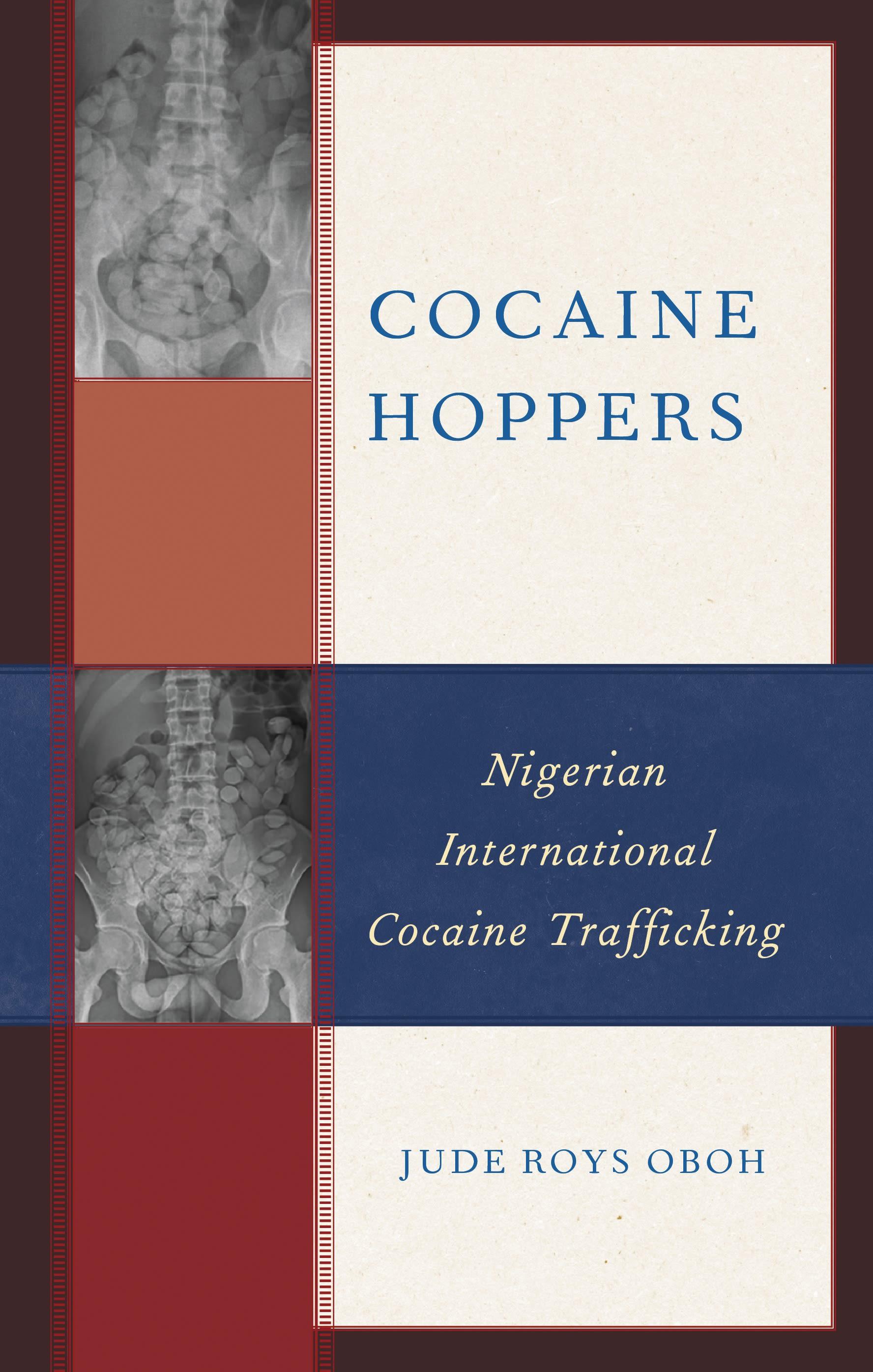
Cocaine Hoppers provides empirical evidence to explain the involvement of Nigerians in the global cocaine trade. Investigating the criminogenic environment created by the Nigerian ‘state crisis,’ Oboh traces the geographic, demographic, economic, historical, political, and cultural factors enhancing cocaine culture in Nigeria. Based on years of research, Oboh reveals this social network that relies on “reverse social capital” wherein wealth and power are achieved through illegal means solely to benefit the individual. This lively, theoretically grounded study examines the new trend of traffickers dominating the illicit cocaine trade through West Africa to destinations across the globe to provide an account of Nigerian involvement in international drug trafficking as it has never been divulged before. This book will be appreciated by criminologists, social scientists, policymakers, drug researchers and organized crime scholars. And eagerly be read by those interested in Nigeria, and problems of African immigrants, and in the international drug trafficking.
Betal enkelt med kort, Klarna, Apple Pay eller Google Pay. Ikke fornøyd? Du har alltid 14 dagers angrerett. Les mer i våre vilkår. Har du spørsmål, send oss en e-post på hello@memmo.org.
Memmo gjør det enklere å studere – uansett hvor du er i verden. Hos oss samler du pensumbøker og smarte studieverktøy på ett og samme sted: sammendrag, quizer, podkaster og flashcards. Og så Ted, din studiekompis som svarer på alt du lurer på. Over 50 000 studenter studerer allerede her – bygget for at du skal lære raskere og stresse mindre.