
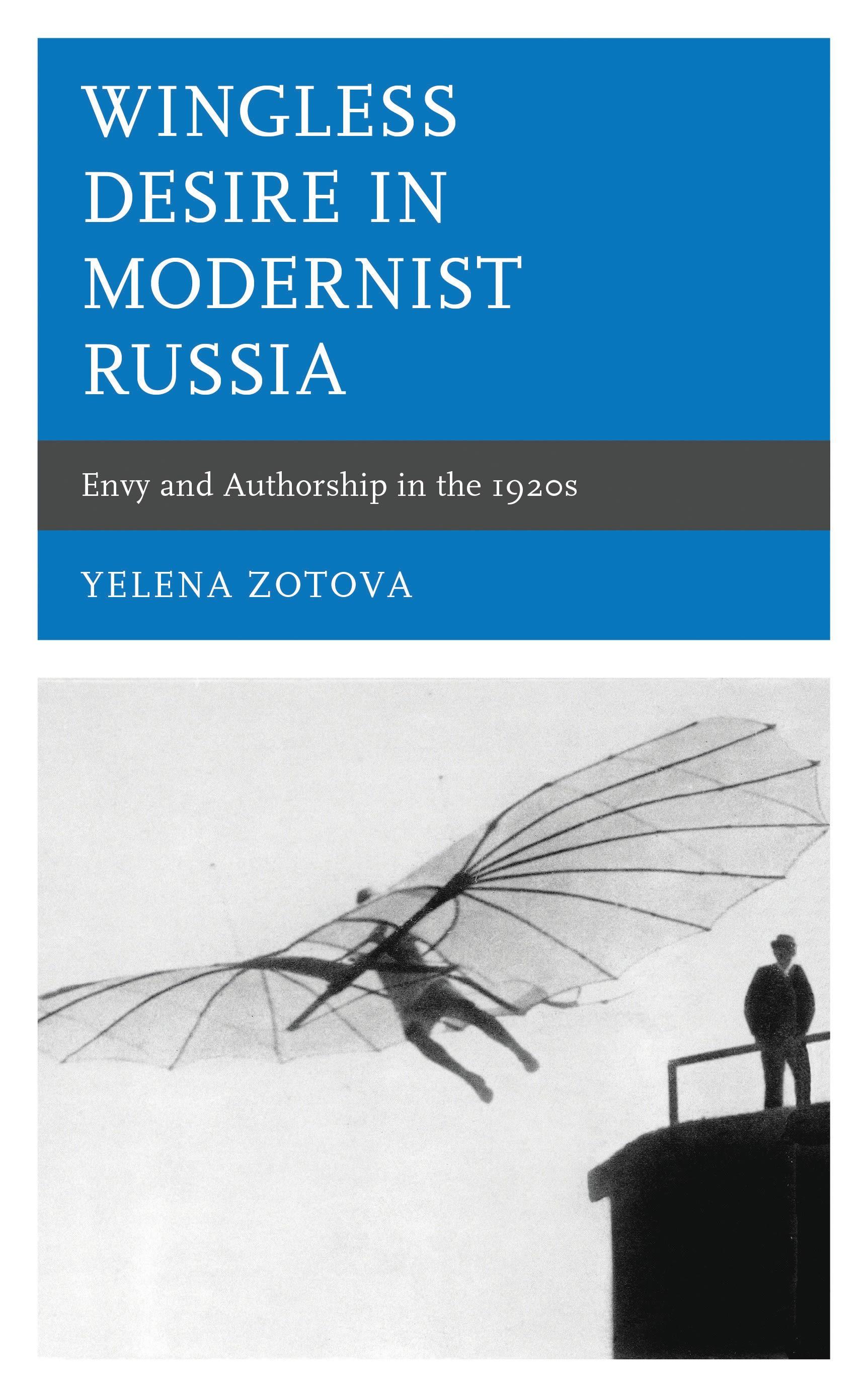
In Wingless Desire in Modernist Russia, Yelena Zotova argues that the concept of envy underwent a peculiar transformation in the Russian Modernist prose of the 1920s due to a series of radical shifts in societal values, with each subsequent change thwarting Russia’s volatile axiological hierarchy. Industriousness and austerity, inferior to playful genius in Pushkin’s “Mozart and Salieri,” became virtues, while the intrinsic value of nonutilitarian art was officially nullified by the Bolshevik state.Consequently, a new literary type emerged, and envy, described as “wingless desire” by Russia’s chief poet Alexander Pushkin, obtained new ownership as the envied became the envier. Superimposing twentieth-century theories of envy onto Mikhail Bakhtin’s “Author and Hero in the Aesthetic Activity” (1923), Zotova proposes that Salieri’s envy could be the wingless embryo of the Bakhtinian authorship.
Betal enkelt med kort, Klarna, Apple Pay eller Google Pay. Ikke fornøyd? Du har alltid 14 dagers angrerett. Les mer i våre vilkår. Har du spørsmål, send oss en e-post på hello@memmo.org.
Memmo gjør det enklere å studere – uansett hvor du er i verden. Hos oss samler du pensumbøker og smarte studieverktøy på ett og samme sted: sammendrag, quizer, podkaster og flashcards. Og så Ted, din studiekompis som svarer på alt du lurer på. Over 50 000 studenter studerer allerede her – bygget for at du skal lære raskere og stresse mindre.