
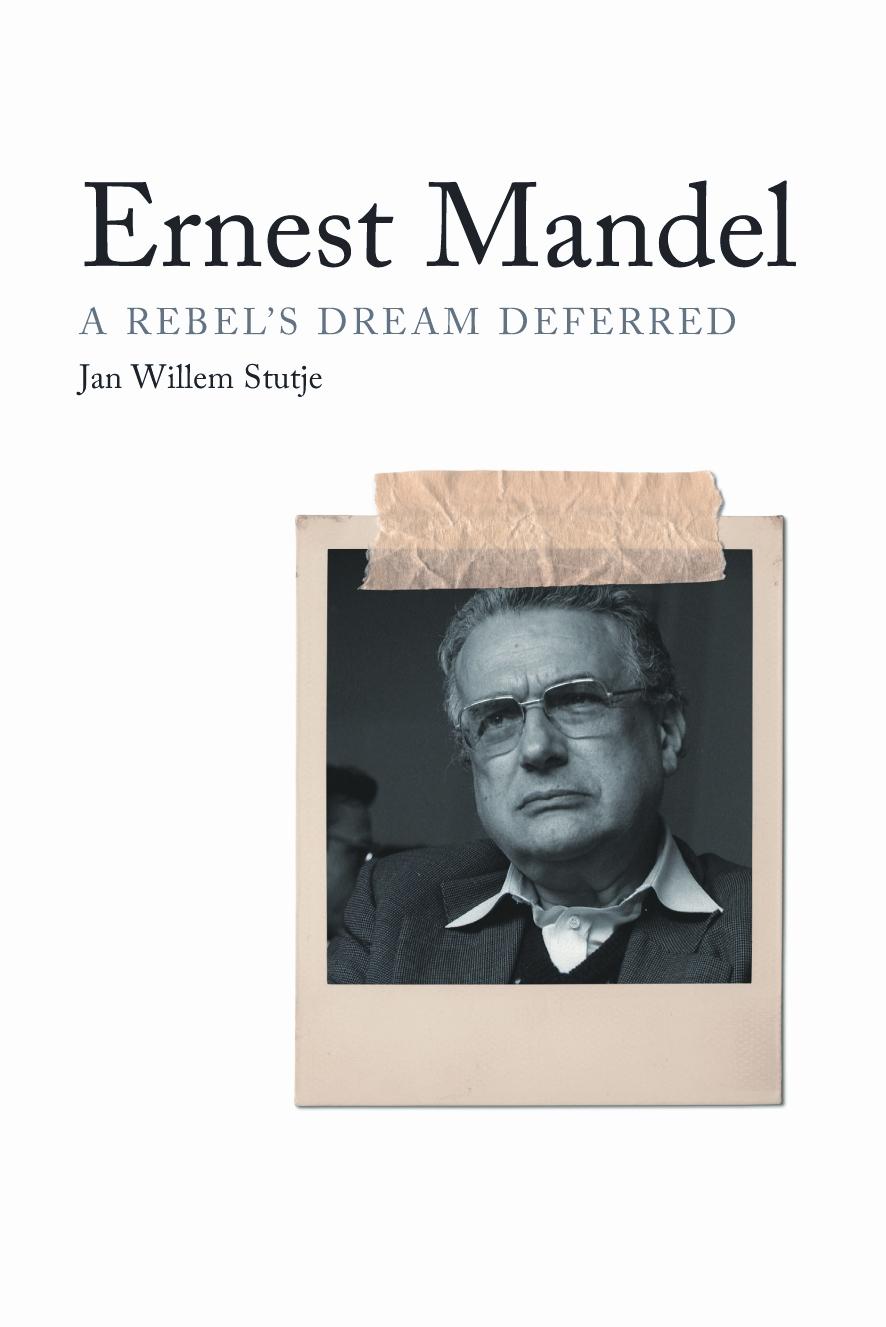
Ernest Mandel (1923-1995), was one of the most prominent anti-Stalinist Marxist intellectuals of his time. A political theorist and economist, his worldview was shaped by experiences in the Second World War as an underground political activist in Occupied Belgium and during his subsequent internment in a Nazi prison camp. Mandel's faith in human nature and in the working classes survived Nazi oppression and the murder of much of his family in the concentration camps. He retained his connection to his Jewish roots throughout his life, but believed that security and liberation for the Jewish people was best achieved through world revolution and universal emancipation rather than nationalism.
A brilliant orator in several languages, Mandel was an indefatigable revolutionary militant and a key leader in the Fourth International, and he had an enormous impact on the thought and practice of the 1968 generation. His writings range from innovative economic and political theory to a study of the Second World War and have been published in over forty languages. His last major work, Late Capitalism, had an influence that reached from the social sciences into the humanities.
Biographer Jan Willem Stutje, the first writer with access to Mandel's archives, has interviewed many of the leading figures in the story and unearthed a wealth of new material, detailing Mandel's arrest by the Nazis and his role in Latin American guerrilla warfare. He recounts Mandel's interactions with both scholars-Sartre, Ernst Bloch, Perry Anderson-and comrades-in-arms such as Che Guevara, Rudi Dutschke and Tariq Ali. The book also yields fascinating details of the man's sometimes tragic private life.
A brilliant orator in several languages, Mandel was an indefatigable revolutionary militant and a key leader in the Fourth International, and he had an enormous impact on the thought and practice of the 1968 generation. His writings range from innovative economic and political theory to a study of the Second World War and have been published in over forty languages. His last major work, Late Capitalism, had an influence that reached from the social sciences into the humanities.
Biographer Jan Willem Stutje, the first writer with access to Mandel's archives, has interviewed many of the leading figures in the story and unearthed a wealth of new material, detailing Mandel's arrest by the Nazis and his role in Latin American guerrilla warfare. He recounts Mandel's interactions with both scholars-Sartre, Ernst Bloch, Perry Anderson-and comrades-in-arms such as Che Guevara, Rudi Dutschke and Tariq Ali. The book also yields fascinating details of the man's sometimes tragic private life.
Betal enkelt med kort, Klarna, Apple Pay eller Google Pay. Ikke fornøyd? Du har alltid 14 dagers angrerett. Les mer i våre vilkår. Har du spørsmål, send oss en e-post på hello@memmo.org.
Memmo gjør det enklere å studere – uansett hvor du er i verden. Hos oss samler du pensumbøker og smarte studieverktøy på ett og samme sted: sammendrag, quizer, podkaster og flashcards. Og så Ted, din studiekompis som svarer på alt du lurer på. Over 50 000 studenter studerer allerede her – bygget for at du skal lære raskere og stresse mindre.
Du vil kanskje også like
Kjøp boken0