
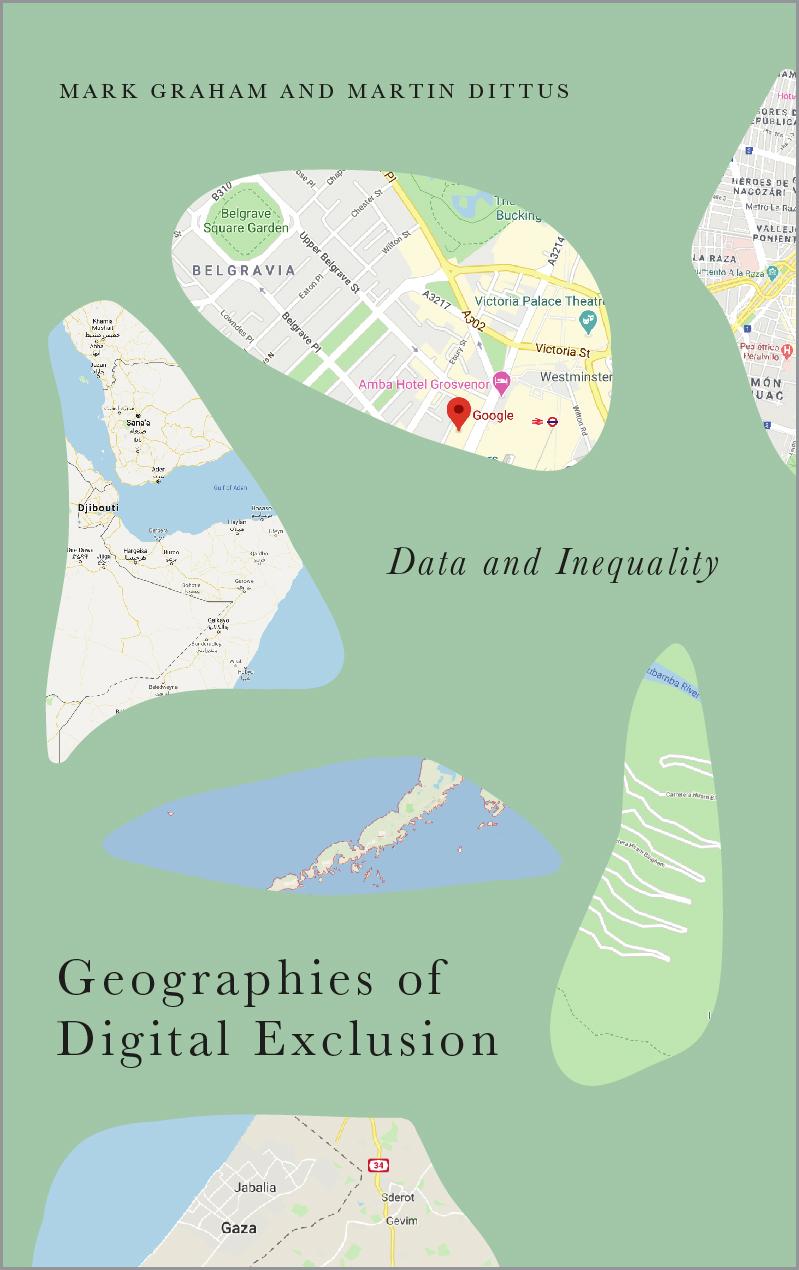
Today's urban environments are layered with data and algorithms that fundamentally shape how we perceive and move through space. But are our digitally dense environments continuing to amplify inequalities rather than alleviate them? This book looks at the key contours of information inequality, and who, what and where gets left out.
Platforms like Google Maps and Wikipedia have become important gateways to understanding the world, and yet they are characterised by significant gaps and biases, often driven by processes of exclusion. As a result, their digital augmentations tend to be refractions rather than reflections: they highlight only some facets of the world at the expense of others.
This doesn't mean that more equitable futures aren't possible. By outlining the mechanisms through which our digital and material worlds intersect, the authors conclude with a roadmap for what alternative digital geographies might look like.
Betal enkelt med kort, Klarna, Apple Pay eller Google Pay. Ikke fornøyd? Du har alltid 14 dagers angrerett. Les mer i våre vilkår. Har du spørsmål, send oss en e-post på hello@memmo.org.
Memmo gjør det enklere å studere – uansett hvor du er i verden. Hos oss samler du pensumbøker og smarte studieverktøy på ett og samme sted: sammendrag, quizer, podkaster og flashcards. Og så Ted, din studiekompis som svarer på alt du lurer på. Over 50 000 studenter studerer allerede her – bygget for at du skal lære raskere og stresse mindre.