
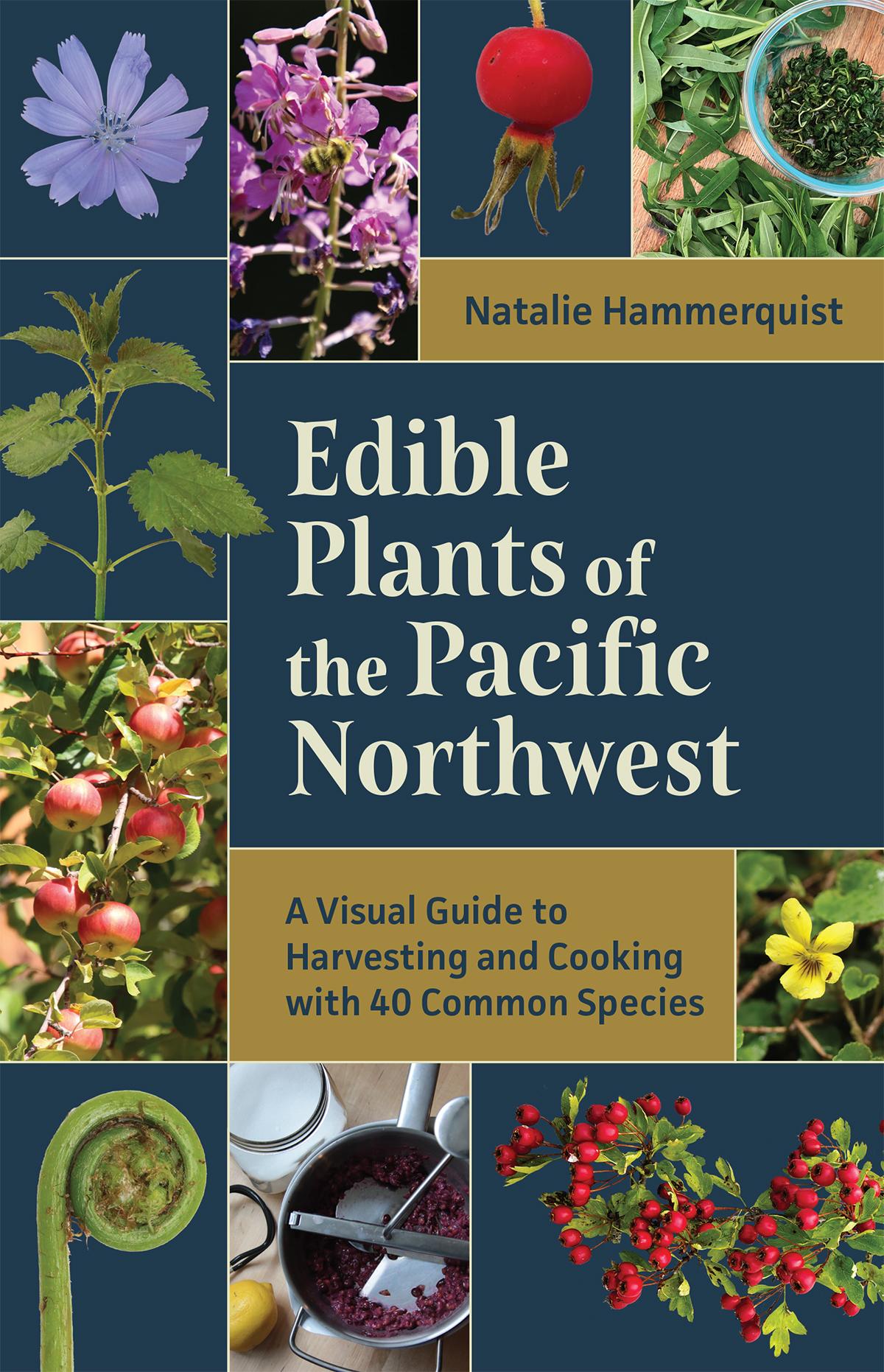
A detailed guide to the most abundant and tasty edible wild plants in the Pacific Northwest
A foraging guide that emphasizes the tastiest wild foods of the region, Edible Plants of the Pacific Northwest is a comprehensive, effective, and ethical resource for anyone interested in foraged food. Appropriate for beginners and experienced naturalists alike, this book teaches readers to identify, harvest, and cook with 40 of the region’s most common wild plants.
Expert forager and educator Natalie Hammerquist not only teaches readers to recognize the most common plants, but she also shows them how to steer clear of threatened species, as well as toxic and poisonous plants, using highly detailed visuals to make identification more immediate and accurate. Her holistic approach to wild foods incorporates both Eastern and Western traditions, as well as folk knowledge, and invites people to form relationships with the land and to act with reciprocity and care in our wild spaces.
Plants range from familiar treats like nettles and evergreen huckleberries, to lesser-known edibles like cattail, mallow, wood sorrel, and more. Recipes include local favorites like rose-petal jam, dock-seed crackers, and slow-cooker applesauce.
- Overviews of 40 edible plants with history, common names, and subspecies
- Beginner-friendly resource explores native, non-native, and invasive plants with detailed listings, recipes, plus a seasonal harvest calendar
- Full-color ID photos with detailed close-ups, as well as contextual photos of plants in the wild
A foraging guide that emphasizes the tastiest wild foods of the region, Edible Plants of the Pacific Northwest is a comprehensive, effective, and ethical resource for anyone interested in foraged food. Appropriate for beginners and experienced naturalists alike, this book teaches readers to identify, harvest, and cook with 40 of the region’s most common wild plants.
Expert forager and educator Natalie Hammerquist not only teaches readers to recognize the most common plants, but she also shows them how to steer clear of threatened species, as well as toxic and poisonous plants, using highly detailed visuals to make identification more immediate and accurate. Her holistic approach to wild foods incorporates both Eastern and Western traditions, as well as folk knowledge, and invites people to form relationships with the land and to act with reciprocity and care in our wild spaces.
Plants range from familiar treats like nettles and evergreen huckleberries, to lesser-known edibles like cattail, mallow, wood sorrel, and more. Recipes include local favorites like rose-petal jam, dock-seed crackers, and slow-cooker applesauce.
Betal enkelt med kort, Klarna, Apple Pay eller Google Pay. Ikke fornøyd? Du har alltid 14 dagers angrerett. Les mer i våre vilkår. Har du spørsmål, send oss en e-post på hello@memmo.org.
Memmo gjør det enklere å studere – uansett hvor du er i verden. Hos oss samler du pensumbøker og smarte studieverktøy på ett og samme sted: sammendrag, quizer, podkaster og flashcards. Og så Ted, din studiekompis som svarer på alt du lurer på. Over 50 000 studenter studerer allerede her – bygget for at du skal lære raskere og stresse mindre.
Du vil kanskje også like
Kjøp boken0