
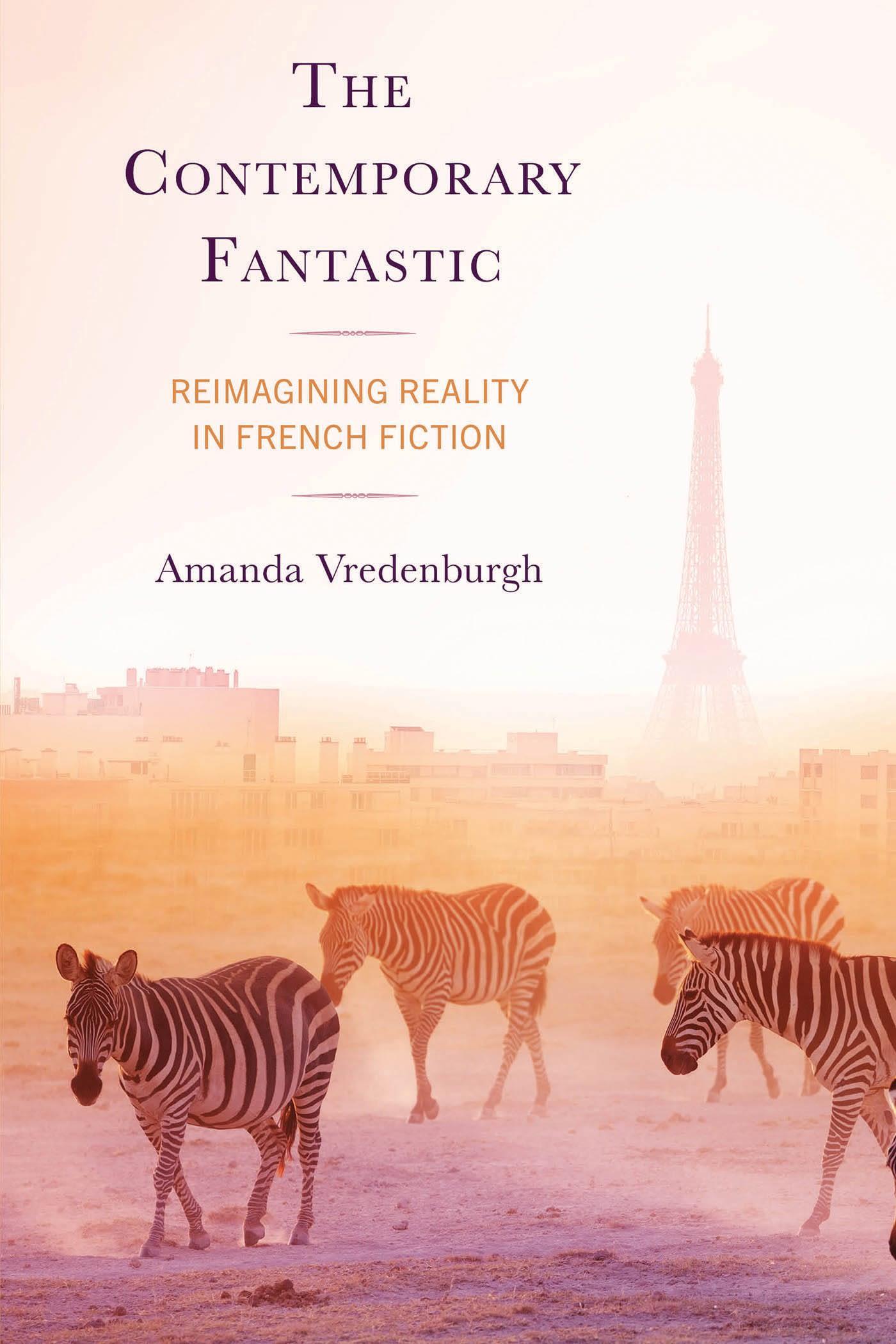
In The Contemporary Fantastic: Reimagining Reality in French Fiction, Amanda Vredenburgh identifies a contemporary shift in the use of fantastic modalities in French fiction, no longer dominated by the desire to escape the disappointments of reality nor the reader's hesitation about the reality of the novel's events, but by its innovative confrontation with the real. What could bizarre, uncanny, or supernatural literary representations have to tell us about very urgent, real issues like the environmental crisis, racism, migration, and the formation of egalitarian communities? Through close readings of a selection of novels by Marie Darrieussecq, Marie NDiaye, and Antoine Volodine, Vredenburgh argues that the ability to blur boundaries gives the fantastic both an emancipatory and reparative function in its engagement with contemporary political issues. These authors complicate categories such as human/nonhuman, French/foreign, inclusion/exclusion, and individual/community and shift the focus to the experiential and affective dimensions of these issues, ultimately allowing us to better think and feel with those that are excluded. Vredenburgh concludes that this use of the fantastic has a specific ethical stance, which encourages a community-based approach founded on compassion and inclusion.
Betal enkelt med kort, Klarna, Apple Pay eller Google Pay. Ikke fornøyd? Du har alltid 14 dagers angrerett. Les mer i våre vilkår. Har du spørsmål, send oss en e-post på hello@memmo.org.
Memmo gjør det enklere å studere – uansett hvor du er i verden. Hos oss samler du pensumbøker og smarte studieverktøy på ett og samme sted: sammendrag, quizer, podkaster og flashcards. Og så Ted, din studiekompis som svarer på alt du lurer på. Over 50 000 studenter studerer allerede her – bygget for at du skal lære raskere og stresse mindre.