
Choice 2025 Outstanding Academic Title
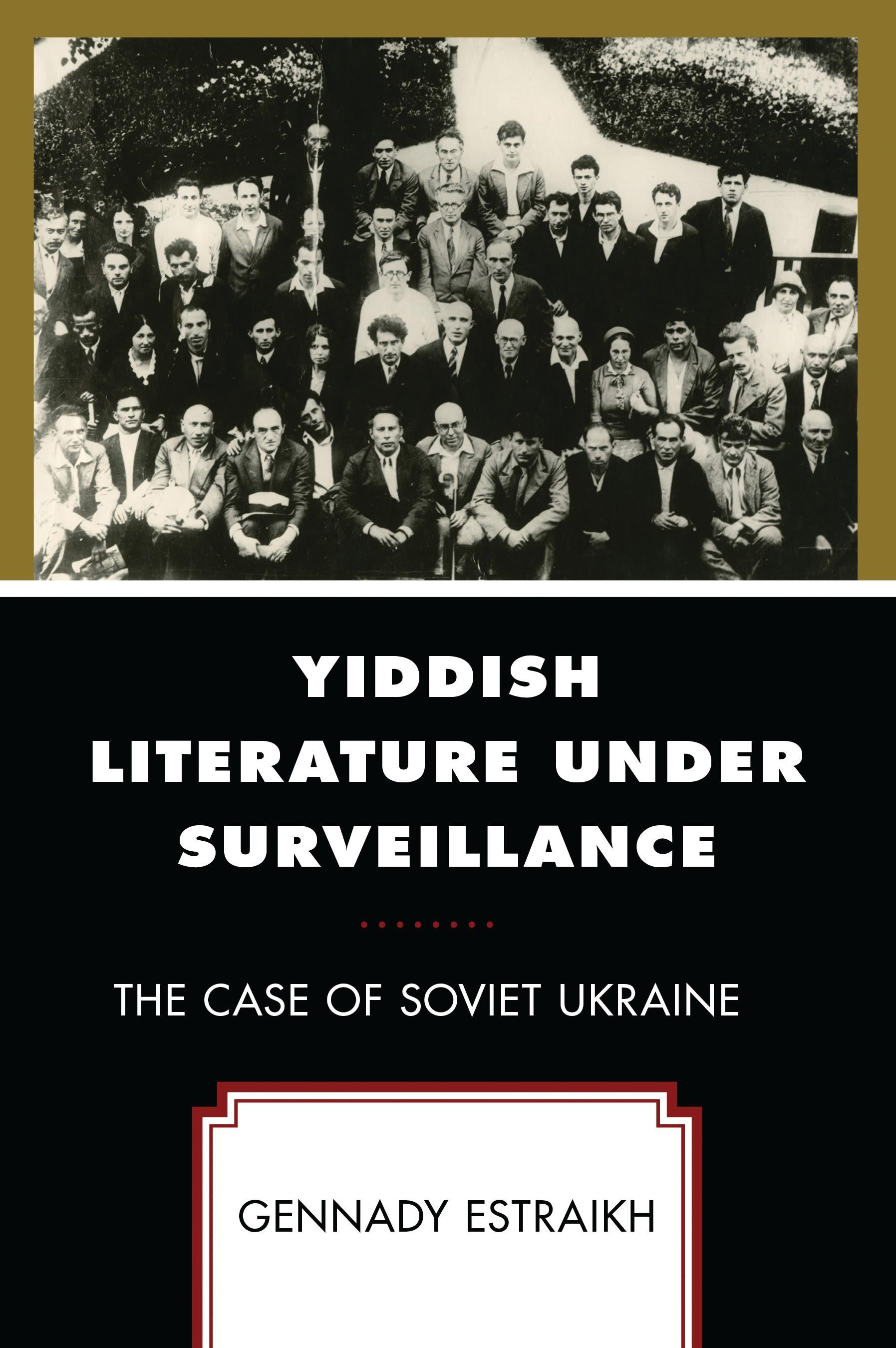
Yiddish Literature Under Surveillance: The Case of Soviet Ukraine gives a broad view on Soviet Jewish literary life, and on the repression suffered by Yiddish writers under Stalinist rule. It moves from the paradigm of writing almost exclusively about the most prominent authors, whose execution in Moscow on August 12, 1952 is tragically known as "The Night of Murdered Poets." Instead, the narrative is built as a group biography of five writers whose literary home was in Kyiv, the capital of Soviet Ukraine from 1934 to 1991. Those authors are as follows: Avrom Abchuk (arrested and executed in 1937), Chaim Gildin (arrested in 1940; died in a camp in 1943), Itsik Kipnis (arrested in 1949; released in 1955), Rive Balyasne (arrested in 1952; released in 1955), and Hirsh Bloshteyn, an enthusiastic agent of the secret police. In addition, this book is populated by other Yiddish, Ukrainian, and Russian literati. Kyiv was the primary fountainhead for Yiddish literary creativity in the early postrevolutionary period for seven decades and remained a leading Soviet Yiddish literary center, second in importance only to Moscow. Attention is paid to the victims' rehabilitation, posthumous or otherwise, in the mid-1950s and onwards.
Yiddish Literature Under Surveillance: The Case of Soviet Ukraine gives a broad view on Soviet Jewish literary life, and on the repression suffered by Yiddish writers under Stalinist rule. It moves from the paradigm of writing almost exclusively about the most prominent authors, whose execution in Moscow on August 12, 1952 is tragically known as "The Night of Murdered Poets." Instead, the narrative is built as a group biography of five writers whose literary home was in Kyiv, the capital of Soviet Ukraine from 1934 to 1991. Those authors are as follows: Avrom Abchuk (arrested and executed in 1937), Chaim Gildin (arrested in 1940; died in a camp in 1943), Itsik Kipnis (arrested in 1949; released in 1955), Rive Balyasne (arrested in 1952; released in 1955), and Hirsh Bloshteyn, an enthusiastic agent of the secret police. In addition, this book is populated by other Yiddish, Ukrainian, and Russian literati. Kyiv was the primary fountainhead for Yiddish literary creativity in the early postrevolutionary period for seven decades and remained a leading Soviet Yiddish literary center, second in importance only to Moscow. Attention is paid to the victims' rehabilitation, posthumous or otherwise, in the mid-1950s and onwards.
Betal enkelt med kort, Klarna, Apple Pay eller Google Pay. Ikke fornøyd? Du har alltid 14 dagers angrerett. Les mer i våre vilkår. Har du spørsmål, send oss en e-post på hello@memmo.org.
Memmo gjør det enklere å studere – uansett hvor du er i verden. Hos oss samler du pensumbøker og smarte studieverktøy på ett og samme sted: sammendrag, quizer, podkaster og flashcards. Og så Ted, din studiekompis som svarer på alt du lurer på. Over 50 000 studenter studerer allerede her – bygget for at du skal lære raskere og stresse mindre.