
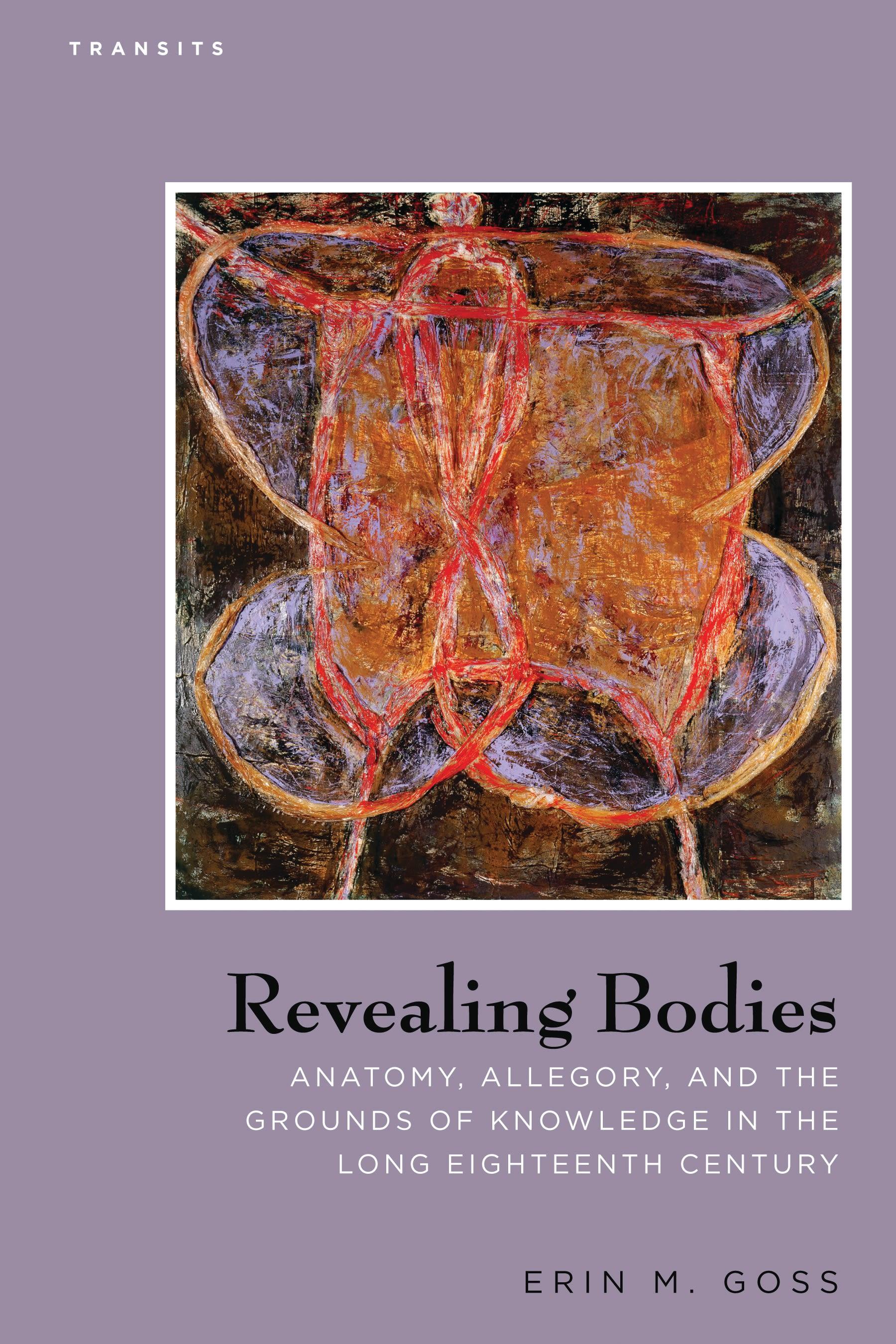
Revealing Bodies turns to the eighteenth century to ask a question with continuing relevance: what kinds of knowledge condition our understanding of our own bodies? Focusing on the tension between particularity and generality that inheres in intellectual discourse about the body, Revealing Bodies explores the disconnection between the body understood as a general form available to knowledge and the body experienced as particularly one's own. Erin Goss locates this division in contemporary bodily exhibits, such as Gunther von Hagens' Body Worlds, and in eighteenth-century anatomical discourse. Her readings of the corporeal aesthetics of Edmund Burke's Philosophical Enquiry, William Blake's cosmological depiction of the body's origin in such works as The [First] Book of Urizen, and Mary Tighe's reflection on the relation between love and the soul in Psyche; or, The Legend of Love demonstrate that the idea of the body that grounds knowledge in an understanding of anatomy emerges not as fact but as fiction. Ultimately, Revealing Bodies describes how thinkers in the eighteenth and nineteenth centuries and bodily exhibitions in the twentieth and twenty-first call upon allegorized figurations of the body to conceal the absence of any other available means to understand that which is uniquely our own: our existence as bodies in the world.
Betal enkelt med kort, Klarna, Apple Pay eller Google Pay. Ikke fornøyd? Du har alltid 14 dagers angrerett. Les mer i våre vilkår. Har du spørsmål, send oss en e-post på hello@memmo.org.
Memmo gjør det enklere å studere – uansett hvor du er i verden. Hos oss samler du pensumbøker og smarte studieverktøy på ett og samme sted: sammendrag, quizer, podkaster og flashcards. Og så Ted, din studiekompis som svarer på alt du lurer på. Over 50 000 studenter studerer allerede her – bygget for at du skal lære raskere og stresse mindre.