
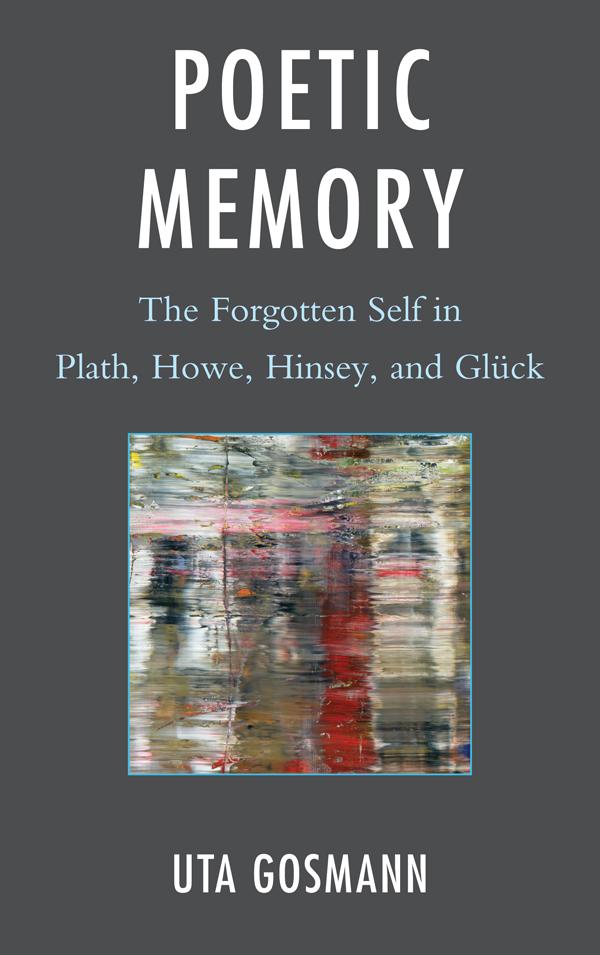
How do poems remember? What kinds of memory do poems register that factual, chronological accounts of the past are oblivious to? What is the self created by such practices of memory? To answer these questions, Uta Gosmann introduces a general theory of “poetic memory,” a manner of thinking that eschews simple-minded notions of linearity and accuracy in order to uncover the human subject’s intricate relationship to a past that it cannot fully know. Gosmann explores poetic memory in the work of Sylvia Plath, Susan Howe, Ellen Hinsey, and Louise Glück, four American poets writing in a wide range of styles and discussed here for the first time together. Drawing on psychoanalysis, memory studies, and thinkers from Nietzsche and Benjamin to Halbwachs and Kristeva, Gosmann uses these demanding poets to articulate an alternative, non-empirical model of the self in poetry.
Betal enkelt med kort, Klarna, Apple Pay eller Google Pay. Ikke fornøyd? Du har alltid 14 dagers angrerett. Les mer i våre vilkår. Har du spørsmål, send oss en e-post på hello@memmo.org.
Memmo gjør det enklere å studere – uansett hvor du er i verden. Hos oss samler du pensumbøker og smarte studieverktøy på ett og samme sted: sammendrag, quizer, podkaster og flashcards. Og så Ted, din studiekompis som svarer på alt du lurer på. Over 50 000 studenter studerer allerede her – bygget for at du skal lære raskere og stresse mindre.