
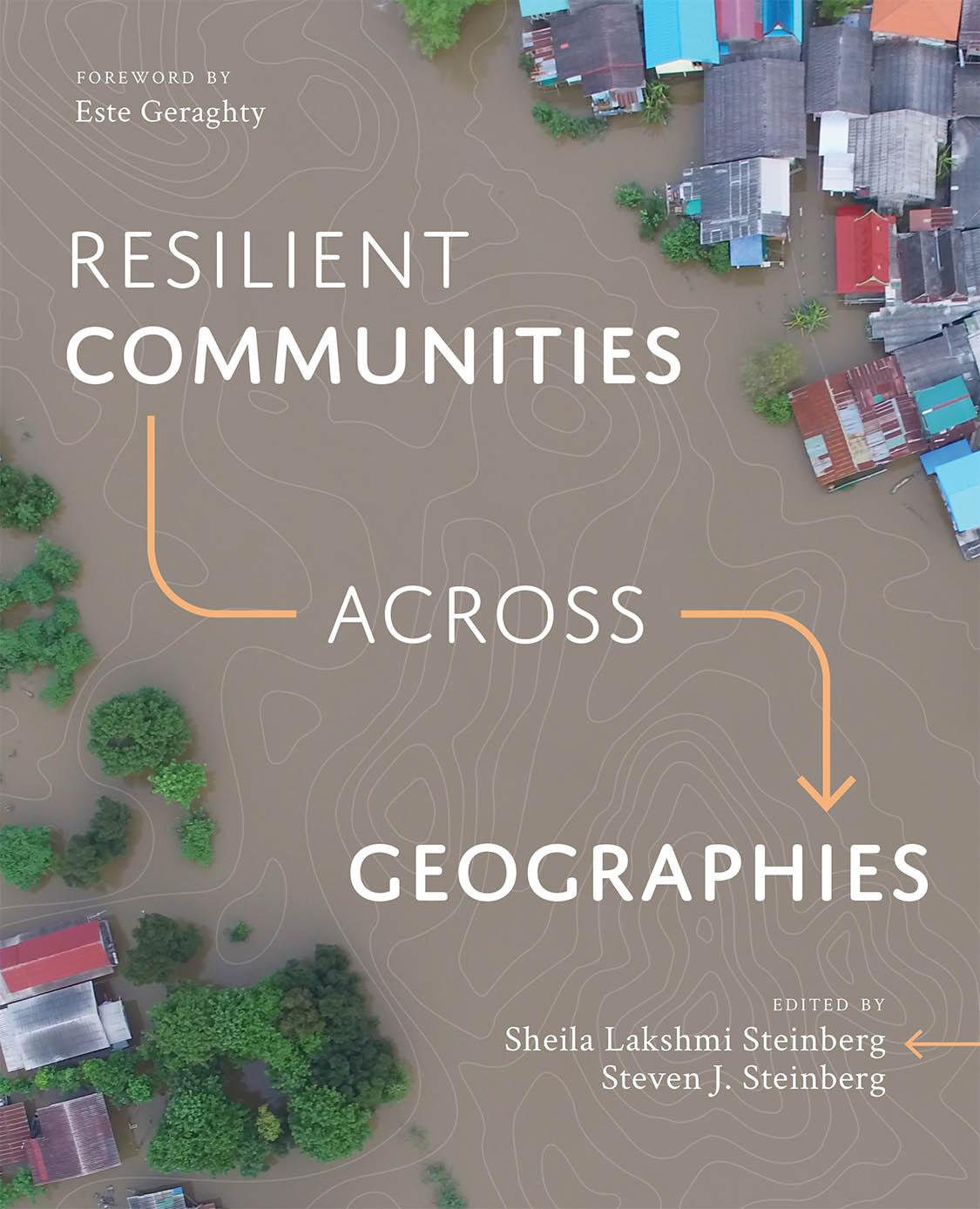
What makes a community resilient? How do we ensure its sustainable future?
Resilience—the unique ability to positively adapt to changing physical and social environments—is essential for populations of all sizes and locales in today's world of unexpected changes and increasing instances of environmental change. Communities around the globe possess unique combinations of culture, skills, and abilities in context of unique built and natural environments. Identifying and mapping community strengths and resources facilitates effective planning for where and how to focus and manage their unique cultures and characteristics.
Resilient Communities across Geographies is a collection of case studies examining the application of geographic information systems (GIS) to environmental and socioeconomic challenges for analysis, planning, and, ultimately, more resilient communities. Each chapter discusses a spatially driven approach to challenges in geography, social sciences, landscape architecture, urban planning, environmental studies, sociology, economics, migration, community development, meteorology, oceanography, and other fields.
Examples explore both the natural and cultural contexts of climate adaptation in built environments and cultural impacts in a diversity of communities. These include the Martu people of Australia, First Nation youth in Canada, and cultural diversity of indigenous Los Angeles to California farmworkers facing exposure to agricultural chemicals in their communities. Each example applies powerful GIS tools and analysis to document, support, and assess resilience across these unique geographies while recognizing the value and strength which lies in the diversity of the people who live there.
The stories shared within Resilient Communities across Geographies help readers develop an expanded sense of the power of spatial thinking, local knowledge, and engagement to address the difficult problems we collectively face in various locales.
Edited by the authors of GIS Research Methods with a foreword by Esri Chief Medical Officer Este Geraghty.
Betal enkelt med kort, Klarna, Apple Pay eller Google Pay. Ikke fornøyd? Du har alltid 14 dagers angrerett. Les mer i våre vilkår. Har du spørsmål, send oss en e-post på hello@memmo.org.
Memmo gjør det enklere å studere – uansett hvor du er i verden. Hos oss samler du pensumbøker og smarte studieverktøy på ett og samme sted: sammendrag, quizer, podkaster og flashcards. Og så Ted, din studiekompis som svarer på alt du lurer på. Over 50 000 studenter studerer allerede her – bygget for at du skal lære raskere og stresse mindre.