
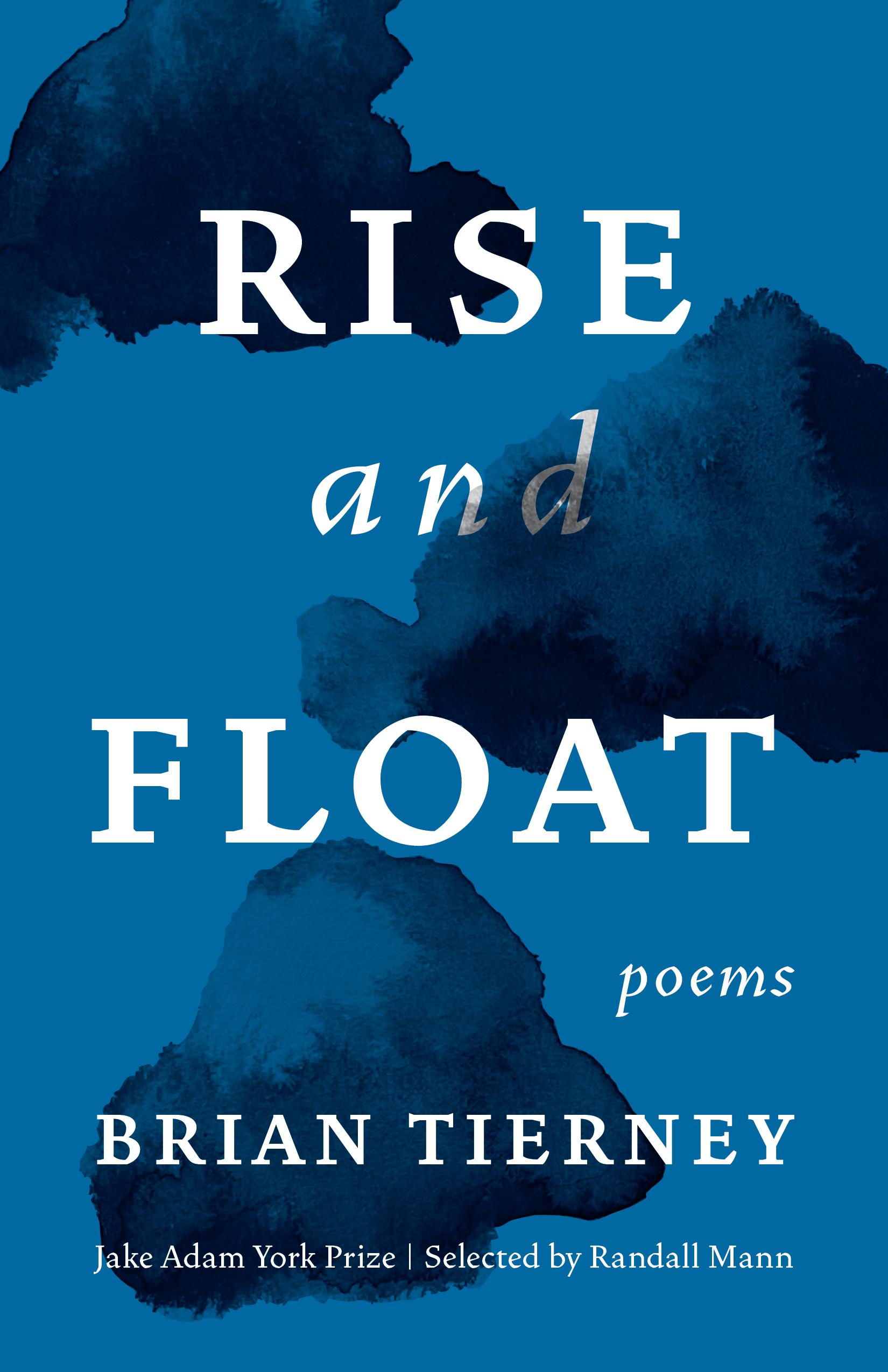
Chosen by Randall Mann as a winner of the Jake Adam York Prize, Brian Tierney’s Rise and Float depicts the journey of a poet working—remarkably, miraculously—to make our most profound, private wounds visible on the page.
With the “corpse of Frost” under his heel, Tierney reckons with a life that resists poetic rendition. The transgenerational impact of mental illness, a struggle with disordered eating, a father’s death from cancer, the loss of loved ones to addiction and suicide—all of these compound to “month after / month” and “dream / after dream” of struck-through lines. Still, Tierney commands poetry’s cathartic potential through searing images: wallpaper peeling like “wrist skin when a grater slips,” a “laugh as good as a scream,” pears as hard as a tumor. These poems commune with their ghosts not to overcome, but to release.
The course of Rise and Float is not straightforward. Where one poem gently confesses to “trying, these days, to believe again / in people,” another concedes that “defeat / sometimes is defeat / without purpose.” Look: the chair is just a chair.” But therein lies the beauty of this collection: in the proximity (and occasional overlap) of these voices, we see something alluringly, openly human. Between a boy “torn open” by dogs and a suicide, “two beautiful teenagers are kissing.” Between screams, something intimate—hope, however difficult it may be.
With the “corpse of Frost” under his heel, Tierney reckons with a life that resists poetic rendition. The transgenerational impact of mental illness, a struggle with disordered eating, a father’s death from cancer, the loss of loved ones to addiction and suicide—all of these compound to “month after / month” and “dream / after dream” of struck-through lines. Still, Tierney commands poetry’s cathartic potential through searing images: wallpaper peeling like “wrist skin when a grater slips,” a “laugh as good as a scream,” pears as hard as a tumor. These poems commune with their ghosts not to overcome, but to release.
The course of Rise and Float is not straightforward. Where one poem gently confesses to “trying, these days, to believe again / in people,” another concedes that “defeat / sometimes is defeat / without purpose.” Look: the chair is just a chair.” But therein lies the beauty of this collection: in the proximity (and occasional overlap) of these voices, we see something alluringly, openly human. Between a boy “torn open” by dogs and a suicide, “two beautiful teenagers are kissing.” Between screams, something intimate—hope, however difficult it may be.
Betal enkelt med kort, Klarna, Apple Pay eller Google Pay. Ikke fornøyd? Du har alltid 14 dagers angrerett. Les mer i våre vilkår. Har du spørsmål, send oss en e-post på hello@memmo.org.
Memmo gjør det enklere å studere – uansett hvor du er i verden. Hos oss samler du pensumbøker og smarte studieverktøy på ett og samme sted: sammendrag, quizer, podkaster og flashcards. Og så Ted, din studiekompis som svarer på alt du lurer på. Over 50 000 studenter studerer allerede her – bygget for at du skal lære raskere og stresse mindre.
Du vil kanskje også like
Kjøp boken0