
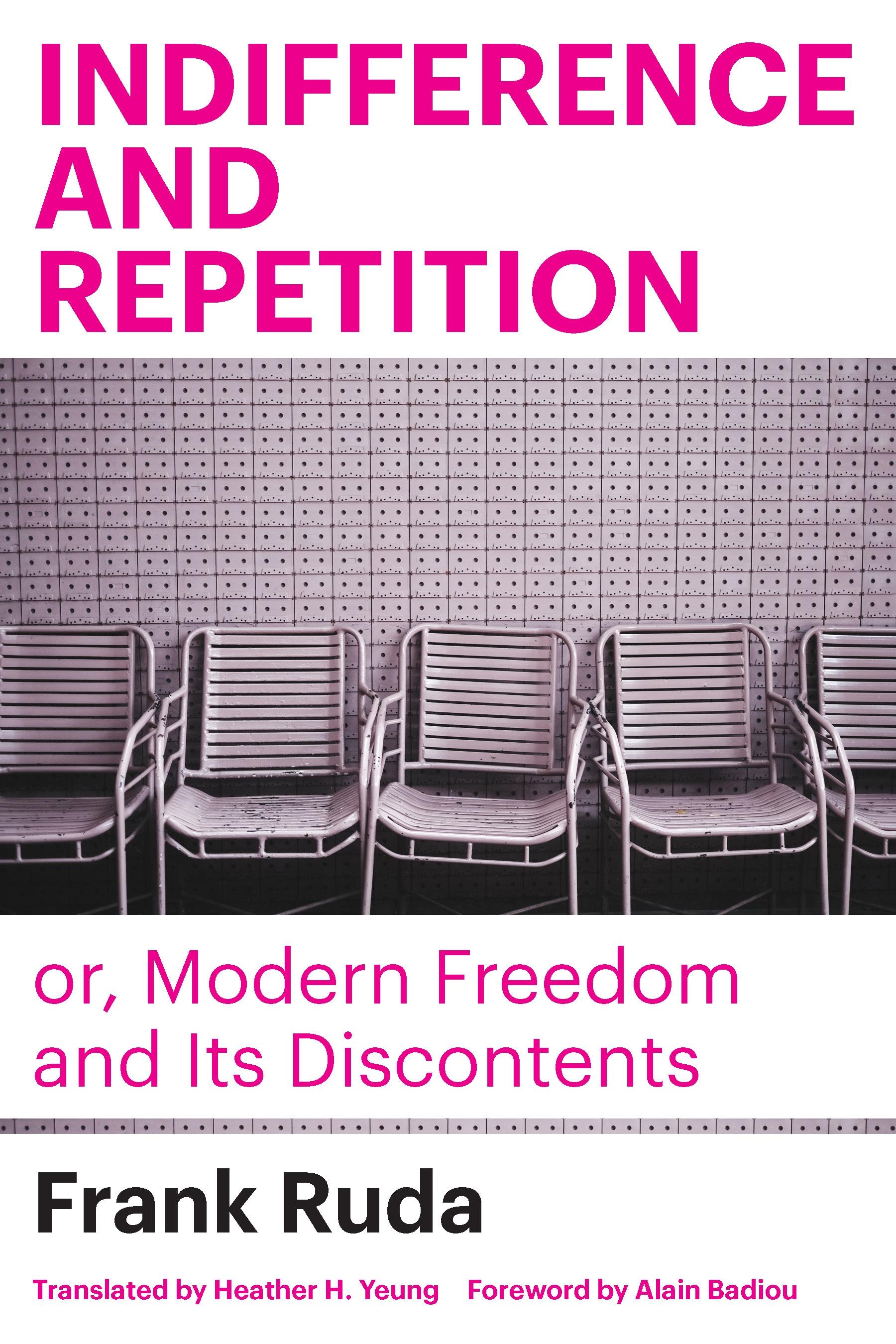
In capitalism human beings act as if they are mere animals. So we hear repeatedly in the history of modern philosophy. Indifference and Repetition examines how modern philosophy, largely coextensive with a particular boost in capitalism’s development, registers the reductive and regressive tendencies produced by capitalism’s effect on individuals and society.
Ruda examines a problem that has invisibly been shaping the history of modern, especially rationalist philosophical thought, a problem of misunderstanding freedom. Thinkers like Descartes, Kant, Hegel, and Marx claim that there are conceptions and interpretations of freedom that lead the subjects of these interpretations to no longer act and think freely. They are often unwillingly led into unfreedom. It is thus possible that even “freedom” enslaves. Modern philosophical rationalism, whose conceptual genealogy the books traces and unfolds, assigns a name to this peculiar form of domination by means of freedom: indifference. Indifference is a name for the assumption that freedom is something that human beings have: a given, a natural possession. When we think freedom is natural or a possession we lose freedom. Modern philosophy, Ruda shows, takes its shape through repeated attacks on freedom as indifference; it is the owl that begins its flight, so that the days of unfreedom will turn to dusk.
Betal enkelt med kort, Klarna, Apple Pay eller Google Pay. Ikke fornøyd? Du har alltid 14 dagers angrerett. Les mer i våre vilkår. Har du spørsmål, send oss en e-post på hello@memmo.org.
Memmo gjør det enklere å studere – uansett hvor du er i verden. Hos oss samler du pensumbøker og smarte studieverktøy på ett og samme sted: sammendrag, quizer, podkaster og flashcards. Og så Ted, din studiekompis som svarer på alt du lurer på. Over 50 000 studenter studerer allerede her – bygget for at du skal lære raskere og stresse mindre.