
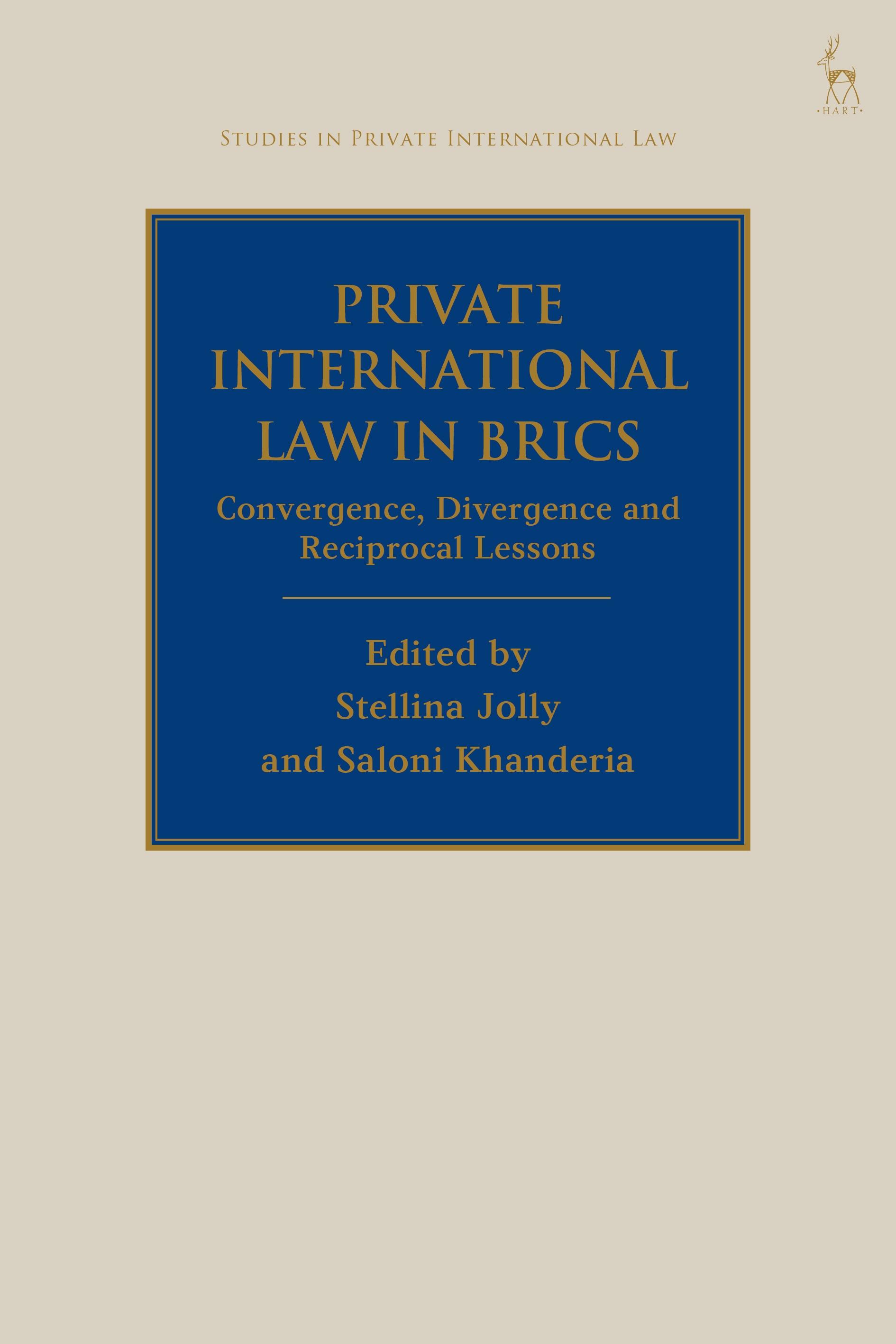
This book examines the convergences, divergences and reciprocal lessons that the BRICS countries (Brazil, Russia, India, China and South Africa) share with one another in developing the principles of private international law.
The chapters provide a thematic understanding of the cornerstones of private international law in each of the BRICS countries: namely, (1) the procedure to initiate claims in civil and commercial matters, (2) the law that would govern such matters in litigation and arbitration, as well as (3) the mechanism to recognise and enforce foreign judgments and arbitral awards.
Written by leading private international law scholars and practitioners, the chapters draw on domestic legislation and its interpretation through cases decided by the courts in each of these emerging economies, and explicitly cover the rules applicable in contractual and non-contractual concerns and issues of choice of court agreements. Issues around marriage, divorce, matrimonial property, succession and surrogacy are also addressed, considering the implication of such aspects through the increased movement of persons.
The book is a useful comparative resource for the governments of the BRICS countries, legislators, traders, academics, researchers and students looking for an in-depth discussion of the reciprocal lessons that these countries may have to offer one another on these issues.
The chapters provide a thematic understanding of the cornerstones of private international law in each of the BRICS countries: namely, (1) the procedure to initiate claims in civil and commercial matters, (2) the law that would govern such matters in litigation and arbitration, as well as (3) the mechanism to recognise and enforce foreign judgments and arbitral awards.
Written by leading private international law scholars and practitioners, the chapters draw on domestic legislation and its interpretation through cases decided by the courts in each of these emerging economies, and explicitly cover the rules applicable in contractual and non-contractual concerns and issues of choice of court agreements. Issues around marriage, divorce, matrimonial property, succession and surrogacy are also addressed, considering the implication of such aspects through the increased movement of persons.
The book is a useful comparative resource for the governments of the BRICS countries, legislators, traders, academics, researchers and students looking for an in-depth discussion of the reciprocal lessons that these countries may have to offer one another on these issues.
Betal enkelt med kort, Klarna, Apple Pay eller Google Pay. Ikke fornøyd? Du har alltid 14 dagers angrerett. Les mer i våre vilkår. Har du spørsmål, send oss en e-post på hello@memmo.org.
Memmo gjør det enklere å studere – uansett hvor du er i verden. Hos oss samler du pensumbøker og smarte studieverktøy på ett og samme sted: sammendrag, quizer, podkaster og flashcards. Og så Ted, din studiekompis som svarer på alt du lurer på. Over 50 000 studenter studerer allerede her – bygget for at du skal lære raskere og stresse mindre.