
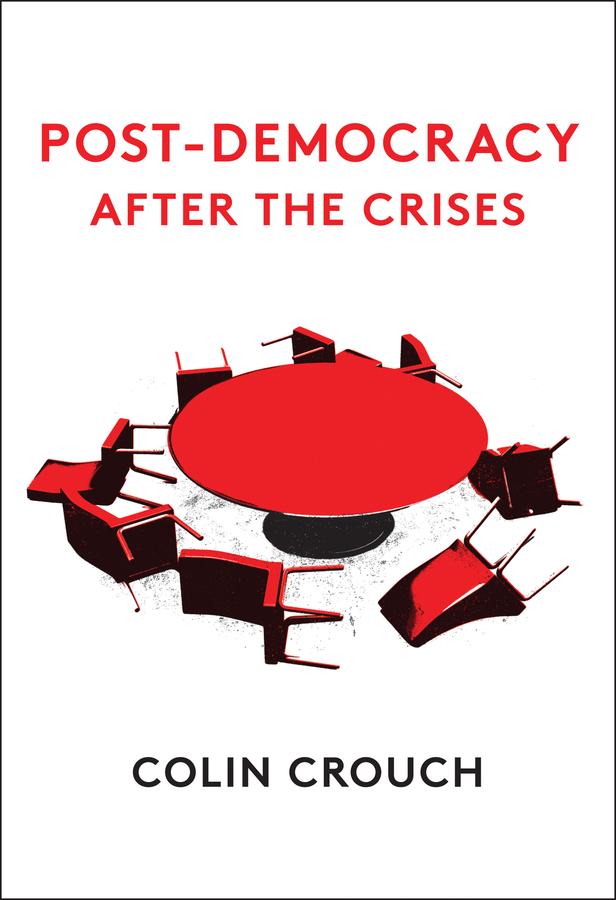
In Post-Democracy (Polity, 2004) Colin Crouch argued that behind the façade of strong institutions, democracy in many advanced societies was being hollowed out, its big events becoming empty rituals as power passed increasingly to circles of wealthy business elites and an ever-more isolated political class.
Crouch’s provocative argument has in many ways been vindicated by recent events, but these have also highlighted some weaknesses of the original thesis and shown that the situation today is even worse. The global financial deregulation that was the jewel in the crown of wealthy elite lobbying brought us the financial crisis and helped stimulate xenophobic movements which no longer accept the priority of institutions that safeguard democracy, like the rule of law. The rise of social media has enabled a handful of very rich individuals and institutions to target vast numbers of messages at citizens, giving a false impression of debate that is really stage-managed from a small number of concealed sources. Crouch evaluates the implications of these and other developments for his original thesis, arguing that while much of his thesis remains sound, he had under-estimated the value of institutions which are vital to the support of a democratic order. He also confronts the challenge of populists who seem to echo the complaints of Post-Democracy but whose pessimistic nostalgia brings an anti-democratic brew of hatred, exclusion and violence.
Crouch’s provocative argument has in many ways been vindicated by recent events, but these have also highlighted some weaknesses of the original thesis and shown that the situation today is even worse. The global financial deregulation that was the jewel in the crown of wealthy elite lobbying brought us the financial crisis and helped stimulate xenophobic movements which no longer accept the priority of institutions that safeguard democracy, like the rule of law. The rise of social media has enabled a handful of very rich individuals and institutions to target vast numbers of messages at citizens, giving a false impression of debate that is really stage-managed from a small number of concealed sources. Crouch evaluates the implications of these and other developments for his original thesis, arguing that while much of his thesis remains sound, he had under-estimated the value of institutions which are vital to the support of a democratic order. He also confronts the challenge of populists who seem to echo the complaints of Post-Democracy but whose pessimistic nostalgia brings an anti-democratic brew of hatred, exclusion and violence.
Betal enkelt med kort, Klarna, Apple Pay eller Google Pay. Ikke fornøyd? Du har alltid 14 dagers angrerett. Les mer i våre vilkår. Har du spørsmål, send oss en e-post på hello@memmo.org.
Memmo gjør det enklere å studere – uansett hvor du er i verden. Hos oss samler du pensumbøker og smarte studieverktøy på ett og samme sted: sammendrag, quizer, podkaster og flashcards. Og så Ted, din studiekompis som svarer på alt du lurer på. Over 50 000 studenter studerer allerede her – bygget for at du skal lære raskere og stresse mindre.
Du vil kanskje også like
Kjøp boken0