
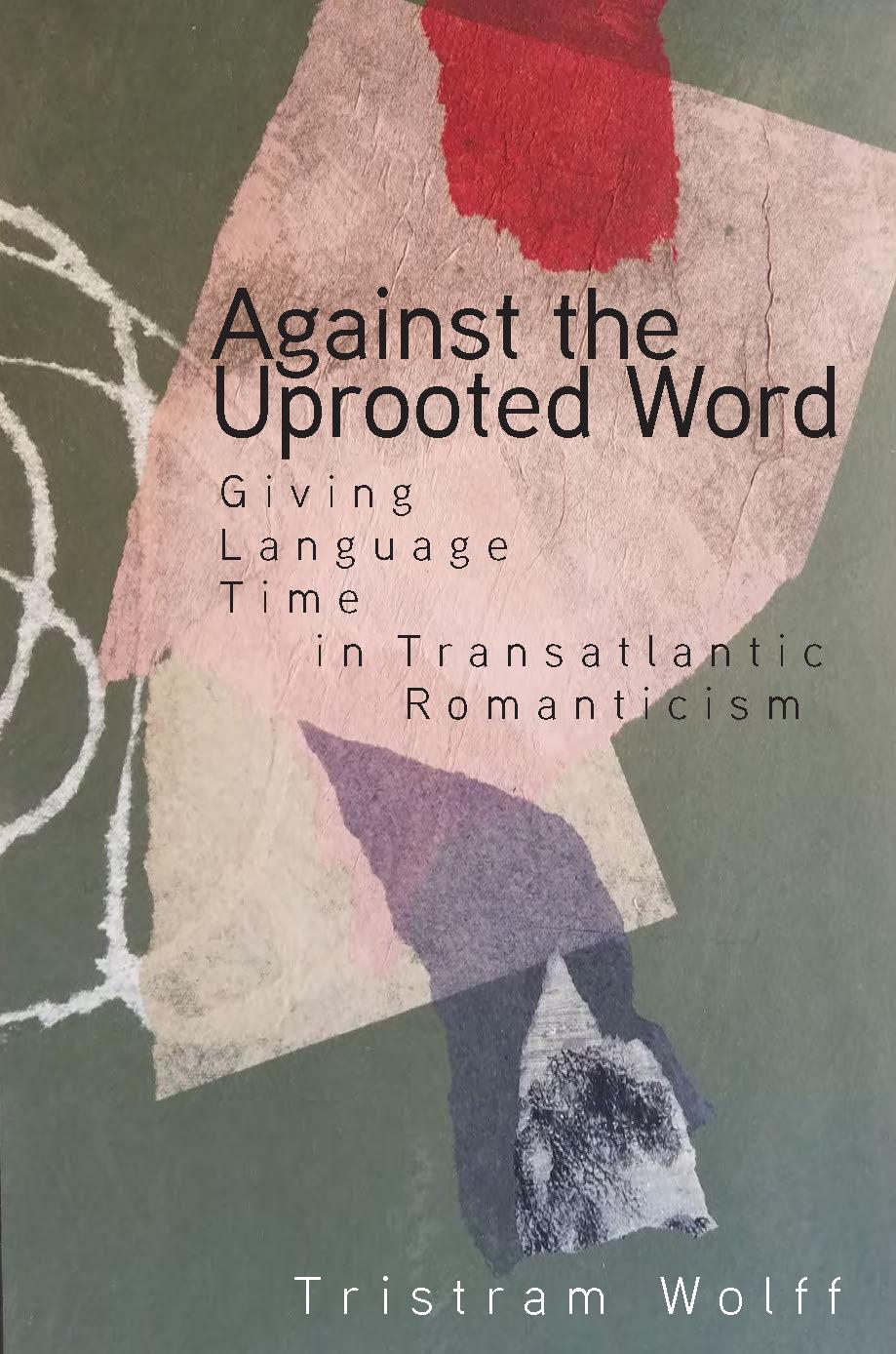
In this revisionist account of romantic-era poetry and language philosophy, Tristram Wolff recovers vibrant ways of thinking language and nature together.
Wolff argues that well-known writers including Phillis Wheatley Peters, William Blake, William Wordsworth, and Henry David Thoreau offer a radical chronopolitics in reaction to the "uprooted word," or the formal analytic used to classify languages in progressive time according to a primitivist timeline of history and a hierarchy of civilization. Before the bad naturalisms of nineteenth-century race science could harden language into place as a metric of social difference, poets and thinkers try to soften, thicken, deepen, and dissolve it. This naturalizing tendency makes language more difficult to uproot from its active formation in the lives of its speakers. And its "gray romanticism" simultaneously gives language different kinds of time—most strikingly, the deep time of geologic form—to forestall the hardening of time into progress.
Reorienting romantic studies to consider colonialism's pervasive effects on theories of language origin, Wolff shows us the ambivalent position of romantics in this history. His reparative reading makes visible language's ability to reimagine social forms.
Betal enkelt med kort, Klarna, Apple Pay eller Google Pay. Ikke fornøyd? Du har alltid 14 dagers angrerett. Les mer i våre vilkår. Har du spørsmål, send oss en e-post på hello@memmo.org.
Memmo gjør det enklere å studere – uansett hvor du er i verden. Hos oss samler du pensumbøker og smarte studieverktøy på ett og samme sted: sammendrag, quizer, podkaster og flashcards. Og så Ted, din studiekompis som svarer på alt du lurer på. Over 50 000 studenter studerer allerede her – bygget for at du skal lære raskere og stresse mindre.