
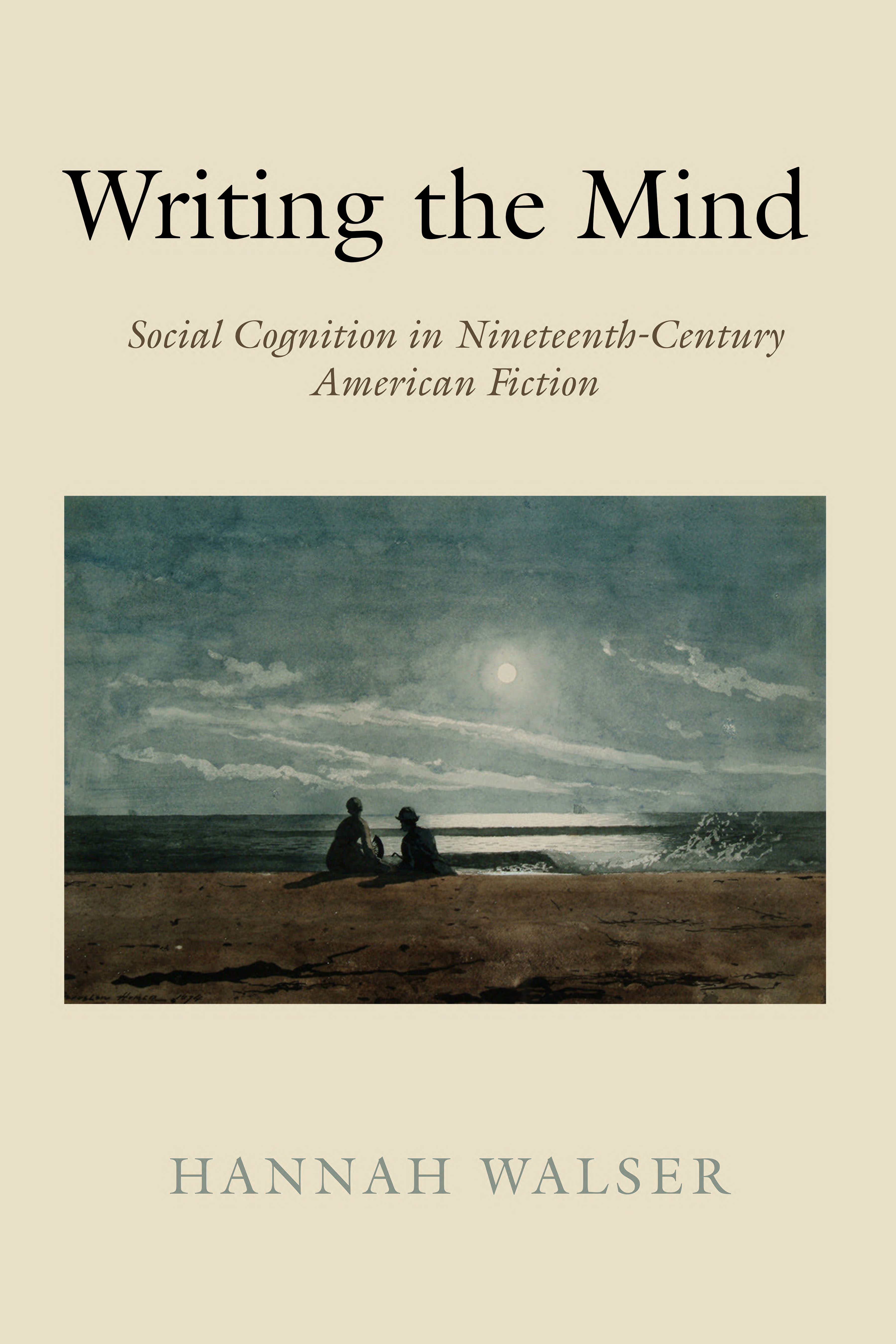
Novels are often said to help us understand how others think—especially when those others are profoundly different from us. When interpreting a character's behavior, readers are believed to make use of "Theory of Mind," the general human capacity to attribute mental states to other people. In many well-known nineteenth-century American novels, however, characters behave in ways that are opaque to readers, other characters, and even themselves, undermining efforts to explain their actions in terms of mental states like beliefs and intentions.
Writing the Mind dives into these unintelligible moments to map the weaknesses of Theory of Mind and explore alternative frameworks for interpreting behavior. Through readings of authors such as Charles Brockden Brown, Herman Melville, Martin Delany, Harriet Beecher Stowe, Charles Chesnutt, and Mark Twain, Hannah Walser explains how experimental models of cognition lead to some of the strangest formal features of canonical American texts. These authors' attempts to found social life on something other than mental states not only invite us to revise our assumptions about the centrality of mind reading and empathy to the novel as a form; they can also help us understand more contemporary concepts in social cognition, including gaslighting and learned helplessness, with more conceptual rigor and historical depth.
Betal enkelt med kort, Klarna, Apple Pay eller Google Pay. Ikke fornøyd? Du har alltid 14 dagers angrerett. Les mer i våre vilkår. Har du spørsmål, send oss en e-post på hello@memmo.org.
Memmo gjør det enklere å studere – uansett hvor du er i verden. Hos oss samler du pensumbøker og smarte studieverktøy på ett og samme sted: sammendrag, quizer, podkaster og flashcards. Og så Ted, din studiekompis som svarer på alt du lurer på. Over 50 000 studenter studerer allerede her – bygget for at du skal lære raskere og stresse mindre.