
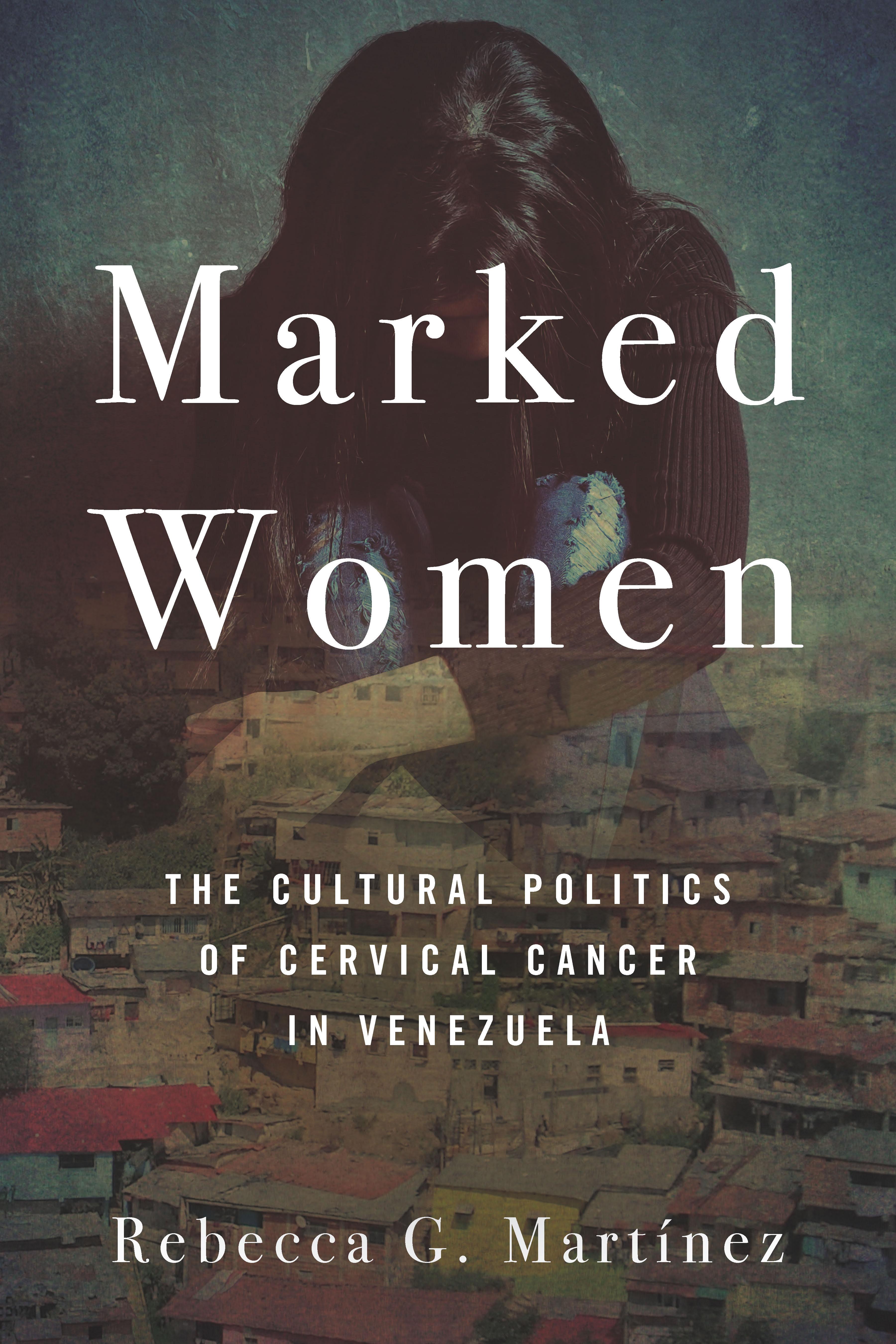
Cervical cancer is the third leading cause of death among women in Venezuela, with poor and working-class women bearing the brunt of it. Doctors and public health officials regard promiscuity and poor hygiene—coded indicators for low class, low culture, and bad morals—as risk factors for the disease.
Drawing on in-depth fieldwork conducted in two oncology hospitals in Caracas, Marked Women is an ethnography of women's experiences with cervical cancer, the doctors and nurses who treat them, and the public health officials and administrators who set up intervention programs to combat the disease. Rebecca G. Martínez contextualizes patient-doctor interactions within a historical arc of Venezuelan nationalism, modernity, neoliberalism, and Chavismo to understand the scientific, social, and political discourses surrounding the disease. The women, marked as deviant for their sexual transgressions, are not only characterized as engaging in unhygienic, uncultured, and promiscuous behaviors, but also become embodiments of these very behaviors. Ultimately, Marked Women explores how epidemiological risk is a socially, culturally, and historically embedded process—and how this enables cervical cancer to stigmatize women as socially marginal, burdens on society, and threats to the "health" of the modern nation.
Betal enkelt med kort, Klarna, Apple Pay eller Google Pay. Ikke fornøyd? Du har alltid 14 dagers angrerett. Les mer i våre vilkår. Har du spørsmål, send oss en e-post på hello@memmo.org.
Memmo gjør det enklere å studere – uansett hvor du er i verden. Hos oss samler du pensumbøker og smarte studieverktøy på ett og samme sted: sammendrag, quizer, podkaster og flashcards. Og så Ted, din studiekompis som svarer på alt du lurer på. Over 50 000 studenter studerer allerede her – bygget for at du skal lære raskere og stresse mindre.