
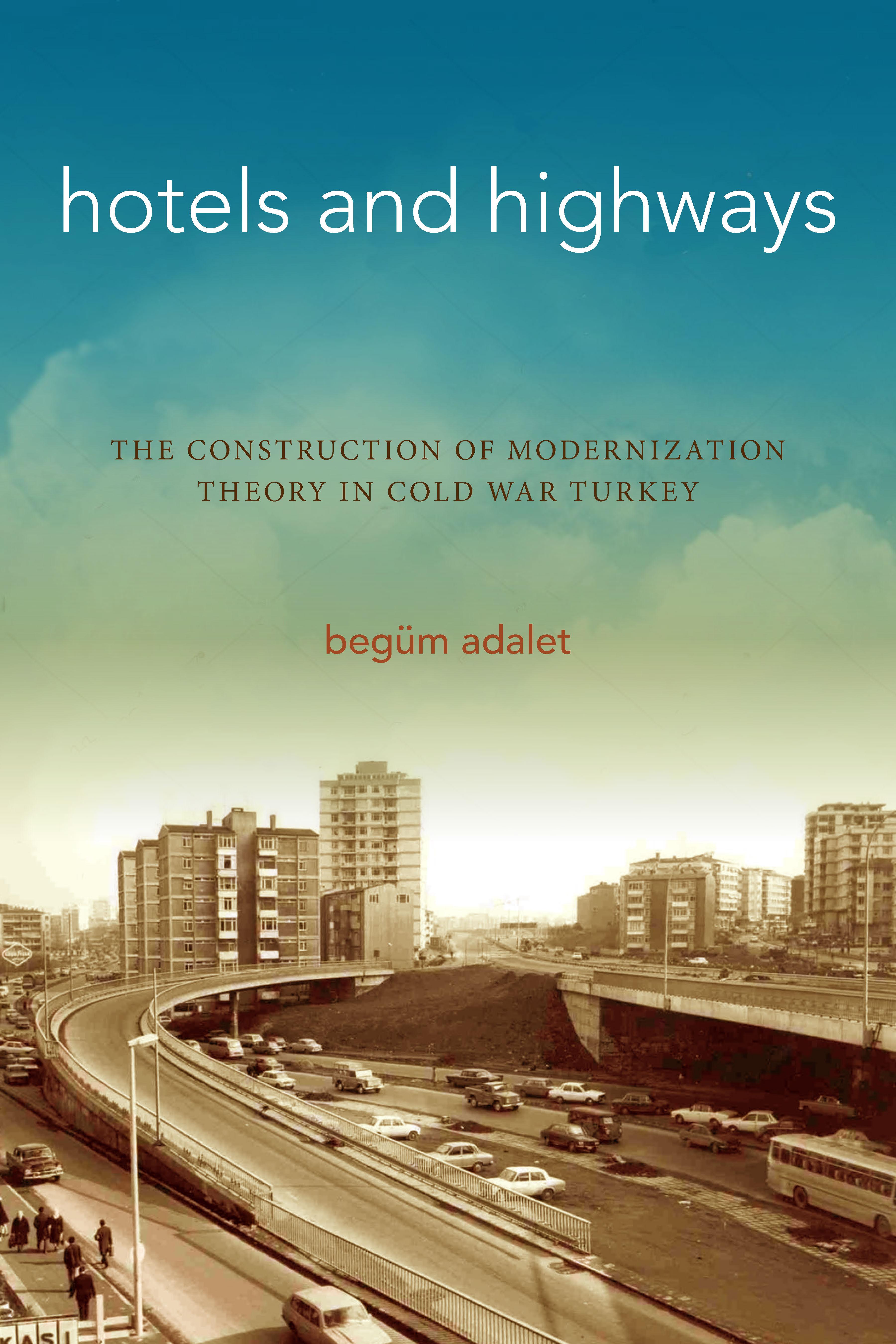
The early decades of the Cold War presented seemingly boundless opportunity for the construction of "laboratories" of American society abroad: microcosms where experts could scale down problems of geopolitics to manageable size, and where locals could be systematically directed toward American visions of capitalist modernity. Among the most critical tools in the U.S.'s ideological arsenal was modernization theory, and Turkey emerged as a vital test case for the construction and validation of developmental thought and practice.
With this book, Begüm Adalet reveals how Turkey became both the archetypal model of modernization and an active partner for its enactment. Through her analysis of the flow of aid money and expertise between the U.S. and Turkey, the planning of the American-funded Turkish highway network, and the development of the Turkish tourism industry, Adalet also highlights how "problems of knowledge" are fundamentally entwined with "problems of the political order": social scientific theories are produced in material spaces, through uncertain encounters between transnational actors and policy networks. In tracking the growth and transmission of modernization as a theory and in practice in Turkey, Hotels and Highways offers not only a specific history of a postwar development model that continues to influence our world, but a widely relevant consideration of how theoretical debates take shape in concrete situations.
Betal enkelt med kort, Klarna, Apple Pay eller Google Pay. Ikke fornøyd? Du har alltid 14 dagers angrerett. Les mer i våre vilkår. Har du spørsmål, send oss en e-post på hello@memmo.org.
Memmo gjør det enklere å studere – uansett hvor du er i verden. Hos oss samler du pensumbøker og smarte studieverktøy på ett og samme sted: sammendrag, quizer, podkaster og flashcards. Og så Ted, din studiekompis som svarer på alt du lurer på. Over 50 000 studenter studerer allerede her – bygget for at du skal lære raskere og stresse mindre.