
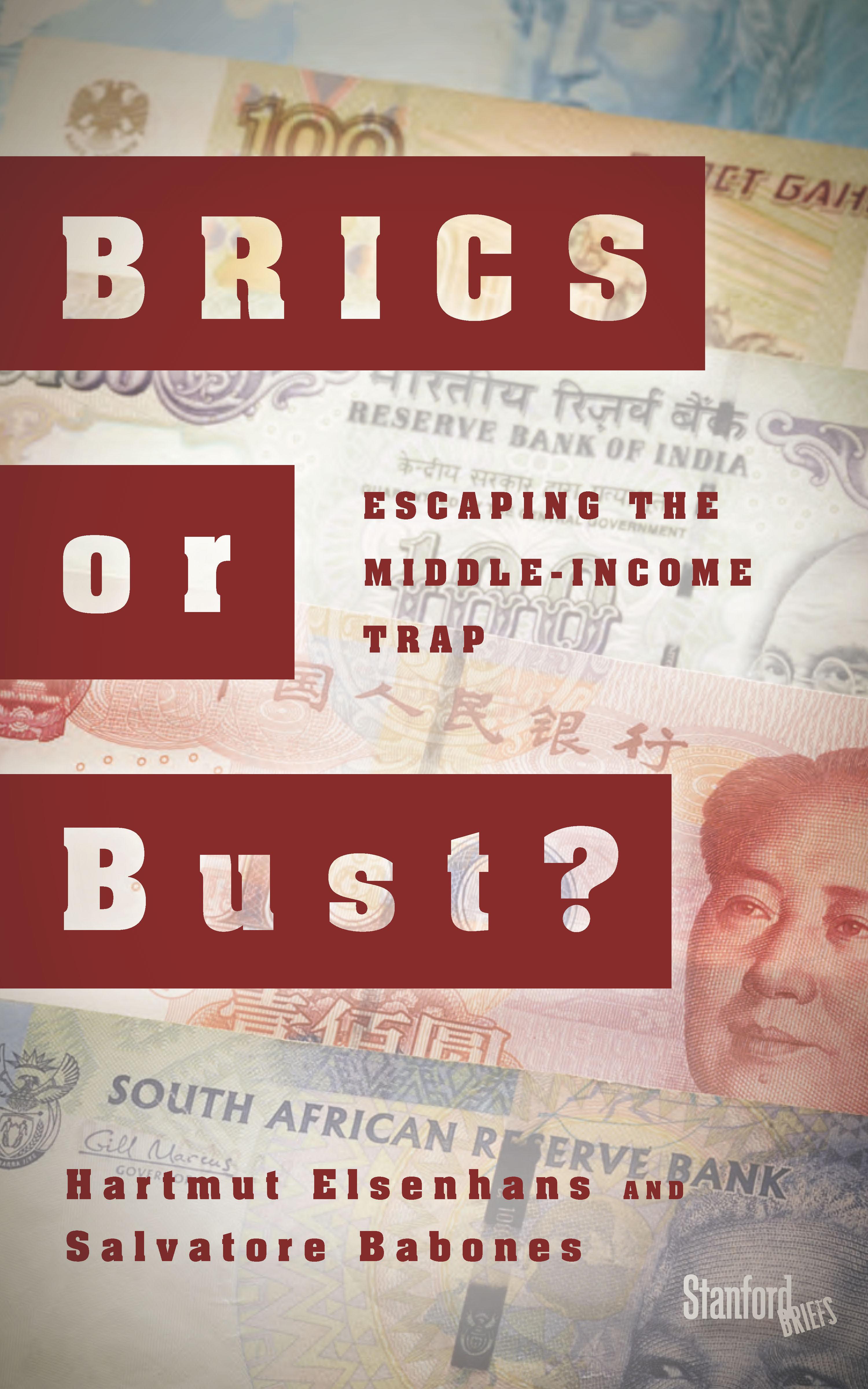
Once among the fastest developing economies, growth has slowed or stalled in Brazil, Russia, India, China, and South Africa. What policies can governments enact to jump-start the rise of these middle-income countries? Hartmut Elsenhans and Salvatore Babones argue that economic catch-up requires investment in the productivity of ordinary citizens.
Diverging from the popular narrative of increased liberalization, this book argues specifically for direct government investment in human infrastructure; policies that increase wages and the bargaining power of labor; and the strategic use of exchange rates to encourage export-led growth. These measures raise up the majority and finance future productivity by driving broader consumption and fostering investment within national borders.
Though strategies like full employment, mass education, and progressive taxation are not especially controversial, none of the BRICS have truly embraced them. Examining barriers to implementation, Elsenhans and Babones find that the main obstacle to such reforms is an absence of political will, stemming from closely guarded elite privilege under the current laws. BRICS or Bust? is a short, incisive read that underscores the need for demand-driven growth and why it has yet to be achieved.
Betal enkelt med kort, Klarna, Apple Pay eller Google Pay. Ikke fornøyd? Du har alltid 14 dagers angrerett. Les mer i våre vilkår. Har du spørsmål, send oss en e-post på hello@memmo.org.
Memmo gjør det enklere å studere – uansett hvor du er i verden. Hos oss samler du pensumbøker og smarte studieverktøy på ett og samme sted: sammendrag, quizer, podkaster og flashcards. Og så Ted, din studiekompis som svarer på alt du lurer på. Over 50 000 studenter studerer allerede her – bygget for at du skal lære raskere og stresse mindre.