
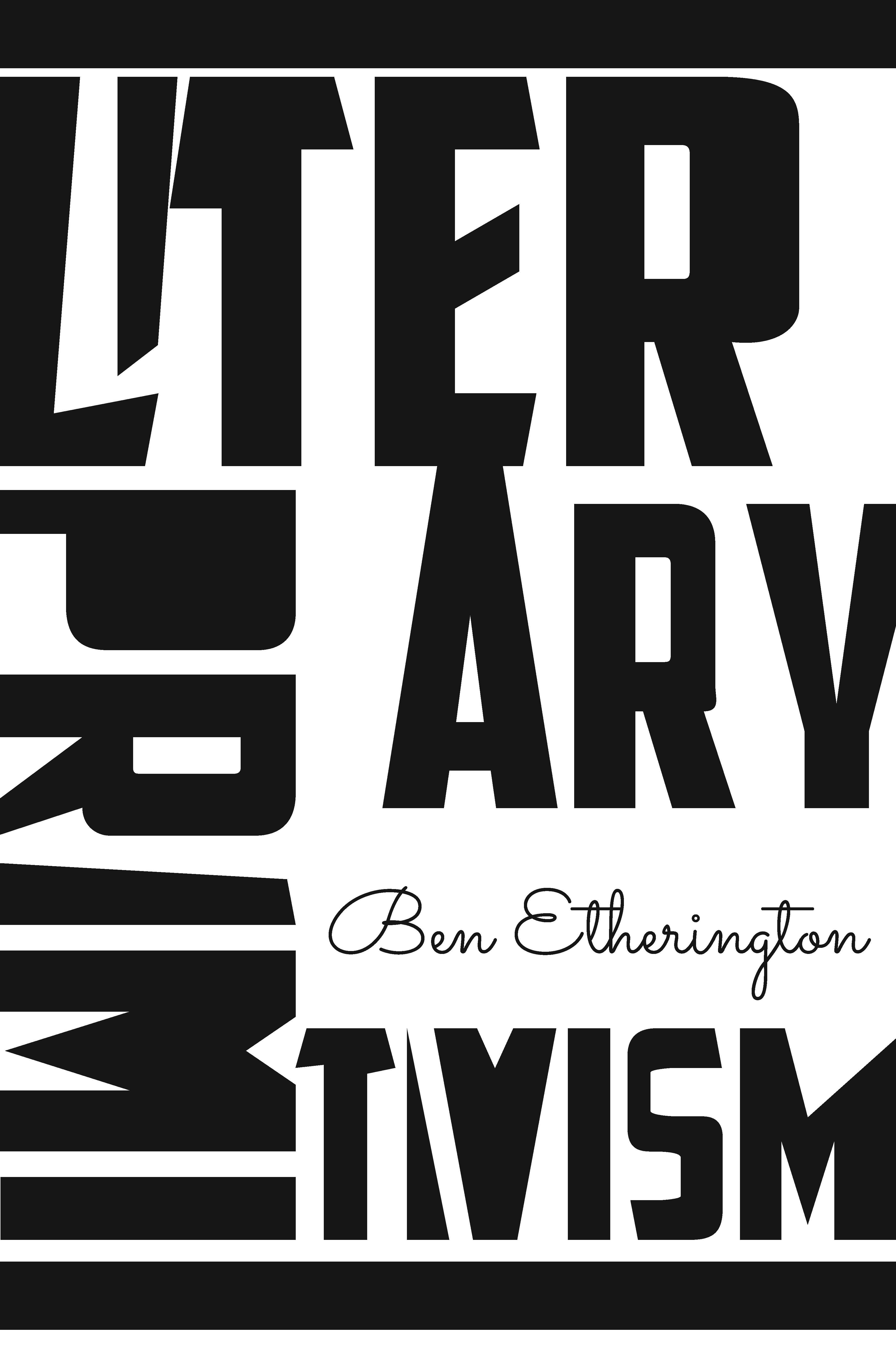
This book fundamentally rethinks a pervasive and controversial concept in literary criticism and the history of ideas. Primitivism has long been accepted as a transhistorical tendency of the "civilized" to idealize that primitive condition against which they define themselves. In the modern era, this has been a matter of the "West" projecting its primitivist fantasies onto non-Western "others." Arguing instead that primitivism was an aesthetic mode produced in reaction to the apotheosis of European imperialism, and that the most intensively primitivist literary works were produced by imperialism's colonized subjects, the book overturns basic assumptions of the last two generations of literary scholarship.
Against the grain, Ben Etherington contends that primitivism was an important, if vexed, utopian project rather than a form of racist discourse, a mode that emerged only when modern capitalism was at the point of subsuming all human communities into itself. The primitivist project was an attempt, through art, to recreate a "primitive" condition then perceived to be at its vanishing point. The first overview of this vast topic in forty years, Literary Primitivism maps out previous scholarly paradigms, provides a succinct and readable account of its own methodology, and presents critical readings of key writers, including Aimé Césaire, Frantz Fanon, D. H. Lawrence, and Claude McKay.
Betal enkelt med kort, Klarna, Apple Pay eller Google Pay. Ikke fornøyd? Du har alltid 14 dagers angrerett. Les mer i våre vilkår. Har du spørsmål, send oss en e-post på hello@memmo.org.
Memmo gjør det enklere å studere – uansett hvor du er i verden. Hos oss samler du pensumbøker og smarte studieverktøy på ett og samme sted: sammendrag, quizer, podkaster og flashcards. Og så Ted, din studiekompis som svarer på alt du lurer på. Over 50 000 studenter studerer allerede her – bygget for at du skal lære raskere og stresse mindre.