
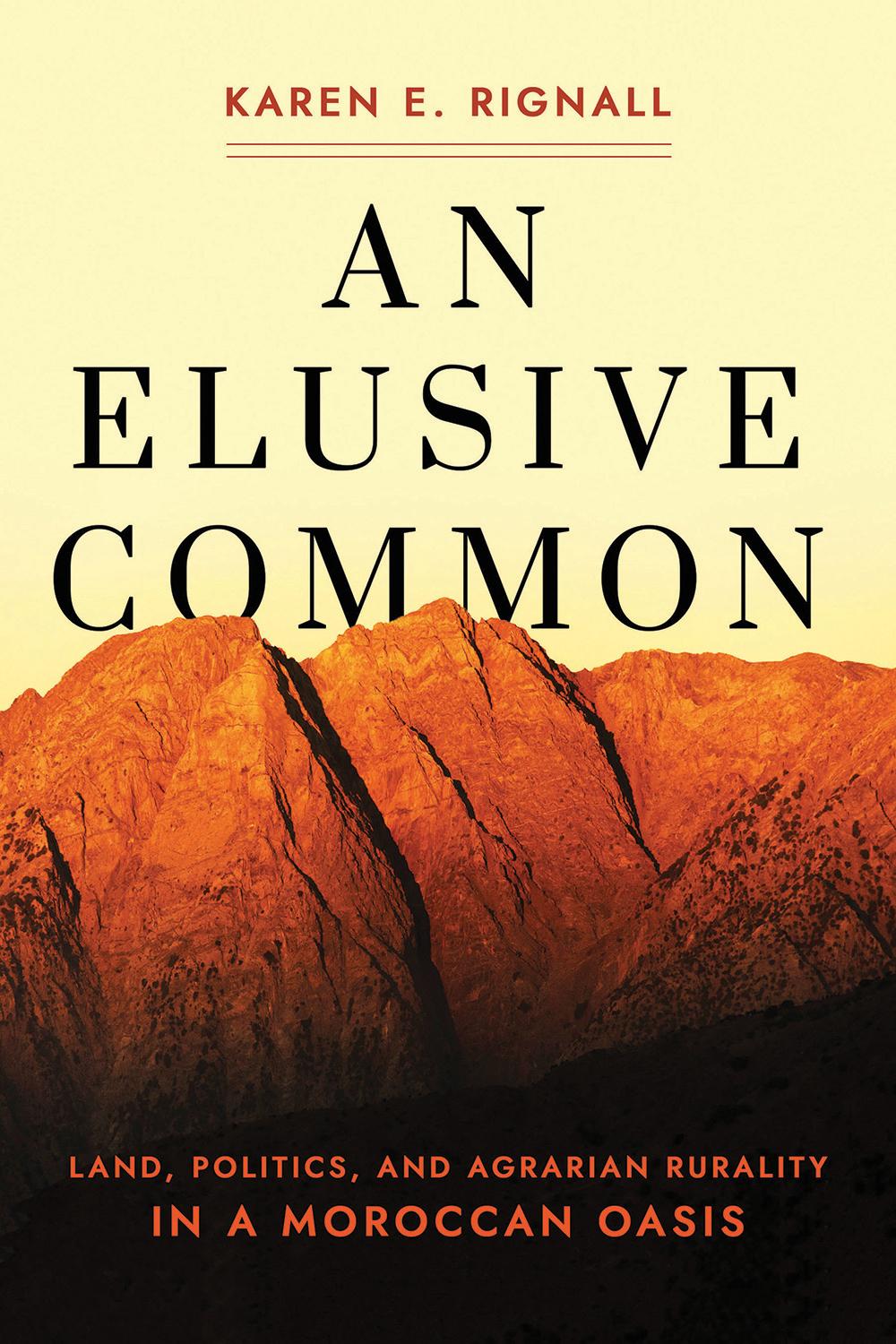
An Elusive Common details the fraught dynamics of rural life in the arid periphery of southeastern Morocco. Karen Rignall considers whether agrarian livelihoods can survive in the context of globalized capitalism and proposes a new way of thinking about agrarian practice, politics, and land in North Africa and the Middle East. Her book questions many of the assumptions underlying movements for land and food sovereignty, theories of the commons, and environmental governance.
Global market forces, government disinvestment, political marginalization, and climate change are putting unprecedented pressures on contemporary rural life. At the same time, rural peoples are defying their exclusion by forging new economic and political possibilities. In southern Morocco, the vibrancy of rural life was sustained by creative and often contested efforts to sustain communal governance, especially of land, as a basis for agrarian livelihoods and a changing wage labor economy.
An Elusive Common follows these diverse strategies ethnographically to show how land became a site for conflicts over community, political authority, and social hierarchy. Rignall makes the provocative argument that land enclosures can be an essential part of communal governance and the fight for autonomy against intrusive state power and historical inequalities.
Betal enkelt med kort, Klarna, Apple Pay eller Google Pay. Ikke fornøyd? Du har alltid 14 dagers angrerett. Les mer i våre vilkår. Har du spørsmål, send oss en e-post på hello@memmo.org.
Memmo gjør det enklere å studere – uansett hvor du er i verden. Hos oss samler du pensumbøker og smarte studieverktøy på ett og samme sted: sammendrag, quizer, podkaster og flashcards. Og så Ted, din studiekompis som svarer på alt du lurer på. Over 50 000 studenter studerer allerede her – bygget for at du skal lære raskere og stresse mindre.