
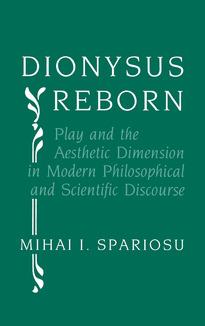
Mihai Spariosu here explores the significance of the closely linked concepts of play and aestheticism in philosophical and scientific discourse since the end of the eighteenth century. Spariosu points out that since its birth in archaic and classical Hellenic thought the concept of play has always been subject to the influences of various rational and prerational sets of values. Spariosu maintains that there have been not one but two major modern concepts of aestheticism: artistic aestheticism, related to a prerational mentality and introduced in modern thought by Schopenhauer and Nietzsche; and philosophicalscientific aestheticism, initiated by Kant and Schiller and shaped by rationalism. According to Spariosu, the first has often arisen in response to the attempts of philosophy and science to impose their standards on art, and the second has often been called on to deal with the epistemological crises that periodically shake these disciplines. Spariosu also looks closely at some of the play concepts that surface in modern science in connection with the Darwinian theory of evolution and the play of scientific discourse itself, as exemplified by the new physics and the contemporary philosophy of science.
A penetrating and cogently argued book, Dionysus Reborn will be welcomed by readers interested in Continental philosophy, scientific discourse, and the aesthetics of play, including literary theorists, comparatists, philosophers, intellectual historians, and social scientists.
Betal enkelt med kort, Klarna, Apple Pay eller Google Pay. Ikke fornøyd? Du har alltid 14 dagers angrerett. Les mer i våre vilkår. Har du spørsmål, send oss en e-post på hello@memmo.org.
Memmo gjør det enklere å studere – uansett hvor du er i verden. Hos oss samler du pensumbøker og smarte studieverktøy på ett og samme sted: sammendrag, quizer, podkaster og flashcards. Og så Ted, din studiekompis som svarer på alt du lurer på. Over 50 000 studenter studerer allerede her – bygget for at du skal lære raskere og stresse mindre.