
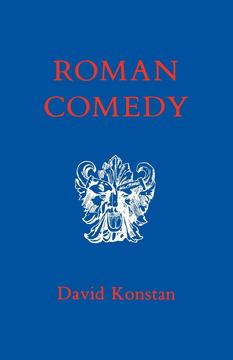
This book explores the social institutions, the prevailing social values, and the ideology of the ancient city-state as revealed in Roman Comedy. "The very essence of comedy is social," writes David Konstan, "and in the complex movement of its plots we may be able to discern the lineaments and contradictions of the reigning ideas of an age."
David Konstan looks closely at eight plays: Plautus's Aulularia, Asinaria, Captivi, Rudens, Cistellaria, and Truculentus, and Terence's Phormio and Hecyra. Offering new interpretations of each, he develops a "typology of plot forms" by analyzing structural features and patterns of conventional behavior in the plays, and he relates the results of his literary analysis to contemporary social conditions. He argues that the plays address tensions that were potentially disruptive to the ancient city-state, and that they tended to resolve these tensions in ways that affirmed traditional values.
Roman Comedy is an innovative and challenging book that will be welcomed by students of classical literature, ancient social history, the history of the theater, and comedy as a genre.
Betal enkelt med kort, Klarna, Apple Pay eller Google Pay. Ikke fornøyd? Du har alltid 14 dagers angrerett. Les mer i våre vilkår. Har du spørsmål, send oss en e-post på hello@memmo.org.
Memmo gjør det enklere å studere – uansett hvor du er i verden. Hos oss samler du pensumbøker og smarte studieverktøy på ett og samme sted: sammendrag, quizer, podkaster og flashcards. Og så Ted, din studiekompis som svarer på alt du lurer på. Over 50 000 studenter studerer allerede her – bygget for at du skal lære raskere og stresse mindre.