
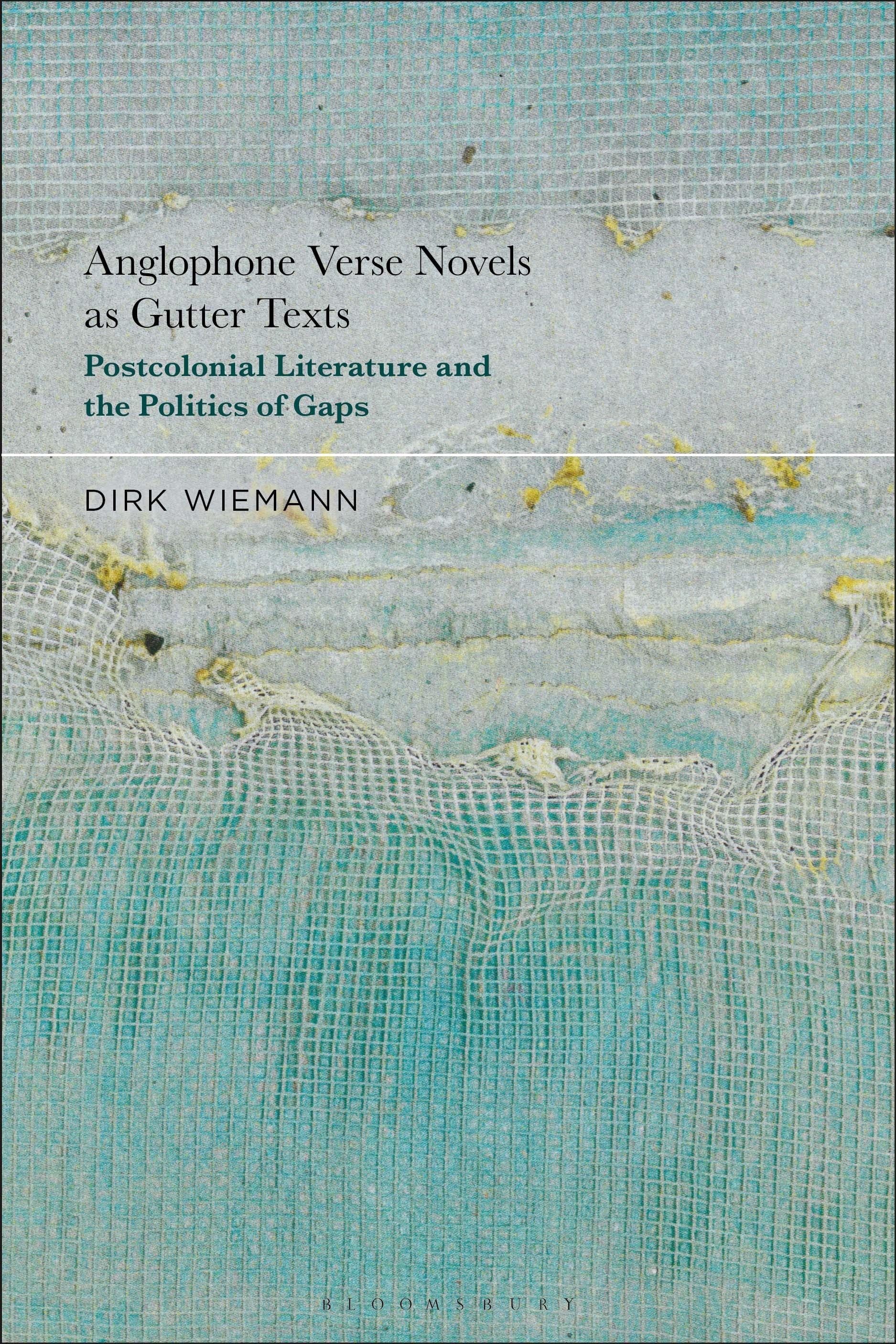
Anglophone Verse Novels as Gutter Texts draws on the notion of the 'gutter' in graphic narratives – the gap between panels that a reader has to imaginatively fill to generate narrative sequence – to analyse the largely overlooked literary form of the verse novel. Marked at all levels by the tense constellation of segment and sequence, and a conspicuously 'gappy' texture, verse novels offer productive alternatives to the dominant prose novel in contemporary fiction, where a similar 'gappiness' has become a hallmark, as illustrated by the loosely interlaced multi-strand plot structures of influential 'world novels' (Bolaño, Mitchell, Powers).
The verse novel is a form particularly prolific in the postcolonial world and among diasporic or minoritarian writers in the Global North. This study concentrates on two of the most prominent areas in which verse novels distinguish themselves from the prose novel to read texts by Derek Walcott, Anne Carson, Bernardine Evaristo, Patience Agbabi and others: In 'planetary' verse novels from the Caribbean, Canada, Samoa and Hawai'i, the central trope of the volcano evokes a world in constant un/making; while post-national verse novels, particularly in Britain, modify the established paradigms of imagined communities. Dirk Wiemann's study speculates whether the resurgence of verse novels correlates with the apprehension of inhabiting a world that has become unpredictable and dangerous but also promising: a 'post-prosaic' world.
The verse novel is a form particularly prolific in the postcolonial world and among diasporic or minoritarian writers in the Global North. This study concentrates on two of the most prominent areas in which verse novels distinguish themselves from the prose novel to read texts by Derek Walcott, Anne Carson, Bernardine Evaristo, Patience Agbabi and others: In 'planetary' verse novels from the Caribbean, Canada, Samoa and Hawai'i, the central trope of the volcano evokes a world in constant un/making; while post-national verse novels, particularly in Britain, modify the established paradigms of imagined communities. Dirk Wiemann's study speculates whether the resurgence of verse novels correlates with the apprehension of inhabiting a world that has become unpredictable and dangerous but also promising: a 'post-prosaic' world.
Betal enkelt med kort, Klarna, Apple Pay eller Google Pay. Ikke fornøyd? Du har alltid 14 dagers angrerett. Les mer i våre vilkår. Har du spørsmål, send oss en e-post på hello@memmo.org.
Memmo gjør det enklere å studere – uansett hvor du er i verden. Hos oss samler du pensumbøker og smarte studieverktøy på ett og samme sted: sammendrag, quizer, podkaster og flashcards. Og så Ted, din studiekompis som svarer på alt du lurer på. Over 50 000 studenter studerer allerede her – bygget for at du skal lære raskere og stresse mindre.