
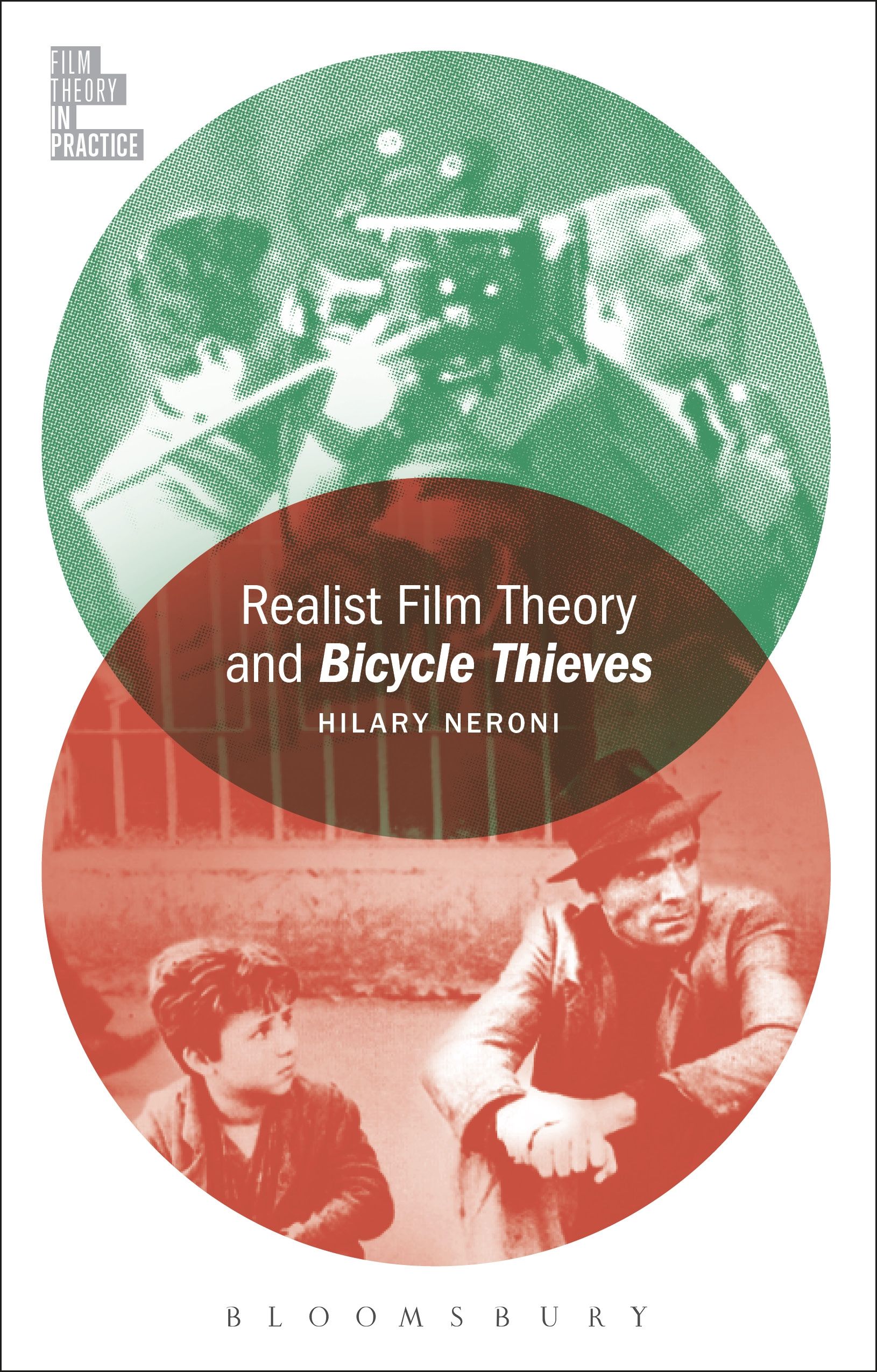
The Film Theory in Practice series fills a gaping hole in the world of film theory. By marrying the explanation of a film theory with the interpretation of a film, the volumes provide discrete examples of how film theory can serve as the basis for textual analysis. Realist Film Theory and Bicycle Thieves offers a concise introduction to realist film theory in jargon-free language and shows how this theory can be deployed to interpret Vittorio De Sica's 1948 Italian neo realist masterpiece Bicycle Thieves.
Hilary Neroni explores the original realist film theorists from the 1940s: André Bazin, Siegfried Kracauer, and Cesare Zavattini, among others. But rather than seeing realist film theory as simply a theory of the past to be moved beyond, the book argues that the prevalence of realism in many different forms within practice and theory suggests the importance of updating this original realist film theory with an understanding of realism that would sustain its viability. Throughout the book, Neroni analyzes neorealist film movements-such as Italian Neorealism, Parallel Cinema of India, and the Iranian New Wave-that challenge mainstream realism with a more radical form that exposes the social order instead of hiding it. Her in-depth investigation of Bicycle Thieves provides a realist methodology that reveals the radicality of its combination of realist techniques, a melodramatic story, and humanist values.
Hilary Neroni explores the original realist film theorists from the 1940s: André Bazin, Siegfried Kracauer, and Cesare Zavattini, among others. But rather than seeing realist film theory as simply a theory of the past to be moved beyond, the book argues that the prevalence of realism in many different forms within practice and theory suggests the importance of updating this original realist film theory with an understanding of realism that would sustain its viability. Throughout the book, Neroni analyzes neorealist film movements-such as Italian Neorealism, Parallel Cinema of India, and the Iranian New Wave-that challenge mainstream realism with a more radical form that exposes the social order instead of hiding it. Her in-depth investigation of Bicycle Thieves provides a realist methodology that reveals the radicality of its combination of realist techniques, a melodramatic story, and humanist values.
Betal enkelt med kort, Klarna, Apple Pay eller Google Pay. Ikke fornøyd? Du har alltid 14 dagers angrerett. Les mer i våre vilkår. Har du spørsmål, send oss en e-post på hello@memmo.org.
Memmo gjør det enklere å studere – uansett hvor du er i verden. Hos oss samler du pensumbøker og smarte studieverktøy på ett og samme sted: sammendrag, quizer, podkaster og flashcards. Og så Ted, din studiekompis som svarer på alt du lurer på. Over 50 000 studenter studerer allerede her – bygget for at du skal lære raskere og stresse mindre.