
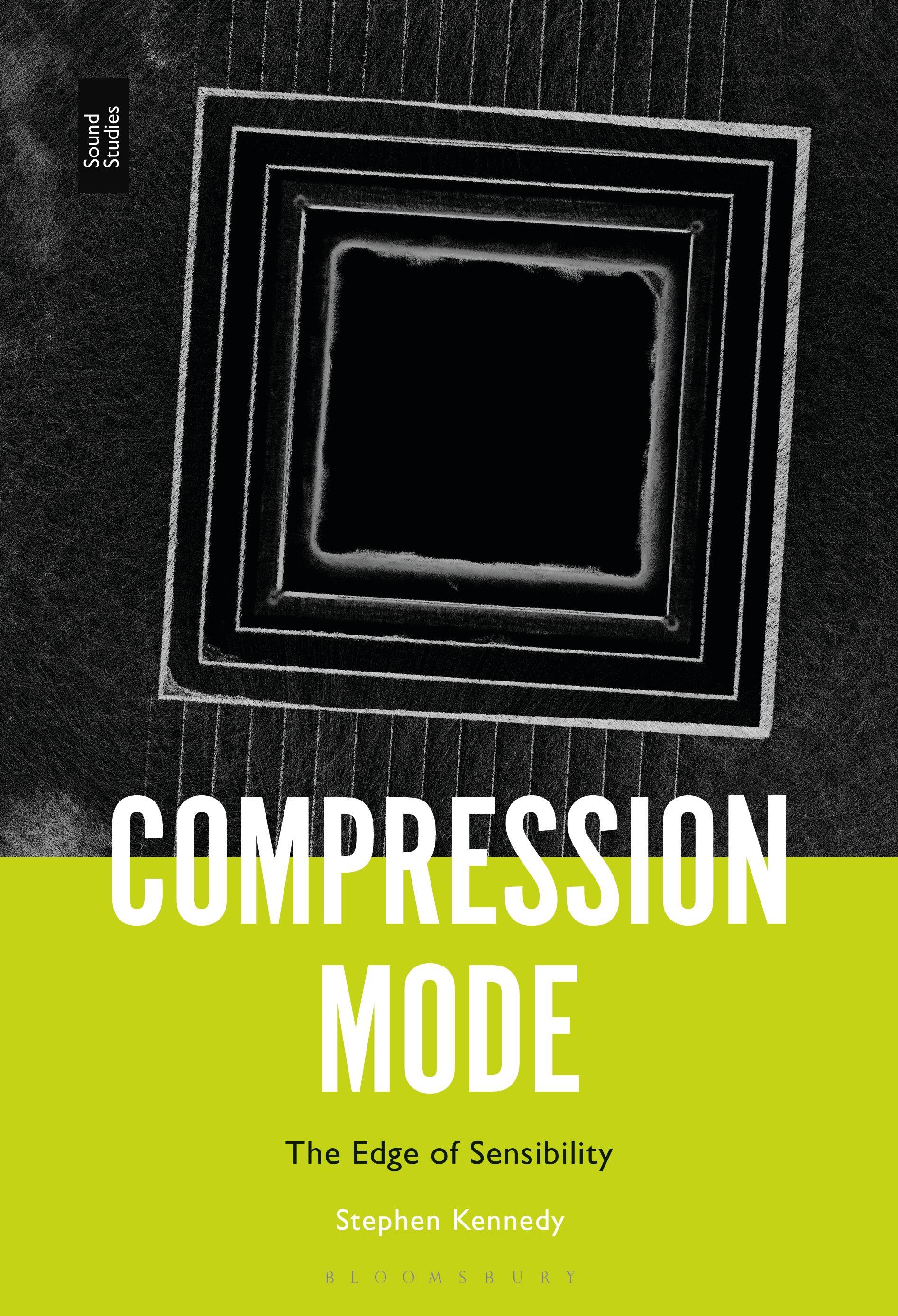
This book examines how compression can be understood not only as a digital process enacted through computing, but as a wider economic and political phenomenon that impacts on the ecology of waste, diversity and social inclusivity.
Setting out from the linguistic underpinning of visual space it proceeds to the development of the MP3 algorithm and an examination of the 'waste' it creates. As it does so it challenges the received wisdom, prevalent in western thought, that human reason and logic enacted through language is uniquely capable of bringing order to chaos. Returning to the idea of a sonic economy it seeks to reintroduce waste, error, and other discarded material back into our systems of thought, or perhaps more accurately into systems beyond our thought.
Setting out from the linguistic underpinning of visual space it proceeds to the development of the MP3 algorithm and an examination of the 'waste' it creates. As it does so it challenges the received wisdom, prevalent in western thought, that human reason and logic enacted through language is uniquely capable of bringing order to chaos. Returning to the idea of a sonic economy it seeks to reintroduce waste, error, and other discarded material back into our systems of thought, or perhaps more accurately into systems beyond our thought.
Betal enkelt med kort, Klarna, Apple Pay eller Google Pay. Ikke fornøyd? Du har alltid 14 dagers angrerett. Les mer i våre vilkår. Har du spørsmål, send oss en e-post på hello@memmo.org.
Memmo gjør det enklere å studere – uansett hvor du er i verden. Hos oss samler du pensumbøker og smarte studieverktøy på ett og samme sted: sammendrag, quizer, podkaster og flashcards. Og så Ted, din studiekompis som svarer på alt du lurer på. Over 50 000 studenter studerer allerede her – bygget for at du skal lære raskere og stresse mindre.