
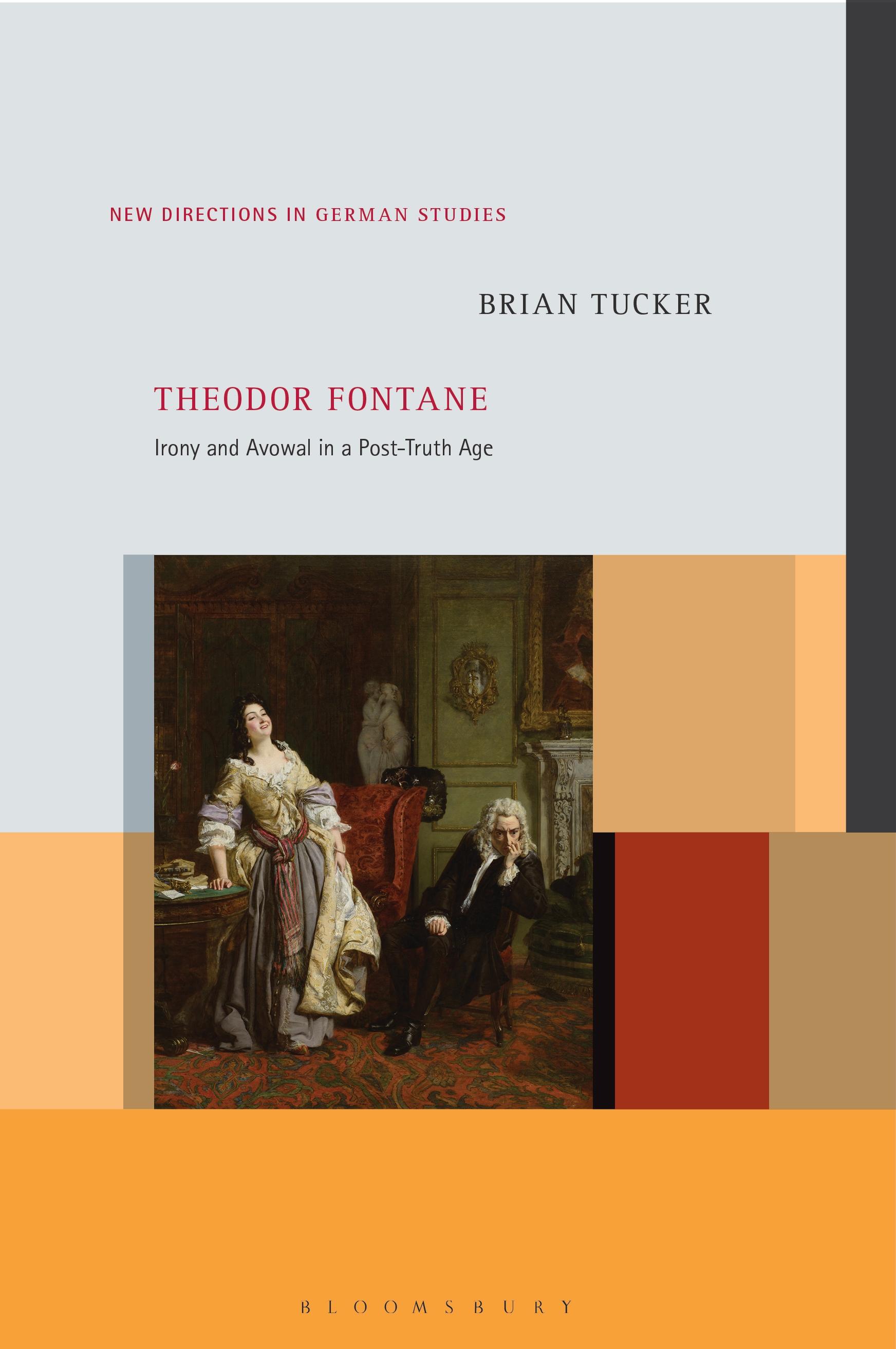
What happens when fashionable forms of unserious speech prove to be contagious, when they adulterate and weaken communicative spheres that rely on honesty, trust, and sincerity? Demonstrating how the tension between irony and avowal constitutes a central conflict in Fontane's works, this book argues that his best-known society novels play out a struggle between the incompatible demands of these two modes of speaking. Read in this light, the novels identify an irreconcilable discrepancy between word and deed as both the root of emotional discord and the proximate cause of historical and political upheaval.
Given the alarm since 2016 over unreliability, falsehood, and indifference to truth, it is now easier to perceive in Fontane's novels a profound concern about language that is not sincere and not meant to be taken literally. For Fontane, irony exemplifies a discrepancy between language and meaning, a loosening of the ethical bond between words and the things to which they refer. His novels investigate the extent to which human relationships can continue to function in the face of pervasive irony and the erosion of language's credibility. Although Fontane is widely regarded as an ironic writer, Tucker's analyses reveal a critical distance between his works and the prospect of irony as a dominant idiom.
Revisiting Fontane's novels in a post-truth age brings the conflict between irony and avowal into sharper relief and makes legible the stakes and contours of our own post-truth condition.
Given the alarm since 2016 over unreliability, falsehood, and indifference to truth, it is now easier to perceive in Fontane's novels a profound concern about language that is not sincere and not meant to be taken literally. For Fontane, irony exemplifies a discrepancy between language and meaning, a loosening of the ethical bond between words and the things to which they refer. His novels investigate the extent to which human relationships can continue to function in the face of pervasive irony and the erosion of language's credibility. Although Fontane is widely regarded as an ironic writer, Tucker's analyses reveal a critical distance between his works and the prospect of irony as a dominant idiom.
Revisiting Fontane's novels in a post-truth age brings the conflict between irony and avowal into sharper relief and makes legible the stakes and contours of our own post-truth condition.
Sider: 264
Kategori: Litteraturvetenskap & Teori
e-ISBN: 9781501368363
Fraktvekt: 1.2 kg
Sendes innen: 1-2 dager
Betal enkelt med kort, Klarna, Apple Pay eller Google Pay. Ikke fornøyd? Du har alltid 14 dagers angrerett. Les mer i våre vilkår. Har du spørsmål, send oss en e-post på hello@memmo.org.
Memmo gjør det enklere å studere – uansett hvor du er i verden. Hos oss samler du pensumbøker og smarte studieverktøy på ett og samme sted: sammendrag, quizer, podkaster og flashcards. Og så Ted, din studiekompis som svarer på alt du lurer på. Over 50 000 studenter studerer allerede her – bygget for at du skal lære raskere og stresse mindre.