
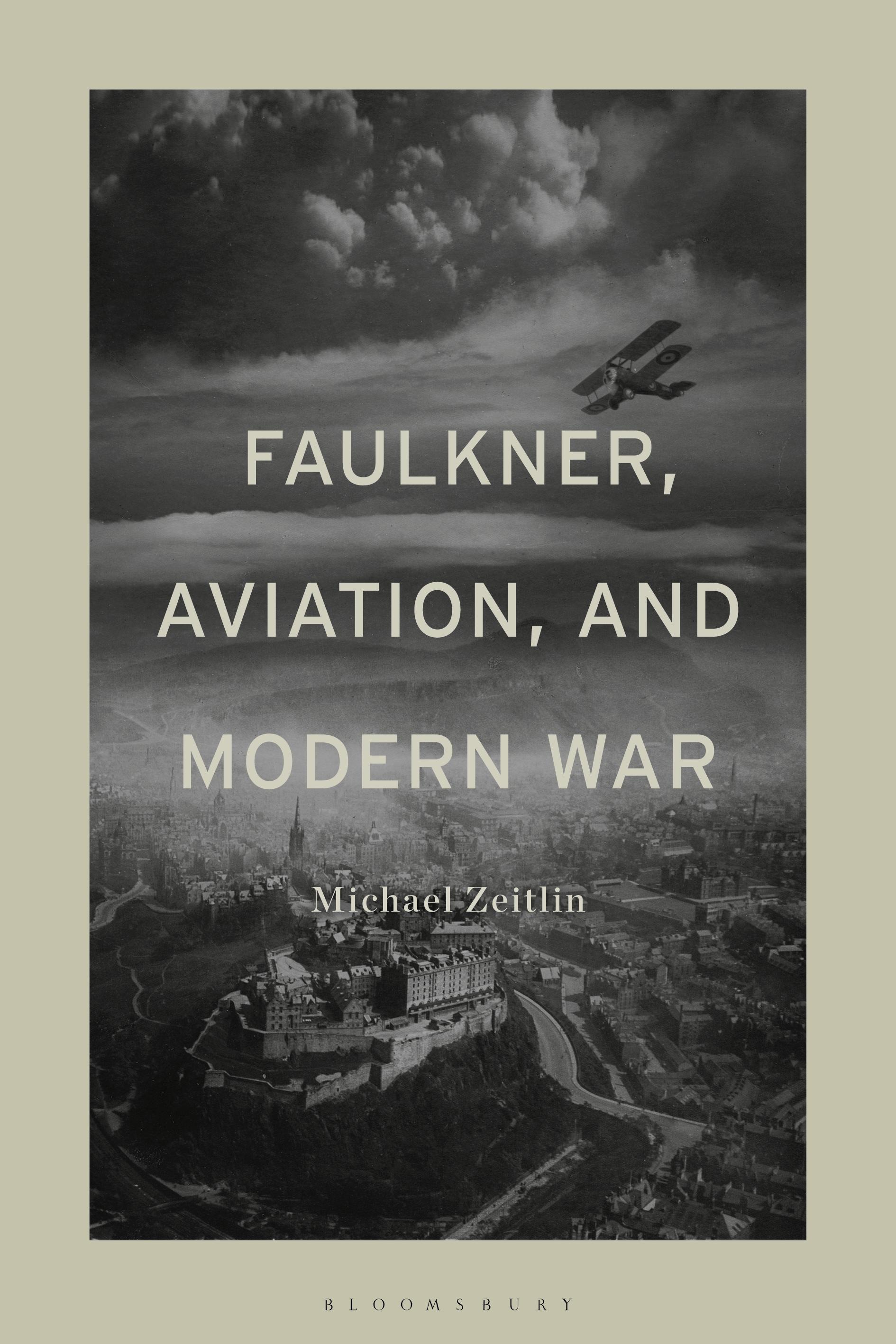
Faulkner, Aviation, and Modern War frames William Faulkner's airplane narratives against major scenes of the early 20th century: the Great War, the rise of European fascism in the 1920s and 30s, the Second World War, and the aviation arms race extending from the Wright Flyer in 1903 into the Cold War era. Placing biographical accounts of Faulkner's time in the Royal Air Force Canada against analysis of such works as Soldiers' Pay (1926), "All the Dead Pilots" (1931), Pylon (1935), and A Fable (1954), this book situates Faulkner's aviation writing within transatlantic historical contexts that have not been sufficiently appreciated in Faulkner's work.
Michael Zeitlin unpacks a broad selection of Faulkner's novels, stories, film treatments, essays, book reviews, and letters to outline Faulkner's complex and ambivalent relationship to the ideologies of masculine performance and martial heroism in an age dominated by industrialism and military technology.
Michael Zeitlin unpacks a broad selection of Faulkner's novels, stories, film treatments, essays, book reviews, and letters to outline Faulkner's complex and ambivalent relationship to the ideologies of masculine performance and martial heroism in an age dominated by industrialism and military technology.
Betal enkelt med kort, Klarna, Apple Pay eller Google Pay. Ikke fornøyd? Du har alltid 14 dagers angrerett. Les mer i våre vilkår. Har du spørsmål, send oss en e-post på hello@memmo.org.
Memmo gjør det enklere å studere – uansett hvor du er i verden. Hos oss samler du pensumbøker og smarte studieverktøy på ett og samme sted: sammendrag, quizer, podkaster og flashcards. Og så Ted, din studiekompis som svarer på alt du lurer på. Over 50 000 studenter studerer allerede her – bygget for at du skal lære raskere og stresse mindre.