
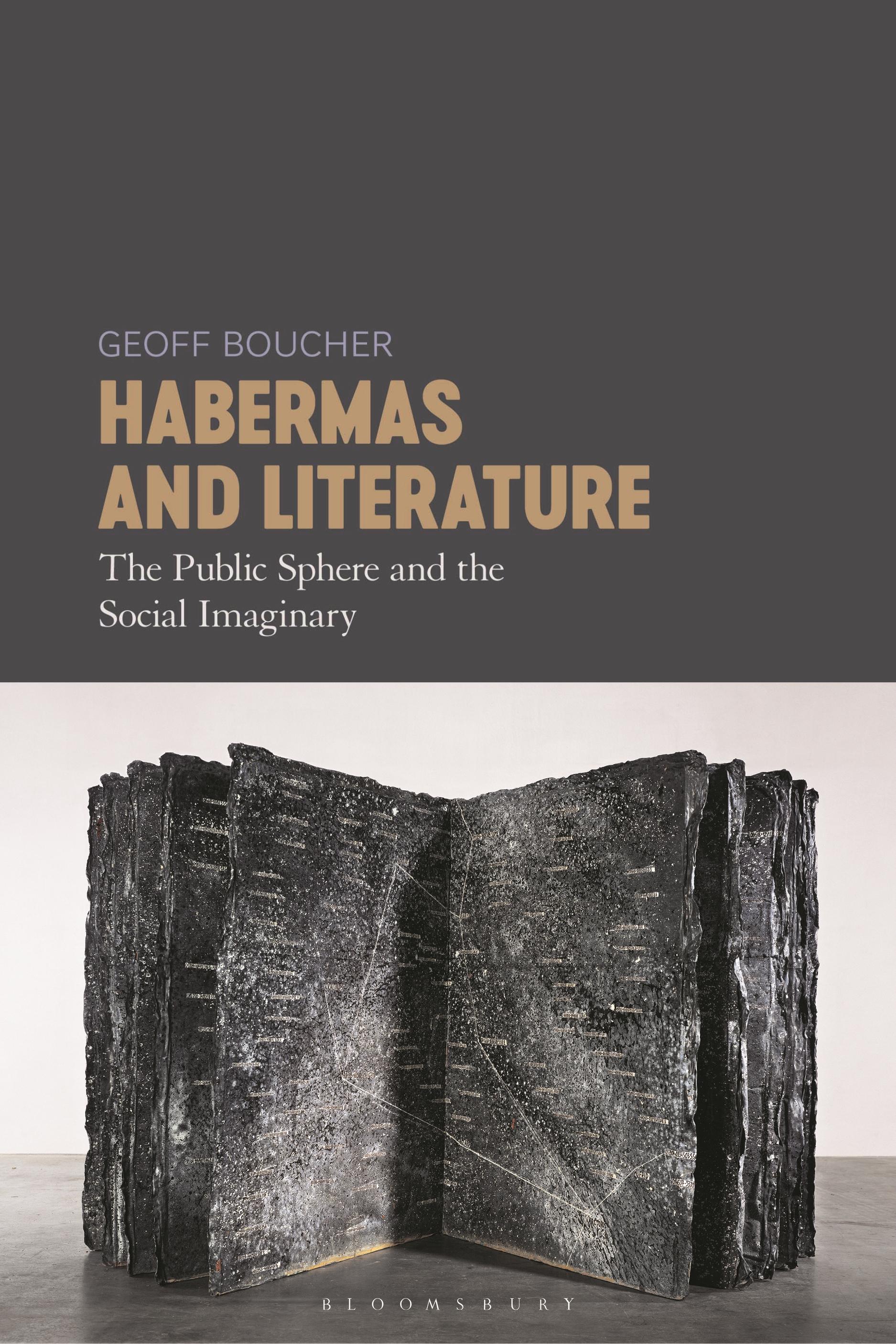
Although Habermas has written about the cultural role of literature and about literary works, he has not systematically articulated a literary-critical method as a component of either communicative reason or post-metaphysical thinking. Habermas and Literature brings Habermasian concepts and categories into contact with aesthetic and cultural theories in and around the Frankfurt School, and beyond. Its central claim is that Habermas' contribution to literary and cultural criticism is the concept of literary rationality and the notion that literature performs a key role in the formation of the modern social imaginary.
Habermas and Literature maintains that literary works have “two faces” – discursive intervention in the public sphere and personal integration of imaginative disclosures – that depend upon two modalities of literary reception: critique and identification. It develops the resulting literary theory through detailed discussion of the theories advanced by Habermas, followed in each case by synthetic and reconstructive argumentation that brings the framework of communicative reason into dialogue with literary methods, aesthetic theories and psychoanalytic categories. It does so through close engagement with debates around aesthetic rationality, world disclosure, social imaginaries, post-secular society and the utopian demand for happiness articulated by artworks. In the process, the Habermasian position is critically reconstructed when necessary, with reference to psychoanalytic and literary theories, and tested, in relation to demanding fiction and popular works.
Habermas and Literature maintains that literary works have “two faces” – discursive intervention in the public sphere and personal integration of imaginative disclosures – that depend upon two modalities of literary reception: critique and identification. It develops the resulting literary theory through detailed discussion of the theories advanced by Habermas, followed in each case by synthetic and reconstructive argumentation that brings the framework of communicative reason into dialogue with literary methods, aesthetic theories and psychoanalytic categories. It does so through close engagement with debates around aesthetic rationality, world disclosure, social imaginaries, post-secular society and the utopian demand for happiness articulated by artworks. In the process, the Habermasian position is critically reconstructed when necessary, with reference to psychoanalytic and literary theories, and tested, in relation to demanding fiction and popular works.
Sider: 288
Kategori: Litteraturvetenskap & Teori
e-ISBN: 9781501344060
Fraktvekt: 1.2 kg
Sendes innen: 1-2 dager
Betal enkelt med kort, Klarna, Apple Pay eller Google Pay. Ikke fornøyd? Du har alltid 14 dagers angrerett. Les mer i våre vilkår. Har du spørsmål, send oss en e-post på hello@memmo.org.
Memmo gjør det enklere å studere – uansett hvor du er i verden. Hos oss samler du pensumbøker og smarte studieverktøy på ett og samme sted: sammendrag, quizer, podkaster og flashcards. Og så Ted, din studiekompis som svarer på alt du lurer på. Over 50 000 studenter studerer allerede her – bygget for at du skal lære raskere og stresse mindre.