
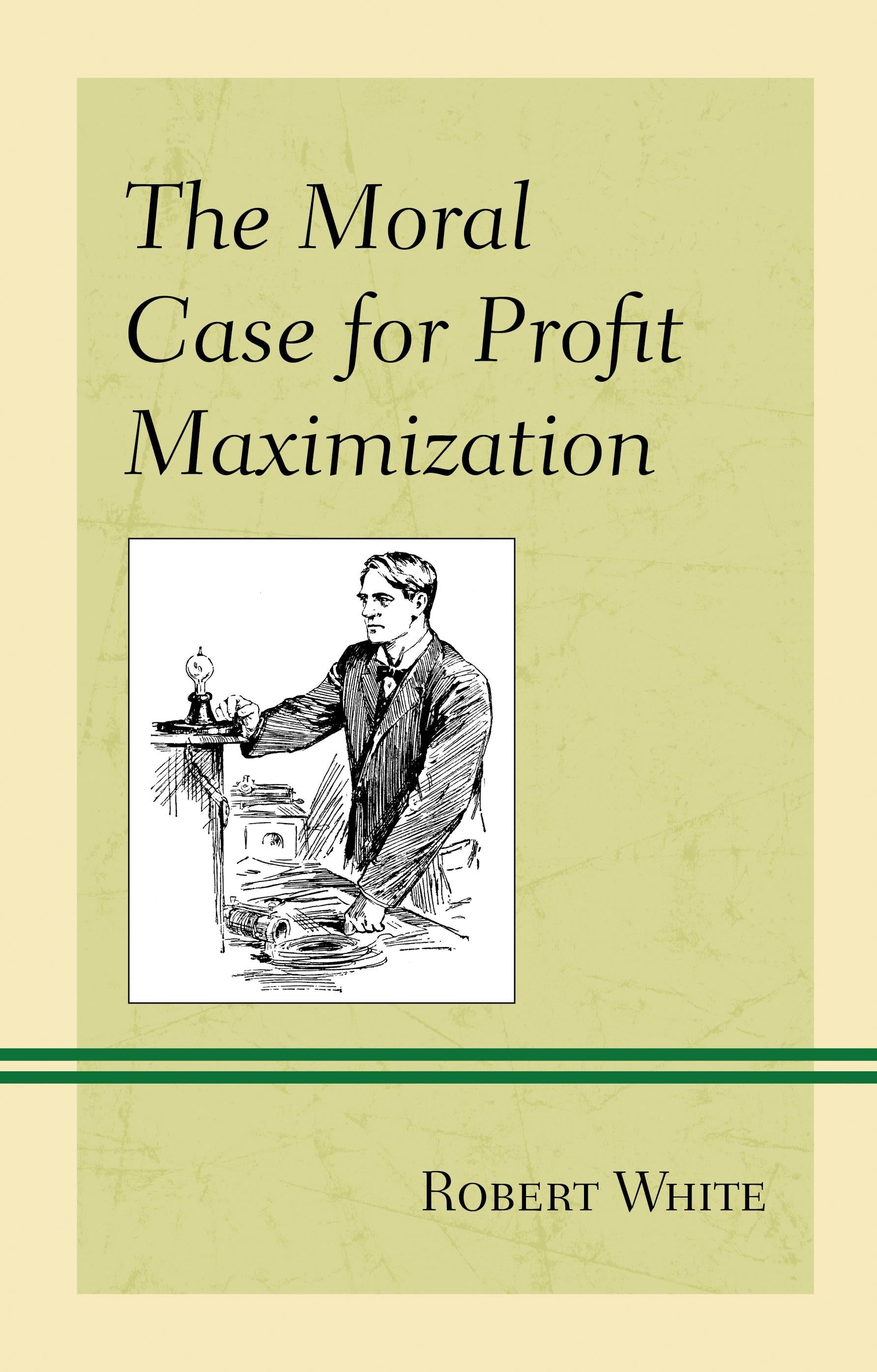
The Moral Case for Profit Maximization argues that profit maximization is moral when businessmen seek to maximize profit by creating goods or services that are of objective value. Traditionally, profit maximization has been defended on economic grounds. Profit, economists argue, incentivizes businessmen to produce goods and services. In this view, businessmen do not need to be virtuous as long as they deliver the goods. It challenges the traditional defense of profit maximization, arguing that profit maximization is morally ambitious because it requires businessmen to form normative abstractions and to cultivate a virtuous character. In so doing, the author also challenges the moral basis of corporate social responsibility. Proponents of CSR argue that businessmen can do good while doing well. This book argues that businessmen already do good by maximizing profit, drawing upon the histories of the wheel, the refrigerator, and the shipping container, as well as the biographies of J. P. Morgan, John D. Rockefeller, and Thomas Edison to demonstrate the role of values in the creation of material goods and the role of the virtues in value creation. The author challenges readers to rethink the relationship between profit, value, and virtue.
Betal enkelt med kort, Klarna, Apple Pay eller Google Pay. Ikke fornøyd? Du har alltid 14 dagers angrerett. Les mer i våre vilkår. Har du spørsmål, send oss en e-post på hello@memmo.org.
Memmo gjør det enklere å studere – uansett hvor du er i verden. Hos oss samler du pensumbøker og smarte studieverktøy på ett og samme sted: sammendrag, quizer, podkaster og flashcards. Og så Ted, din studiekompis som svarer på alt du lurer på. Over 50 000 studenter studerer allerede her – bygget for at du skal lære raskere og stresse mindre.