
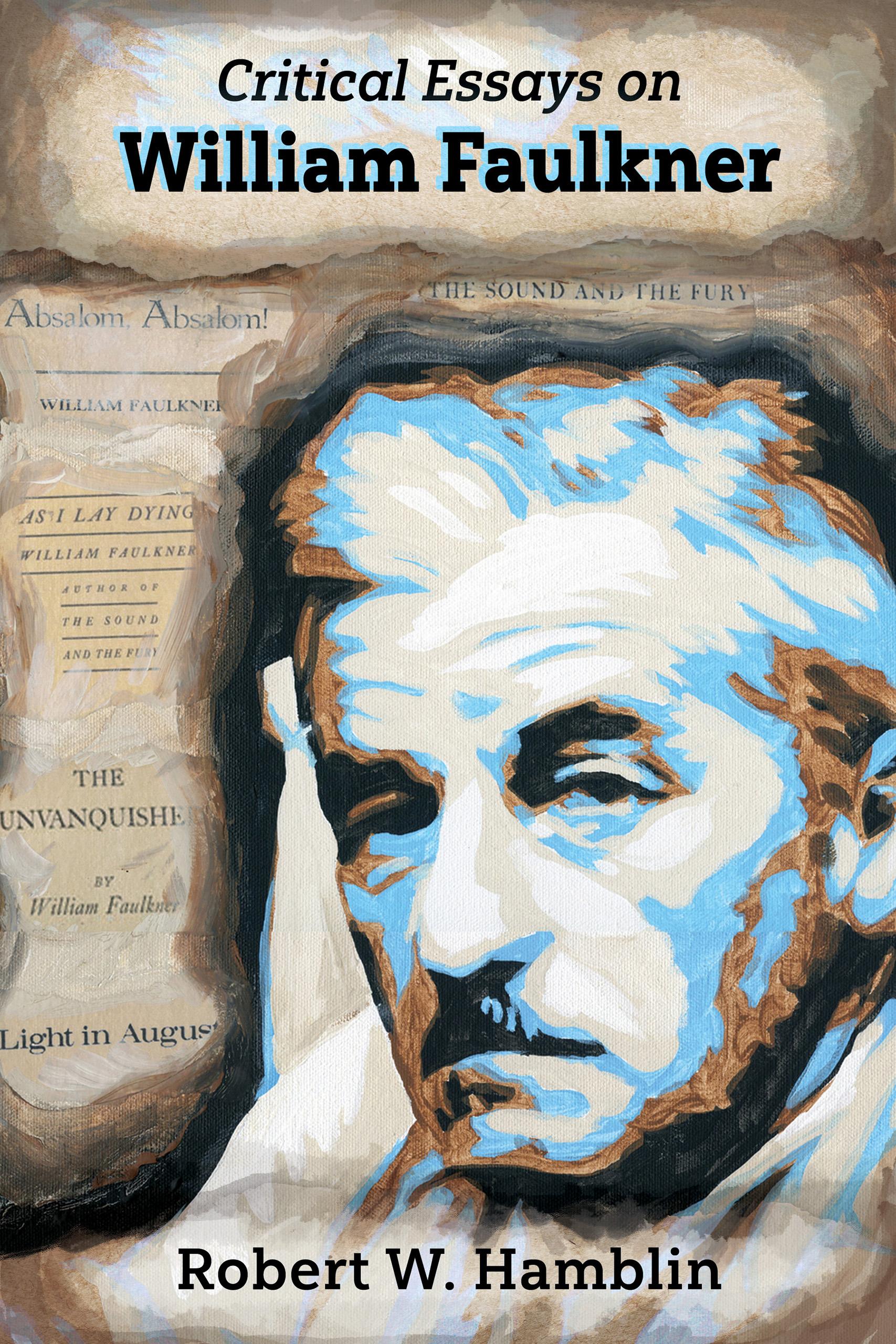
Critical Essays on William Faulkner compiles scholarship by noted Faulkner studies scholar Robert W. Hamblin. Ranging from 1980 to 2020, the twenty-one essays present a variety of approaches to Faulkner’s work. While acknowledging Faulkner as the quintessential southern writer—particularly in his treatment of race—the essays examine his work in relation to American and even international contexts. The volume includes discussions of Faulkner’s techniques and the psychological underpinnings of both the origin and the form of his art; explores how his writing is a means of “saying 'no' to death"; examines the intertextual linkages of his fiction with that of other writers like Shakespeare, Twain, Steinbeck, Warren, and Salinger; treats Faulkner’s use of myth and his fondness for the initiation motif; and argues that Faulkner’s film work in Hollywood is much better and of far greater value than most scholars have acknowledged.
Taken as a whole, Hamblin’s essays suggest that Faulkner’s overarching themes relate to time and consequent change. The history of Faulkner’s Yoknapatawpha stretches from the arrival of the white settlers on the Mississippi frontier in the early 1800s to the beginnings of the civil rights movement in the 1940s. Caught in this world of continual change that produces a great degree of uncertainty and ambivalence, the Faulkner character (and reader) must weigh the traditions of the past with the demands of the present and the future. As Faulkner acknowledges, this process of discovery and growth is a difficult and sometimes painful one; yet, as Hamblin attests, to engage in that quest is to realize the very essence of what it means to be human.
Taken as a whole, Hamblin’s essays suggest that Faulkner’s overarching themes relate to time and consequent change. The history of Faulkner’s Yoknapatawpha stretches from the arrival of the white settlers on the Mississippi frontier in the early 1800s to the beginnings of the civil rights movement in the 1940s. Caught in this world of continual change that produces a great degree of uncertainty and ambivalence, the Faulkner character (and reader) must weigh the traditions of the past with the demands of the present and the future. As Faulkner acknowledges, this process of discovery and growth is a difficult and sometimes painful one; yet, as Hamblin attests, to engage in that quest is to realize the very essence of what it means to be human.
Betal enkelt med kort, Klarna, Apple Pay eller Google Pay. Ikke fornøyd? Du har alltid 14 dagers angrerett. Les mer i våre vilkår. Har du spørsmål, send oss en e-post på hello@memmo.org.
Memmo gjør det enklere å studere – uansett hvor du er i verden. Hos oss samler du pensumbøker og smarte studieverktøy på ett og samme sted: sammendrag, quizer, podkaster og flashcards. Og så Ted, din studiekompis som svarer på alt du lurer på. Over 50 000 studenter studerer allerede her – bygget for at du skal lære raskere og stresse mindre.
Du vil kanskje også like
Kjøp boken0