
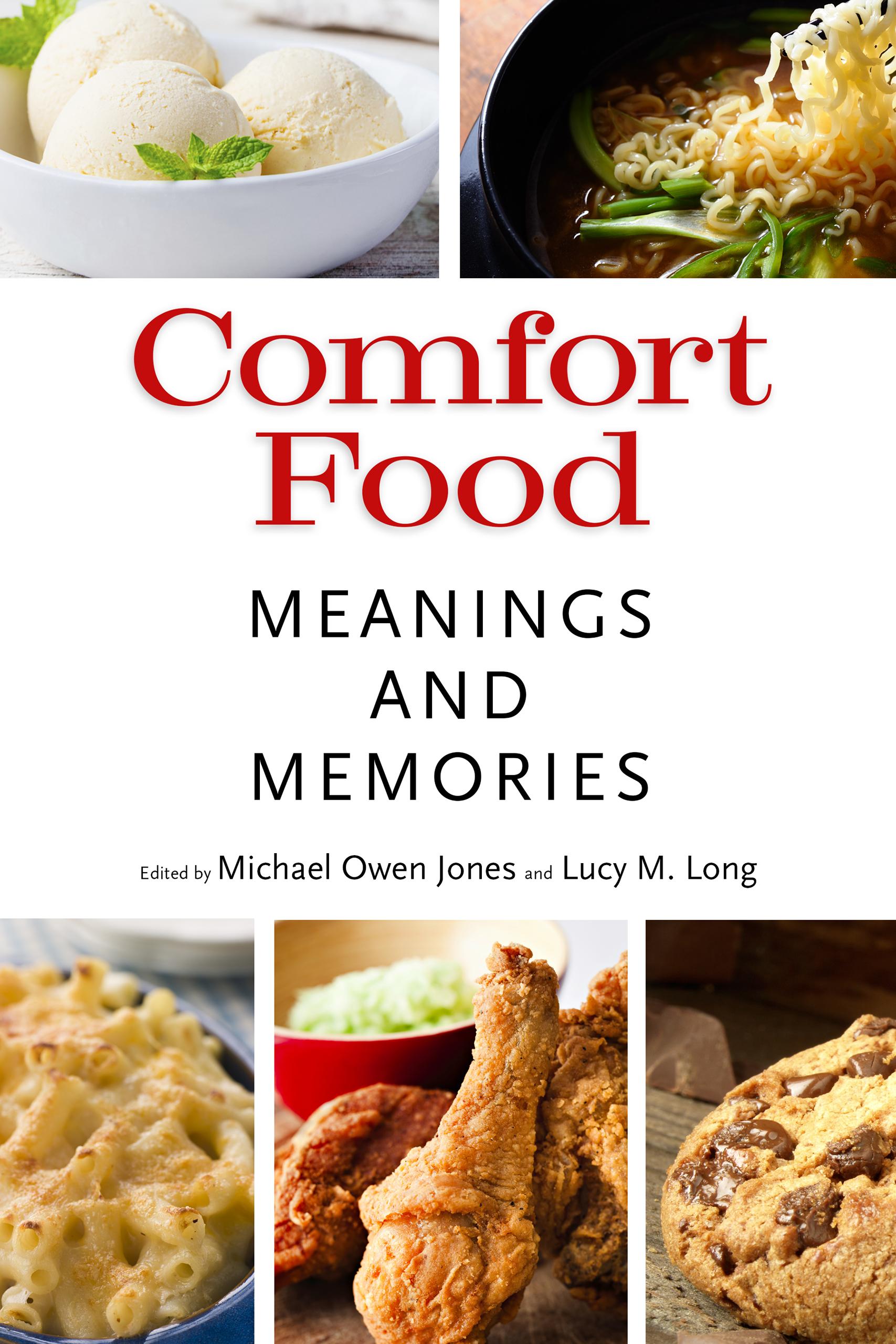
With contributions by Barbara Banks, Sheila Bock, Susan Eleuterio, Jillian Gould, Phillis Humphries, Michael Owen Jones, Alicia Kristen, William G. Lockwood, Yvonne R. Lockwood, Lucy M. Long, LuAnne Roth, Rachelle H. Saltzman, Charlene Smith, Annie Tucker, and Diane Tye
Comfort Food explores this concept with examples taken from Atlantic Canadians, Indonesians, the English in Britain, and various ethnic, regional, and religious populations as well as rural and urban residents in the United States. This volume includes studies of particular edibles and the ways in which they comfort or in some instances cause discomfort. The contributors focus on items ranging from bologna to chocolate, including sweet and savory puddings, fried bread with an egg in the center, dairy products, fried rice, cafeteria fare, sugary fried dough, soul food, and others.
Several essays consider comfort food in the context of cookbooks, films, blogs, literature, marketing, and tourism. Of course what heartens one person might put off another, so the collection also includes takes on victuals that prove problematic. All this fare is then related to identity, family, community, nationality, ethnicity, class, sense of place, tradition, stress, health, discomfort, guilt, betrayal, and loss, contributing to and deepening our understanding of comfort food.
This book offers a foundation for further appreciation of comfort food. As a subject of study, the comfort food is relevant to a number of disciplines, most obviously food studies, folkloristics, and anthropology, but also American studies, cultural studies, global and international studies, tourism, marketing, and public health.
Comfort Food explores this concept with examples taken from Atlantic Canadians, Indonesians, the English in Britain, and various ethnic, regional, and religious populations as well as rural and urban residents in the United States. This volume includes studies of particular edibles and the ways in which they comfort or in some instances cause discomfort. The contributors focus on items ranging from bologna to chocolate, including sweet and savory puddings, fried bread with an egg in the center, dairy products, fried rice, cafeteria fare, sugary fried dough, soul food, and others.
Several essays consider comfort food in the context of cookbooks, films, blogs, literature, marketing, and tourism. Of course what heartens one person might put off another, so the collection also includes takes on victuals that prove problematic. All this fare is then related to identity, family, community, nationality, ethnicity, class, sense of place, tradition, stress, health, discomfort, guilt, betrayal, and loss, contributing to and deepening our understanding of comfort food.
This book offers a foundation for further appreciation of comfort food. As a subject of study, the comfort food is relevant to a number of disciplines, most obviously food studies, folkloristics, and anthropology, but also American studies, cultural studies, global and international studies, tourism, marketing, and public health.
Betal enkelt med kort, Klarna, Apple Pay eller Google Pay. Ikke fornøyd? Du har alltid 14 dagers angrerett. Les mer i våre vilkår. Har du spørsmål, send oss en e-post på hello@memmo.org.
Memmo gjør det enklere å studere – uansett hvor du er i verden. Hos oss samler du pensumbøker og smarte studieverktøy på ett og samme sted: sammendrag, quizer, podkaster og flashcards. Og så Ted, din studiekompis som svarer på alt du lurer på. Over 50 000 studenter studerer allerede her – bygget for at du skal lære raskere og stresse mindre.
Du vil kanskje også like
Kjøp boken0