
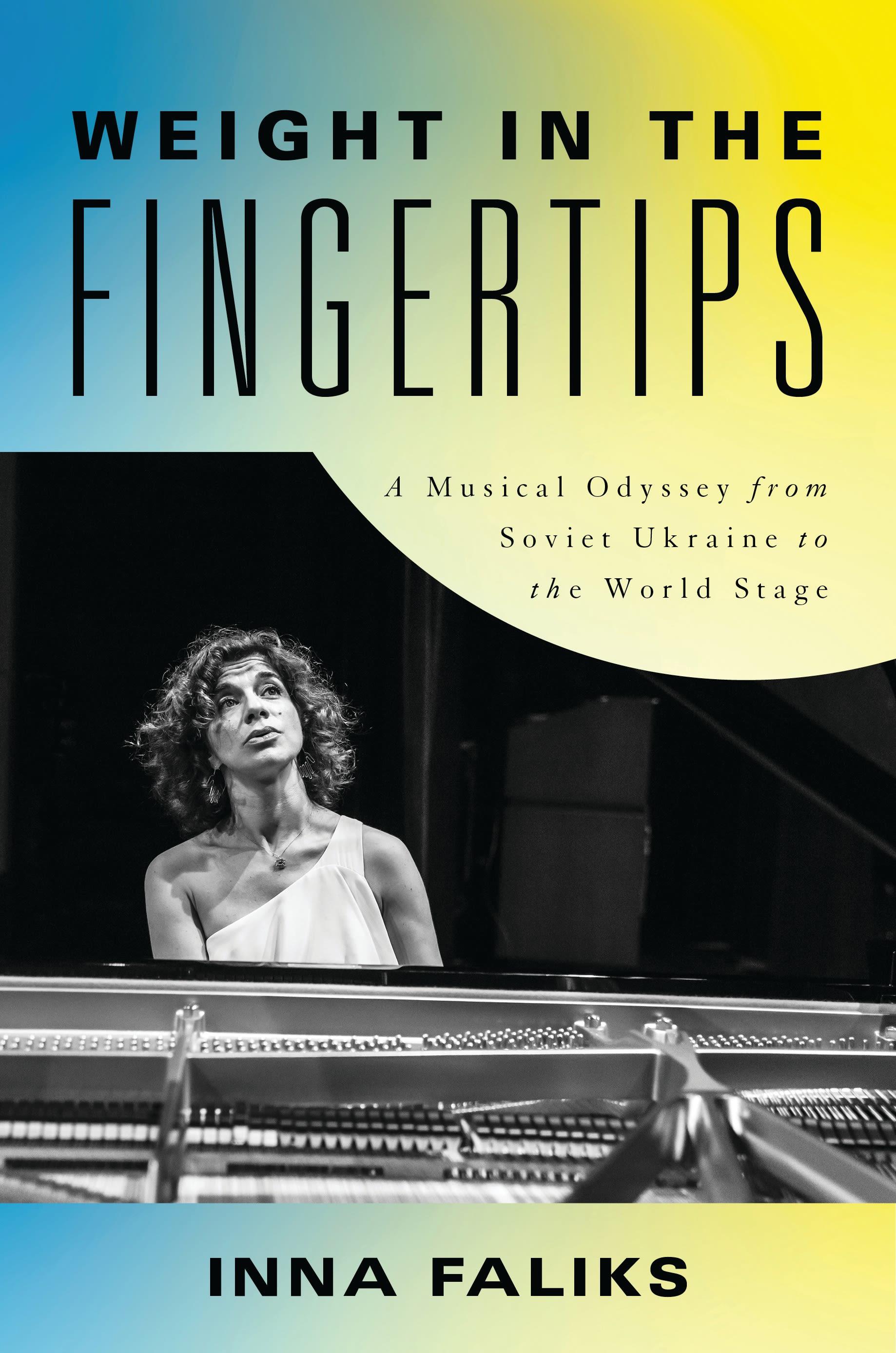
Before she knew she was Ukrainian, Soviet, or Jewish, Inna Faliks knew she was a musician. Growing up in the city of Odessa, the piano became her best friend, and she explored the brilliant, intricate puzzles of Bach’s music and learned to compose under her mother’s watchful eye. At ten, Faliks and her parents moved to Chicago as part of the tide of Jewish refugees who fled the USSR for the West in the 1980s. During the months-long immigration process, she would silently practice on kitchen tables while imagining a full set of piano keys beneath her fingertips.
In Weight in the Fingertips, Faliks gives a globe-trotting account of her upbringing as a child prodigy in a Soviet state, the perils of immigration, the struggle of assimilating as an American, years of training with teachers, and her slow and steady rise in the world of classical music. With a warm and playful style, she helps non-musicians understand the experience of becoming a world-renowned concert pianist. The places she grew up, the books she read, the poems she memorized as a child all connect to her sound at the piano, and the way she hears and shapes a musical phrase illuminate classical music and elite performance. She also explores how a person’s humanity makes their art honest and their voice unique, and how the life-long challenge of retaining that voice is fueled by a balance between being a great musician and being a human being. Throughout, Faliks provides powerful insights into the role of music in a world of conflict, change, and hope for a better tomorrow.
In Weight in the Fingertips, Faliks gives a globe-trotting account of her upbringing as a child prodigy in a Soviet state, the perils of immigration, the struggle of assimilating as an American, years of training with teachers, and her slow and steady rise in the world of classical music. With a warm and playful style, she helps non-musicians understand the experience of becoming a world-renowned concert pianist. The places she grew up, the books she read, the poems she memorized as a child all connect to her sound at the piano, and the way she hears and shapes a musical phrase illuminate classical music and elite performance. She also explores how a person’s humanity makes their art honest and their voice unique, and how the life-long challenge of retaining that voice is fueled by a balance between being a great musician and being a human being. Throughout, Faliks provides powerful insights into the role of music in a world of conflict, change, and hope for a better tomorrow.
Betal enkelt med kort, Klarna, Apple Pay eller Google Pay. Ikke fornøyd? Du har alltid 14 dagers angrerett. Les mer i våre vilkår. Har du spørsmål, send oss en e-post på hello@memmo.org.
Memmo gjør det enklere å studere – uansett hvor du er i verden. Hos oss samler du pensumbøker og smarte studieverktøy på ett og samme sted: sammendrag, quizer, podkaster og flashcards. Og så Ted, din studiekompis som svarer på alt du lurer på. Over 50 000 studenter studerer allerede her – bygget for at du skal lære raskere og stresse mindre.